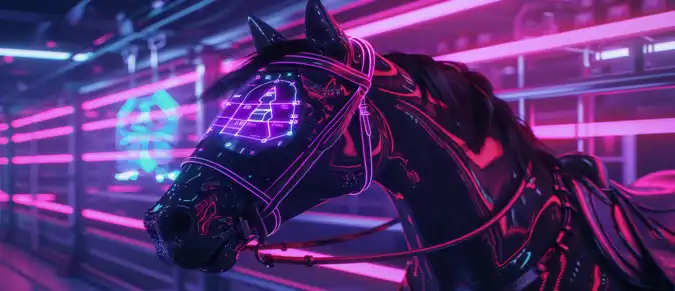

Derby Stars is a Web3 horse racing management game where players develop NFT horses, participate in races, breed new horses, and build their own gameplay strategy. The project combines sports simulator mechanics with a blockchain-based economy: instead of focusing on a single race, players manage the long-term career of a virtual racehorse. The core concept is digital ownership, where every horse has unique characteristics and can be used in competitions, breeding, or rental systems. The game runs on Polygon and targets both crypto enthusiasts and traditional online gamers.
Contents
- What Derby Stars Is
- Core Gameplay Mechanics
- NFT Horses and the Breeding System
- Tokens and the Derby Stars Economy
- Future Potential and Web3 Features
1. What Derby Stars Is
Derby Stars is a blockchain game focused on horse racing and the development of digital horses. Unlike many Web3 projects, the game emphasizes long-term gameplay rather than simple token farming. Players take the role of stable owners, training horses, improving their attributes, and competing in races where strategy plays a major role.
The project combines sports management elements with blockchain technology. NFT horses function as полноценные in-game assets with unique stats, genetics, and growth potential. This allows players to influence race outcomes through preparation and smart resource management.
The developers also aim to make the game accessible for beginners. Derby Stars includes NFT rental mechanics and a gradual introduction to crypto infrastructure, lowering the barrier to entry for new users. The gameplay system features races, training, seasonal tournaments, NFT-based economics, and player interaction, creating a sustainable long-term ecosystem.
2. Core Gameplay Mechanics
The gameplay of Derby Stars revolves around preparing horses for competitions. Players must consider a horse’s attributes, specialization, training level, and compatibility with different track types. Some horses perform better on short distances, while others are more effective in endurance races. Weather conditions, track surfaces, and the horse’s current condition also affect performance.
Progression is based on a training system. Players can improve speed, acceleration, stamina, and other attributes. However, horses cannot be overtrained endlessly because the game includes a fatigue mechanic that forces players to carefully plan training cycles. This makes Derby Stars closer to a sports management simulator than an arcade racing game.
- training improves horse attributes;
- fatigue limits excessive workload;
- PvE helps players earn resources and develop assets;
- PvP creates competitive rankings between players;
- track conditions affect performance;
- each horse has its own racing style.
Derby Stars includes both PvE and PvP modes. PvE allows players to gradually improve their assets and collect resources, while PvP focuses on ranked competition between users. Success depends not only on horse strength but also on choosing the right tournaments and track conditions.
This approach makes Derby Stars more strategic compared to many simpler Web3 projects. Players do not simply click buttons for rewards but instead build long-term systems for training and competition.
3. NFT Horses and the Breeding System
NFT horses are the central element of Derby Stars and the foundation of the in-game economy. Every horse has unique characteristics that influence not only rarity but also racing performance. Some horses are better suited for sprint races, while others excel in endurance or specific track conditions.
One of the game’s key mechanics is breeding. Players can combine horses to produce offspring with mixed attributes, adding both strategy and collection elements to the gameplay. Users analyze genetics, rarity, and parent characteristics to increase the chances of obtaining stronger horses. At the same time, the outcome always remains partially unpredictable.
Breeding is important not only for progression but also for the project’s economy. Valuable horses can be used in races, sold to other players, or rented out. The rental system lowers the entry barrier for beginners and helps maintain activity inside the ecosystem.

4. Tokens and the Derby Stars Economy
The economic system of Derby Stars is built around several digital assets. Tokens are used for in-game operations, rewards, participation in gameplay mechanics, and interaction with the NFT infrastructure. Early project materials mentioned RUN and CRT, although the ecosystem later shifted its primary focus toward DSRUN.
Each asset inside the ecosystem serves a specific purpose connected to gameplay. Some tokens are used for governance and rewards, while others support in-game actions and NFT horse development. This creates a close connection between the economy and the game mechanics.
| Asset | Type | Purpose | Features |
|---|---|---|---|
| DSRUN / RUN | Main token | Rewards, governance, game operations | Used in the core ecosystem mechanics |
| CRT | Utility resource | In-game activities and actions | Used for specific gameplay processes |
| NFT Horses | Digital game asset | Racing, renting, breeding | Value depends on rarity and attributes |
The project’s economy directly depends on player activity. The more users participate in races, train horses, and use the breeding system, the higher the practical demand for in-game assets becomes. This distinguishes Derby Stars from many Web3 games where tokens exist separately from gameplay.
At the same time, maintaining balance remains one of the project’s biggest challenges. Excessive rewards may lead to inflation, while high entry costs could reduce the flow of new players. Therefore, the long-term sustainability of the economy depends on developers continuing to expand gameplay mechanics and regularly update content.
5. Future Potential and Web3 Features
Derby Stars stands out among Web3 games through its combination of sports management gameplay and NFT mechanics. The project focuses not only on earning opportunities but also on long-term player engagement, which is especially important in the GameFi sector.
The main feature of the game is the practical use of NFTs. Horses function as full gameplay assets: they participate in races, are used in breeding systems, and can generate value inside the ecosystem. This approach makes digital ownership more meaningful and useful.
The future of Derby Stars is closely connected to the growth of the Web3 gaming industry and increasing interest in high-quality blockchain games. Another advantage of the project is its use of Polygon, which provides lower transaction fees and a more convenient infrastructure.
However, the GameFi market remains unstable, meaning the project must continue expanding content, balancing the economy, and keeping players engaged in order to succeed long term. Thanks to its combination of NFT assets, competitive gameplay, and economic systems, Derby Stars looks less like a simple token collection and more like a complete Web3 strategy and sports management game.
The project may also attract fans of sports simulators and collectible games. Developers can further expand the ecosystem through new tournaments, seasonal events, and additional gameplay mechanics, helping maintain community interest and gameplay diversity.











