
In the modern digital world, information is transmitted instantly and without borders, but the movement of real value is still associated with complex barriers. The Metagood project offers a solution by creating a technological infrastructure that unites two fundamental spheres — culture and finance. Leveraging the capabilities of distributed ledgers, the team is building an open economy where any asset, be it a work of art or a share in a physical object, can be represented and exchanged digitally. This allows for the transfer of value as easily and quickly as data.
Contents:
- Metagood's Mission and Vision
- Blockchain as the Foundation of an Open Economy
- Transformation of Cultural Assets in the Digital Age
- Infrastructure Metagood for the Future of Assets
- Impact and Prospects of the Project
- Conclusion
Metagood's Mission and Vision
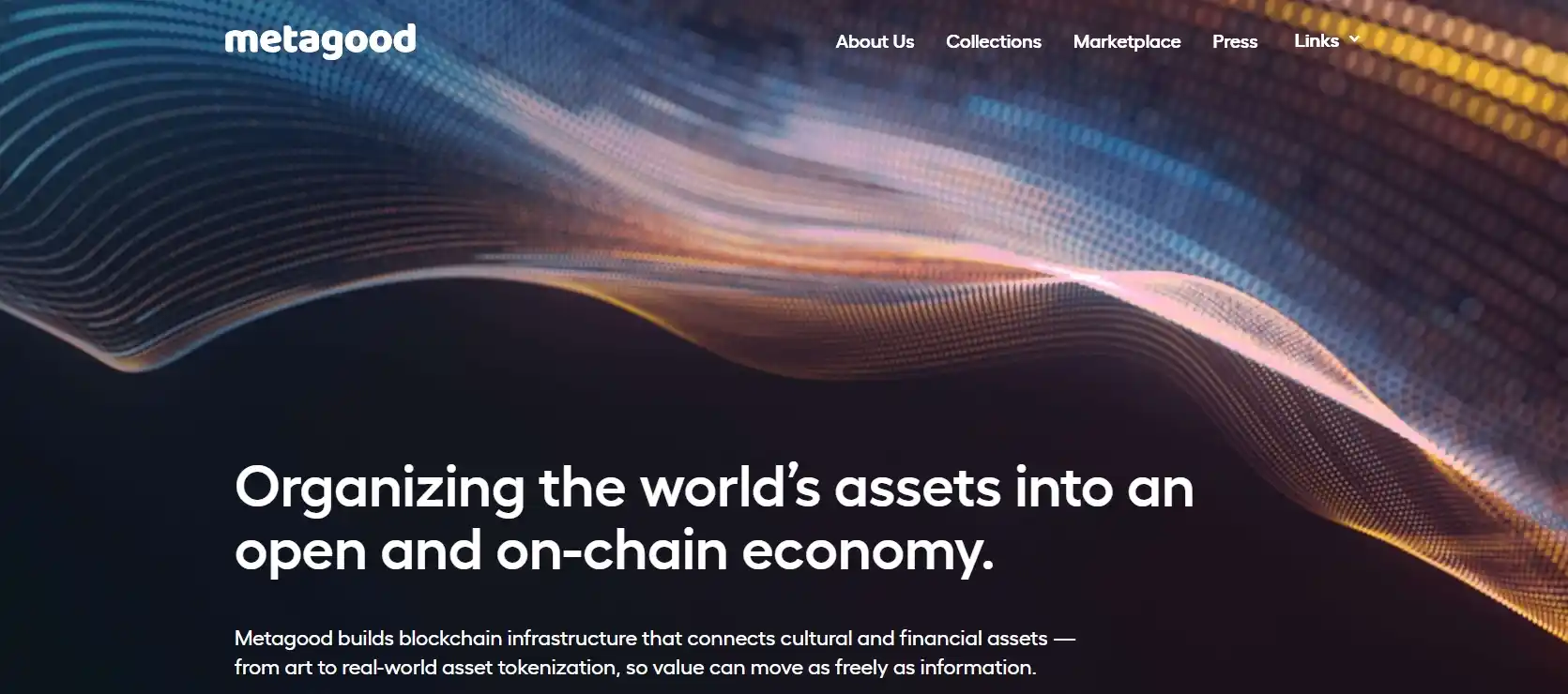
The fundamental objective of the Metagood project is the systemic organization of global assets and their integration into an open economic model operating on distributed ledger technology. The company creates a foundational infrastructure that connects cultural artifacts and financial instruments into a single digital environment, ensuring the free movement of value.
This approach aims to democratize access to capital and cultural assets, eliminating traditional barriers between different asset classes. Ultimately, Metagood strives to form an inclusive ecosystem where physical and digital forms of ownership harmoniously interact, creating a fundamentally new foundation for global exchange.
Blockchain as the Foundation of an Open Economy
Distributed ledger technology is the key foundation for realizing Metagood's vision, providing the principles necessary for the new economy: immutability, transparency, and security of rights transfer. The platform builds its infrastructure on this foundation, where blockchain acts as a universal protocol for recording and confirming ownership of any asset, creating an environment for trust-based exchange without centralized intermediaries.
A crucial aspect of integration is the focus on on-chain operations, where assets are originally created and exist within the chain, not merely reflected in it. This principle allows for the formation of a unified digital space for the entire spectrum of values — from works of art to fractional ownership in real objects, ensuring their mutual compatibility, instant verifiability, and global liquidity.
Transformation of Cultural Assets in the Digital Age
One of the key focus areas of Metagood's work is the integration of works of art into the digital economy. The platform transforms cultural values into tokens existing on the blockchain, opening up new opportunities for monetization and global interaction for authors and collectors.
The process of digitizing and tokenizing cultural heritage provides the art community with a number of important advantages:
- Provenance Transparency: Each work receives an immutable record confirming its authenticity and full ownership history.
- Investment Accessibility: Art becomes accessible to a wider audience through fractional ownership and a lower entry barrier.
- New Forms of Creativity: Artists can utilize the programmable properties of tokens to create interactive works and build direct relationships with their audience.
- Heritage Preservation: Digital representation ensures the long-term preservation of cultural objects for future generations.
Metagood does not simply transfer art to the internet, but creates a new environment for its existence where it acquires additional properties and is integrated into the global economic cycle. This approach changes the very paradigm of collecting and interacting with cultural values.
Infrastructure Metagood for the Future of Assets
Metagood focuses on creating a comprehensive technological foundation, not on individual products. This infrastructure is designed to ensure reliable interaction between different classes of assets — from digital art to shares in physical objects. The platform develops universal tools and protocols that simplify the processes of tokenization, management, and exchange.
The main directions for building this foundational platform cover the following areas:
| Development Direction | Description | Key Result |
|---|---|---|
| Digital Art and NFT | Creation and support of collections on Bitcoin and Ethereum blockchains. | Integration of cultural values into the digital economy with authenticity guarantee. |
| Real World Asset (RWA) Tokenization | Translation of rights to material objects (real estate, commodities) into digital tokens. | Increased liquidity and democratization of access to traditional investments. |
| Core Protocols and Standards | Development of rules and technical specifications for issuing, transferring, and interacting with tokenized assets. | Ensuring compatibility, security, and scalability of the entire ecosystem. |
Creating such a multi-level infrastructure is critically important for the transition to an economy where the digital representation of an asset becomes its full-fledged and liquid equivalent. This structural approach allows for scaling solutions and adapting them to the needs of different industries, laying a universal foundation for the open on-chain economy of the future.
Impact and Prospects of the Project
Metagood's activities have a significant impact on the formation of new economic models, facilitating the transition to a more open and fair system. The project returns control over assets to their immediate owners, minimizing the role of traditional centralized intermediaries and lowering barriers to global participation. Its successful implementation could lead to changes in the operating principles of key markets, including the art market and the capital market.
Development prospects are linked to deepening the integration of digital and physical worlds, as well as expanding the community that supports the new paradigm. The team's efforts are aimed at creating not just technological protocols, but a sustainable ecosystem that delivers practical benefits, stimulating innovation, and forming a more inclusive economic environment for all participants.
Conclusion
The Metagood project represents a large-scale initiative aimed at rethinking the foundations of ownership and value transfer in the 21st century. By creating a reliable blockchain infrastructure, the platform builds a bridge between cultural heritage and financial instruments, uniting them in a transparent ecosystem. This fosters the emergence of a new type of economy, where value takes on a digital form and can move freely around the world.
Metagood's work goes beyond a technological experiment, laying the practical groundwork for a future in which the boundaries between real and digital assets blur. This opens up unprecedented opportunities for investors, artists, and collectors, forming a more open, liquid, and inclusive global economic environment.











