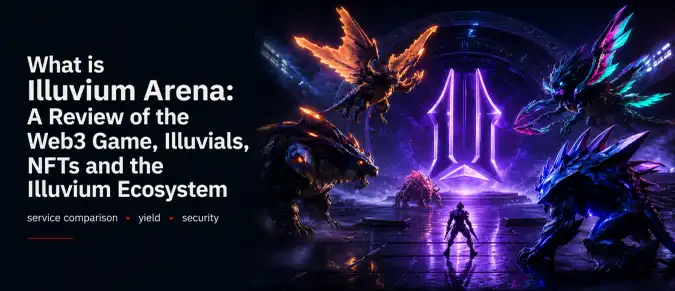

Illuvium Arena is a free-to-play strategic auto-battler developed by Illuvium Labs and one of the core products in the broader Illuvium ecosystem. Players build teams of creatures known as Illuvials, combine classes and affinities, use a Ranger, weapons, and Augments, and compete in automated battles where preparation and team composition play a major role in determining the outcome. Arena is available on PC through the Epic Games Store and continues to evolve in Early Access. Its Web3 layer is connected to digital ownership of selected assets and the broader Illuvium economy, but purchasing NFTs or cryptocurrency is not required to start playing.
Contents
- What Is Illuvium Arena and How the Blockchain Game Works
- How Illuvials, Synergies, Rangers, and Battles Work in Arena
- How Illuvium Arena Compares With Other Web3 Gaming Models
- NFTs, Immutable, ILV, and the Illuvium Ecosystem Economy
- Risks and Prospects of Illuvium Arena as a Web3 Game
1. What Is Illuvium Arena and How the Blockchain Game Works
Illuvium Arena represents the strategic competitive branch of the Illuvium universe. Instead of directly controlling every attack, players assemble teams, choose creature positions, and build combinations of traits before combat begins. Once a round starts, Illuvials fight automatically, making team construction and adaptation to opponents central parts of the gameplay.
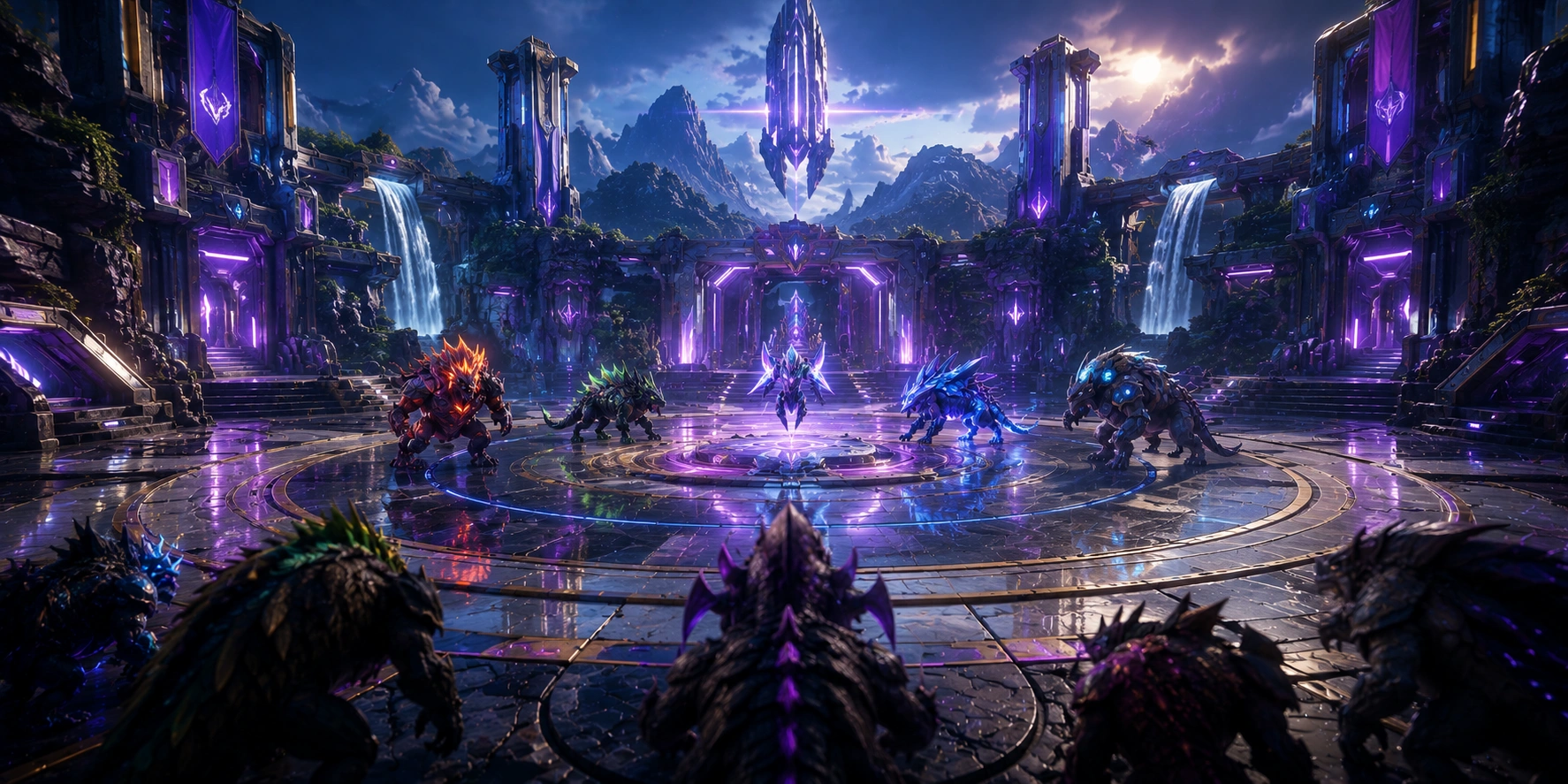
The current version of Arena is built around Gauntlet, a free-for-all PvP mode for eight participants. Players face opponents over successive rounds, manage resources, and adjust their lineups with the goal of becoming the last Ranger remaining in the match. Official materials have also referenced Survival and Ascendant as additional directions for the development of Arena's game modes.
Illuvium Arena belongs to a broader franchise that also includes Illuvium Overworld, Illuvium Zero, and Illuvium Beyond. These products share the same universe, Illuvials, and elements of the digital economy, but they belong to different genres. Arena focuses primarily on competitive strategic battles, while Zero centers on land and resource management and Overworld is built around exploration.
The game is distributed through the Epic Games Store and remains in Early Access. This is important when evaluating the project because rules, balance, interfaces, and individual mechanics continue to change. Updates released in 2026, for example, adjusted synergies, Illuvial statistics, and digital ownership bonuses, reflecting the ongoing development of the competitive model.
2. How Illuvials, Synergies, Rangers, and Battles Work in Arena
Illuvials are the primary combat units in Arena. Each creature has its own attributes, abilities, classes, and affinities. Players must consider not only the individual strength of a unit but also how it interacts with the rest of the team, as specific combinations activate Synergies that can significantly affect the performance of an entire lineup.
Before combat, players place available creatures on the battlefield and choose their positions according to each Illuvial's role. Some units are more effective on the front line, while others specialize in damage or support. Once combat begins, the battle proceeds automatically, meaning that mistakes in team construction can matter more than reaction speed during the fight itself.
- Illuvials serve as the primary combat units;
- classes and affinities create team Synergies;
- positioning affects lineup performance;
- the Ranger functions as a flexible additional unit;
- Rangers can use Weapons and other upgrades;
- Augments modify individual Illuvials and strategic builds;
- PvE rounds can provide additional resources during a match;
- lineups can be adjusted as an individual match progresses;
- Illuvial and Synergy balance is regularly modified through updates.
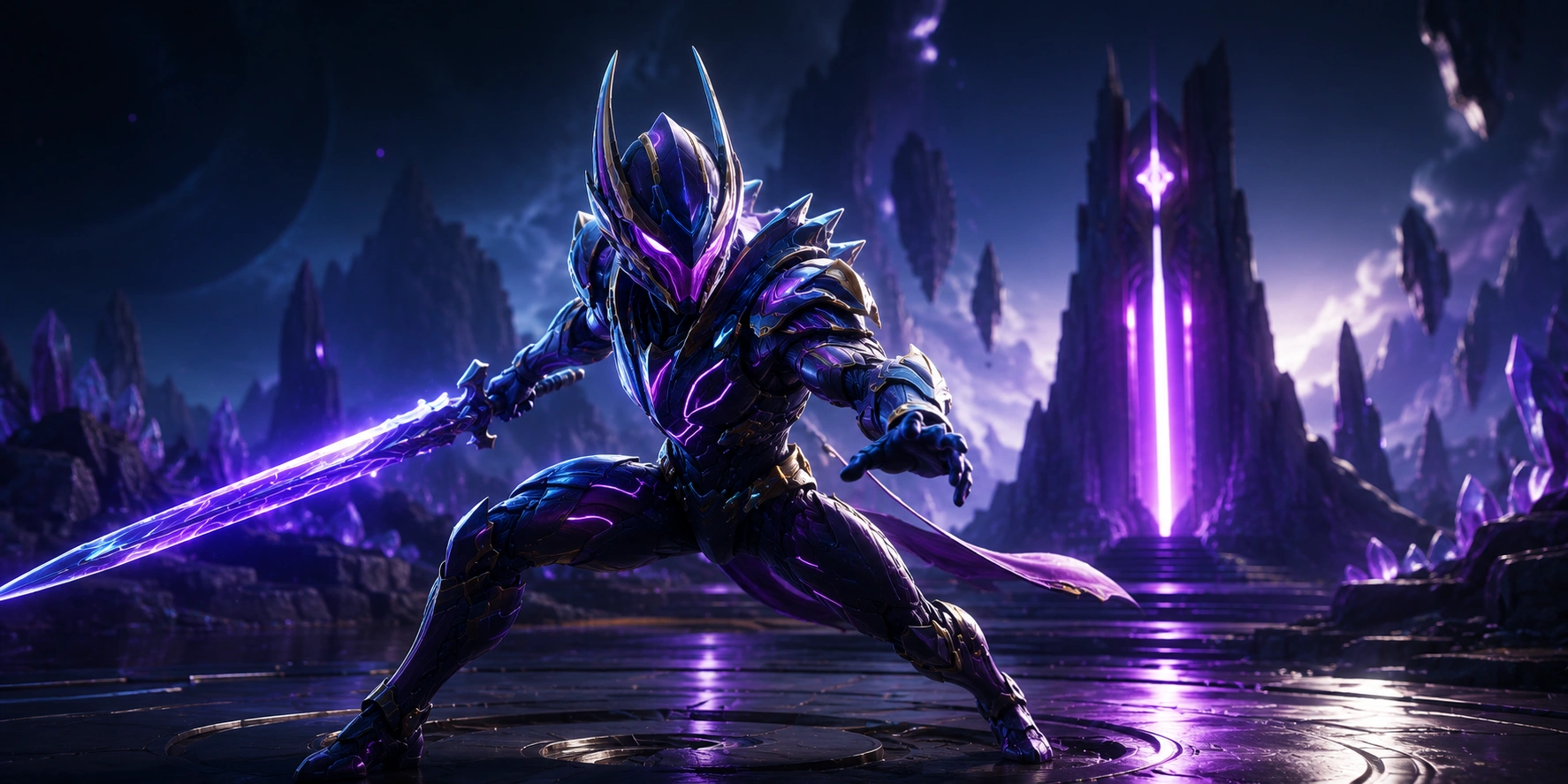
The Ranger has a separate role as a customizable unit that can complement the main lineup. Rangers can use weapons and other upgrades, while the Bond mechanic allows a Ranger to connect with an Illuvial and gain additional class or affinity attributes. This provides another way to restructure active synergies depending on the situation.
Augments introduce an additional layer of customization. They can strengthen specific creatures or alter a team's strategy, meaning that two lineups using similar Illuvials may perform differently. Arena therefore combines several decision-making layers, including creature selection, match economy, positioning, synergies, Ranger configuration, and additional upgrades.
3. How Illuvium Arena Compares With Other Web3 Gaming Models
Illuvium Arena differs from early Play-to-Earn projects because token rewards are not the foundation of every gameplay action. Its core loop is built around strategic auto-battler mechanics, while Web3 serves as an additional layer for digital ownership and ecosystem economics.
Arena also differs from fully onchain games in its architecture. Illuvial positioning, attack calculations, and other actions within a dynamic match do not need to be processed as separate blockchain transactions. This allows the game to maintain conventional performance while using blockchain infrastructure where verifiable ownership of supported digital assets is relevant.
| Model | Core Gameplay Element | Role of Blockchain | Key Feature |
|---|---|---|---|
| Illuvium Arena | Illuvials and team compositions | Digital assets and ecosystem economy | Strategic auto-battler |
| Traditional P2E | Gameplay actions and resources | Distribution of token rewards | Economic incentives for activity |
| NFT TCG | Collectible cards | Ownership and trading of cards | Deck building and PvP |
| Onchain Game | Game-world state | Execution or recording of game logic | Strong reliance on smart contracts |
| Traditional Auto-Battler | Units and synergies | Not used | Team composition, economy, and positioning |
Free-to-play access is another important distinction. Players do not need to own Illuvials as blockchain assets before entering their first match. This reduces the entry barrier compared with models where an NFT purchase is required before gameplay can begin.
Digital ownership can nevertheless affect specific parts of the experience. Arena includes an Ownership Bonus whose parameters have been adjusted by the developers, while the Leviathan mode is designed around the use of owned Illuvials and their attributes. The impact of Web3 assets should therefore be assessed separately for each mode rather than assuming that the same economic model applies across the entire game.
4. NFTs, Immutable, ILV, and the Illuvium Ecosystem Economy
Illuvium's blockchain infrastructure has historically been built around Ethereum and Immutable technology. In late 2025, the team announced the migration of assets and core services to Immutable zkEVM, an EVM-compatible infrastructure designed for gaming applications. Under the updated structure, unique assets such as Illuvials, Illuvitars, and Land Plots retain the ERC-721 format, while other asset categories may use ERC-1155.
Illuvium is not a single game but an interconnected economy spanning several products. Under the project's model, Zero and Overworld represent the supply side of the ecosystem by generating resources and items. Arena and Beyond represent demand-oriented products where these resources and assets can gain additional use cases.
ILV has a broader ecosystem role and is not simply an in-game currency used for every Arena match. The token is associated with governance and the economic structure of the Illuvium protocol, while the gameplay loop itself uses its own resources, units, items, and progression systems. As a result, the market performance of ILV and the quality of Arena are related but distinct indicators of the ecosystem's development.
Digital ownership also does not mean that every item will retain a permanent market value. NFT prices depend on demand, utility, scarcity, and liquidity, while their functions within the game can change as balance updates are introduced. Blockchain ownership confirms control over the corresponding token, but it does not guarantee its market price or an unchanged gameplay role.
5. Risks and Prospects of Illuvium Arena as a Web3 Game
One of the main gameplay risks for Illuvium Arena is maintaining a balanced competitive system. A large number of Illuvials, Synergies, Augments, and weapons creates a complex meta, requiring developers to regularly adjust individual units and combinations. Early Access adds further uncertainty because modes, mechanics, and technical parameters continue to evolve, while updates may alter balance, progression, and other aspects of gameplay.
The Web3 component introduces additional market and infrastructure risks. Digital assets depend on smart contracts, wallets, and Immutable infrastructure, while their value is determined by market conditions. The transition to Immutable zkEVM also requires reliable migration of assets and associated services.
At the same time, the free-to-play model allows players to experience Arena without purchasing NFTs. Its connection with Zero, Beyond, and the continuing development of Overworld creates a broader ecosystem in which digital assets and progression can potentially interact across different Illuvium products.
Arena's prospects will depend on competitive balance, player activity, the development of game modes, and the practical utility of digital assets. Its long-term position will ultimately depend on whether it can retain an audience as a standalone auto-battler while maintaining a meaningful connection with the broader Illuvium Web3 economy.











