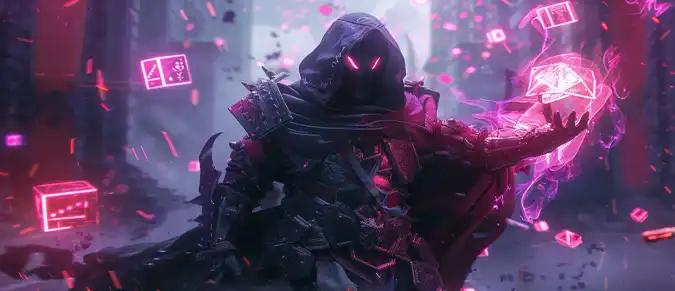

LadderCaster is a Web3 game built on Solana that aims to go beyond standard GameFi models. Instead of the simple “invest and earn tokens” approach, it features a complete gameplay loop: movement across a map, resource gathering, character progression, and item management. The economy is embedded directly into the mechanics rather than existing separately. This makes the project an interesting example of how blockchain can support not only asset ownership but also core gameplay logic.
Contents
- General Structure of LadderCaster
- Gameplay and Core Mechanics
- NFTs and In-Game Assets
- Economy and Tokens
- Strengths and Limitations
1. General Structure of LadderCaster
LadderCaster is a strategic Web3 game where players control characters and gradually progress through levels by collecting resources and strengthening their positions. The core idea is to combine familiar gaming mechanics with blockchain infrastructure. This means that player actions have both in-game consequences and value in terms of digital ownership.
Unlike many GameFi projects where the economy exists separately from gameplay, here it is fully integrated into the process. Players do not simply receive rewards for participation — they manage resources, make decisions, and influence outcomes through a sequence of actions. This approach makes the experience closer to traditional strategy games, where planning and efficiency matter more than initial investment.
The technical design of the project reinforces this concept. Game actions are structured and divided into stages, allowing the logic to be recorded on-chain. This increases transparency and makes the system more predictable. As a result, LadderCaster can be seen as an attempt to create a game where Web3 is not an add-on but part of the foundation.
2. Gameplay and Core Mechanics
LadderCaster’s gameplay is built around a sequential action cycle. Players use characters to move across the map, gather resources, open chests, and enhance their capabilities. Each action is tied to limitations, such as stamina, which forces players to plan their moves and choose optimal strategies.
The level system plays a key role in progression. As players advance, new opportunities become available, but the difficulty also increases. This creates a balance between risk and reward. Success depends not only on chance but also on efficient resource management.
- movement across the map requires stamina management;
- resource gathering forms the basis of progression;
- chests provide random rewards and add risk;
- crafting converts resources into more valuable items;
- character development increases efficiency.
This set of mechanics makes the game both dynamic and strategic. Players constantly make decisions that influence future outcomes. This keeps engagement high and creates a sense of control over the process. Such a structure encourages players to develop their own optimal strategies by combining actions and resources. Over time, an individual playstyle emerges based on priorities and available assets, increasing flexibility and behavioral diversity.
3. NFTs and In-Game Assets
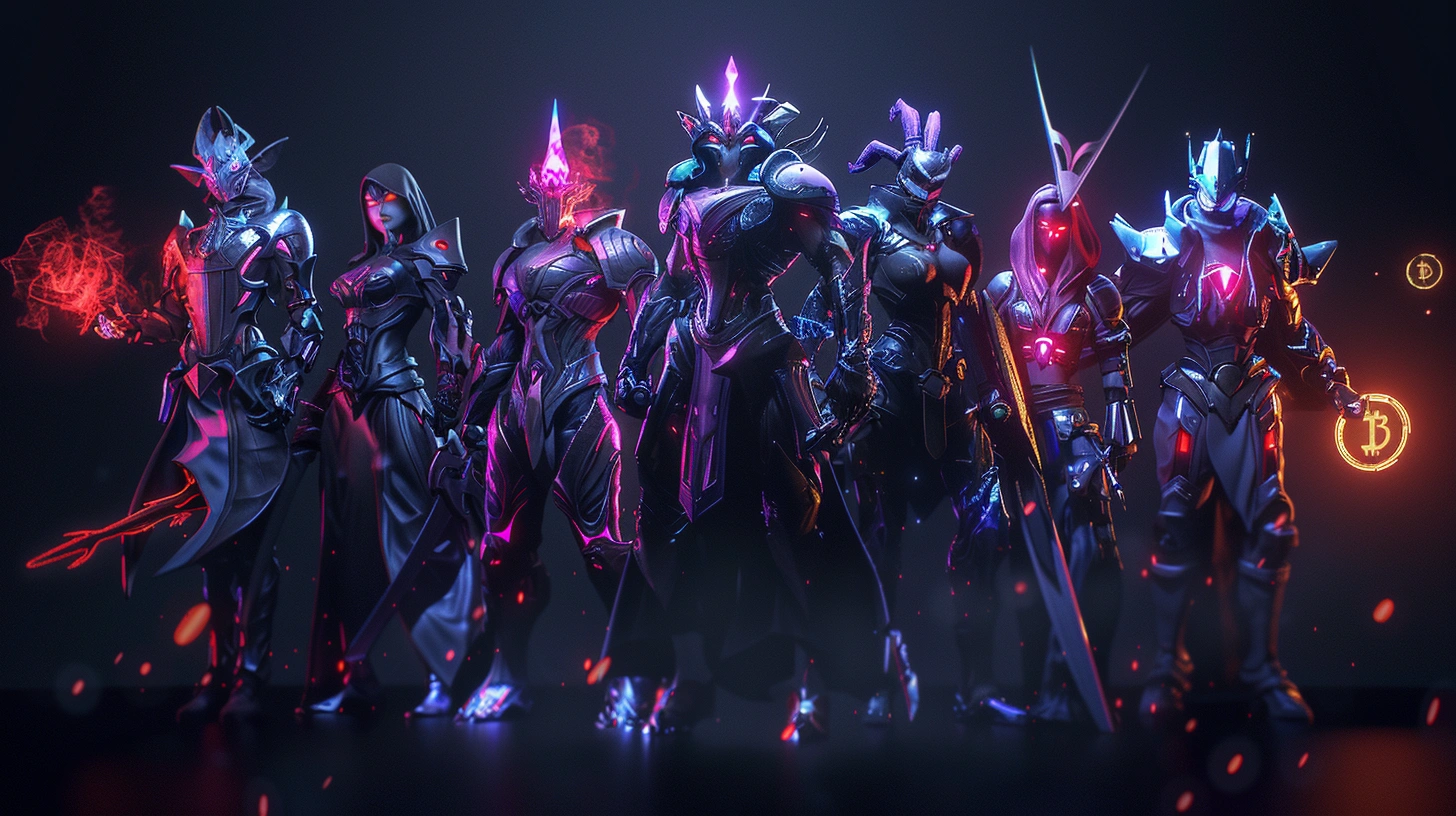
In LadderCaster, NFTs serve a functional role. Characters, known as SpellCasters, are the main gameplay units. They have attributes, can evolve, and directly affect player performance. This distinguishes them from purely cosmetic NFTs that do not influence gameplay.
Items also play a significant role. They enhance characters, improve resource efficiency, and unlock new opportunities. As a result, asset value is determined not only by rarity but also by practical utility. This makes the item market an integral part of strategy.
Digital ownership secures control over assets. Players can use, trade, or hold them for future development. This increases engagement, as every element carries real value within the system. Ultimately, NFTs in LadderCaster serve multiple purposes: they drive progression, support the economy, and record player achievements.
4. Economy and Tokens
The LadderCaster economy is centered around the LADA token and a set of in-game resources. The token has utility functions and is used in various operations within the game. It is connected to the reward system and helps maintain economic balance. Additional resources obtained during gameplay are used for crafting, upgrades, and other actions, creating a layered economic structure.
| Asset | Type | Purpose |
|---|---|---|
| LADA | Token | Core element of the economy and operations |
| Resources | In-game | Used for crafting and progression |
| NFT Items | Digital assets | Enhance characters and impact gameplay |
Despite its well-designed structure, current market activity of the token should be considered. The sustainability of the economy depends not only on mechanics but also on user interest. Therefore, its stability is determined by the combination of game design and player engagement.
5. Strengths and Limitations
LadderCaster stands out due to its attempt to create a full-fledged game rather than just an earning system. Its main strength is the integration of economy into gameplay. Players interact with assets through actions instead of abstract systems, making the experience more natural and intuitive. Another advantage is the use of Solana, which enables fast and low-cost operations.
However, the project faces certain limitations. Web3 games still require users to understand basic blockchain concepts. Additionally, the economic model depends heavily on player activity and external demand. Without a strong user base, even a well-designed system may lose efficiency.
Looking ahead, LadderCaster represents an interesting direction for GameFi. It demonstrates that the future of such projects depends not on tokens alone, but on how seamlessly they are integrated into gameplay. If this model evolves further, more complex and sustainable Web3 games may emerge.
LadderCaster illustrates what a new type of Web3 game can look like. Its economy, NFTs, and gameplay are combined into a unified system where each element affects the outcome. Despite current limitations, the project is valuable as an example of GameFi evolution. Its main strength lies not in the token itself, but in the attempt to make blockchain a core part of the gaming experience rather than just a monetization tool.











