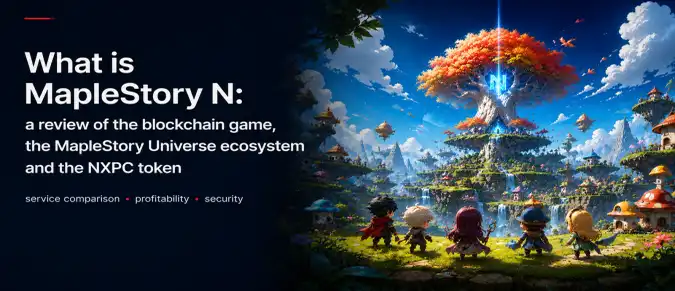

MapleStory N is a blockchain-powered MMORPG developed by NEXPACE in collaboration with Nexon as part of the broader MapleStory Universe ecosystem. Built on one of the most recognizable online gaming franchises, the project combines classic side-scrolling gameplay with Web3 technologies, allowing players to own selected in-game assets as NFTs and interact with a blockchain-based economy. Instead of replacing traditional MMORPG mechanics, blockchain features are integrated into the existing gameplay to enhance digital ownership, trading, and asset transparency. This approach enables MapleStory N to introduce decentralized technologies without fundamentally changing the core gaming experience.
Contents
- What Is MapleStory N and MapleStory Universe?
- How MapleStory N Blockchain Mechanics Work
- MapleStory N Economy: NXPC, NESO, and NFTs
- Key Features and Advantages of MapleStory N
- MapleStory N Compared with Other Web3 Games
1. What Is MapleStory N and MapleStory Universe?
MapleStory N is a blockchain adaptation of the original MapleStory, the iconic MMORPG that has been available since 2003 and has attracted hundreds of millions of players worldwide. It serves as the first flagship game within MapleStory Universe, where the classic game world is expanded through blockchain infrastructure and digital asset ownership.
The project is developed by NEXPACE with support from Nexon. Its primary objective is to extend the traditional in-game economy into a decentralized environment where selected items have verifiable ownership, limited issuance, and can be transferred through blockchain-powered services.
MapleStory Universe is more than a single game. The ecosystem includes a marketplace, blockchain explorer, asset exchange services, developer tools, and an SDK that enables third-party developers to build additional applications around the MapleStory intellectual property. As a result, MapleStory is gradually evolving from a conventional MMORPG into a broader Web3 gaming platform.
Players can begin their adventure without purchasing cryptocurrency. Blockchain functionality becomes available progressively as they advance through the game and start interacting with ecosystem services.
2. How MapleStory N Blockchain Mechanics Work
Despite incorporating Web3 technologies, MapleStory N preserves the traditional gameplay that longtime players expect. Users complete quests, explore maps, defeat monsters, clear dungeons, and upgrade equipment in much the same way as in the original game. The most significant changes are concentrated within the in-game economy rather than the combat system.
Many valuable in-game items are represented as NFTs, giving them verifiable ownership and transparent transaction histories on the blockchain. These digital assets can be traded through the official Marketplace while maintaining authenticity and scarcity.
One of the project's distinctive mechanics is its dynamic reward system. Reward distribution changes depending on player activity across different regions of the game world. Areas that attract large numbers of players gradually provide fewer rewards, while less populated locations receive increased reward rates. This system encourages exploration and helps distribute player activity more evenly across the game.
MapleStory N also introduces dynamic enhancement costs for equipment. As demand for specific items increases, upgrading them may become more expensive, while less popular equipment can require fewer resources to improve. This mechanism is designed to support a healthier and more balanced in-game economy.
3. MapleStory N Economy: NXPC, NESO, and NFTs
The MapleStory N economy is built around several digital assets, each serving a specific role within the MapleStory Universe ecosystem. Unlike traditional MMORPGs, where all currencies and items remain entirely under the developer's control, selected assets in MapleStory N exist on the blockchain, allowing players to own, transfer, and verify them independently.
Each component of the ecosystem supports a different stage of the player experience, from earning rewards and upgrading equipment to trading digital assets and interacting with blockchain services. This multi-layered economic model is designed to combine familiar MMORPG progression with transparent digital ownership.
| Asset | Purpose | Primary Use |
|---|---|---|
| NXPC | Main MapleStory Universe token | Ecosystem interactions, asset exchange, and digital asset creation |
| NESO | On-chain in-game currency | Trading, equipment upgrades, and marketplace transactions |
| NESOLET | Pre-mint gameplay currency | Earned through gameplay and later converted into NESO |
| NFT | Unique blockchain-based game items | Ownership, trading, collecting, and in-game use |
Most resources are earned through regular gameplay rather than direct purchases. Players collect NESOLET while completing quests, defeating monsters, and participating in game activities. After meeting the required conditions, NESOLET can be converted into NESO, which is then used for equipment upgrades, marketplace trading, or interactions with other ecosystem services.
All blockchain operations are supported by the official MapleStory Universe infrastructure, including Marketplace, Swap & Warp, Explorer, and additional ecosystem tools that manage digital assets and blockchain transactions.
4. Key Features and Advantages of MapleStory N
MapleStory N differs from many blockchain games because its digital economy is built around an established MMORPG with decades of history rather than being designed primarily to support token speculation. This allows Web3 functionality to enhance an already successful gameplay experience instead of replacing traditional game mechanics.
Another defining characteristic of the platform is its integrated ecosystem. Alongside the game itself, players gain access to blockchain services, trading platforms, developer tools, and asset management solutions that create a unified environment for both users and third-party developers.
Key features of the project:
- limited issuance of many valuable in-game items;
- verifiable NFT ownership;
- official ecosystem marketplace;
- dynamic gameplay reward distribution;
- adaptive equipment enhancement costs;
- SDK for third-party developers;
- open APIs for ecosystem applications;
- a unified MapleStory Universe infrastructure.
Together, these mechanisms contribute to a more transparent and sustainable in-game economy. The value of digital assets depends not only on gameplay characteristics but also on scarcity, ownership history, and market demand, making the ecosystem more resilient than traditional closed-game economies.
Developers also emphasize transparency by allowing players to verify asset histories, ownership records, and item information through dedicated ecosystem services. The MapleStory Universe SDK further enables developers to create external applications that utilize game data and NFTs, expanding the ecosystem beyond the core game.
5. MapleStory N Compared with Other Web3 Games
Compared with the original MapleStory, MapleStory N retains the familiar gameplay, visual style, and character progression systems that have defined the franchise for years. The primary innovations focus on digital ownership, blockchain infrastructure, and a player-driven economy rather than changing the core MMORPG experience.
Unlike many early GameFi projects, MapleStory N does not revolve exclusively around token rewards. Instead, blockchain technology functions as an additional layer that supports asset ownership, marketplace transactions, and ecosystem interoperability while preserving gameplay as the project's primary focus.
Another important distinction is the project's dedicated MapleStory Universe infrastructure, which combines a marketplace, blockchain explorer, token exchange services, developer tools, and multiple ecosystem applications. This creates opportunities for digital assets to be used not only inside MapleStory N but also across future games and services within the MapleStory Universe.
MapleStory N represents one of the largest attempts to integrate blockchain technology into an established MMORPG franchise. Rather than creating an entirely new crypto game, the developers have adapted an existing global gaming brand to support decentralized ownership and Web3 services. As MapleStory Universe continues to expand, its ecosystem may become an important example of how traditional online games can successfully incorporate blockchain technology without sacrificing gameplay quality.











