

MetaXSeed (MXS Games) — is a hybrid Web2.5 gaming ecosystem that combines familiar mobile and PC game mechanics with blockchain infrastructure. The project aims to make Web3 accessible to a wide audience: users receive the gameplay they are used to, while decentralization technologies — tokens, NFT, transferable game items, and economic incentives — work seamlessly in the background. MetaXSeed is building its own XSeed Chain blockchain, expanding a game library, creating a marketplace and a node infrastructure to prepare the platform for large-scale adoption.
- MetaXSeed (MXS Games): concept and ecosystem structure
- XSeed Chain and the platform’s technical architecture
- XSEED tokenomics and the digital asset model
- MetaXSeed gameplay model and player features
- Partnerships, development prospects and key risks
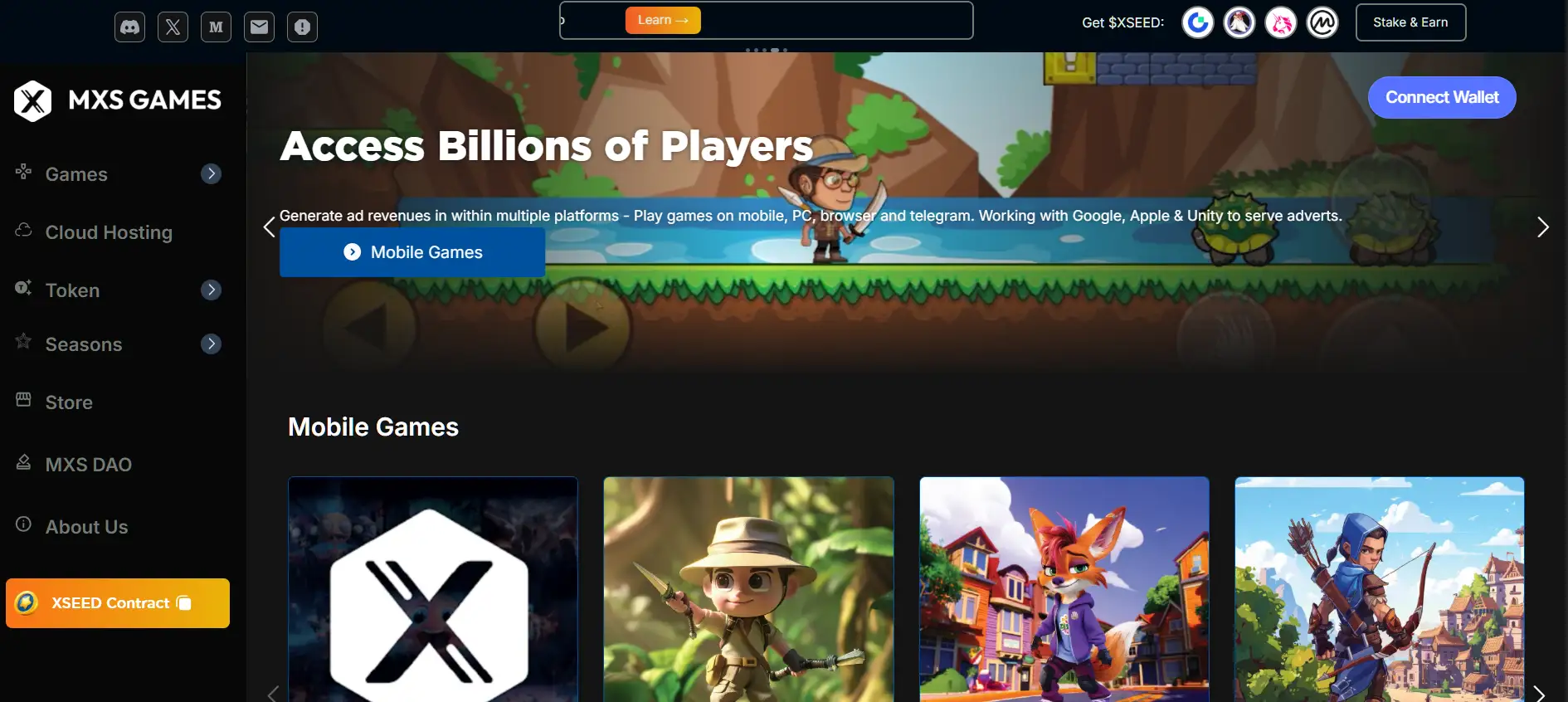
MetaXSeed (MXS Games): concept and ecosystem structure
MetaXSeed is building a multi-component gaming platform that unites studio-developed games, a digital asset marketplace, the XSeed Chain blockchain, and infrastructure for third-party developers. The project is designed as a Web2.5 environment where gameplay remains as simple as possible: the user plays familiar mobile, browser, or PC games, while the management of NFT, transactions, and servers operates behind an intuitive interface.
The ecosystem includes around 30 games across different genres. This multi-platform strategy allows MetaXSeed to attract both mainstream Web2 gamers and crypto-native audiences. This approach eliminates a common GameFi issue — the need to understand blockchain. A player may have no Web3 experience but can still benefit from digital ownership: item portability, an open economy, and the ability to trade NFT.
The node system is an important component: node license holders maintain the network, support games, and receive a share of ecosystem revenue. This makes MetaXSeed closer to a distributed cloud gaming platform rather than a typical Web3 project centered on a single game economy.
XSeed Chain and the platform’s technical architecture
XSeed Chain is the core technological foundation of MetaXSeed. It is an L1 network compatible with EVM and optimized for gaming processes: high speed, low fees, and instant operations. Its architecture is based on Avalanche technologies, enhancing stability and security.
The primary purpose of XSeed Chain is to ensure scalable gaming traffic. Unlike projects that operate on overloaded shared blockchains, MetaXSeed uses a specialized chain. Currently, the network runs in a beta model with a small number of validators, but the roadmap includes broader decentralization and DAO implementation.
For developers, XSeed Chain is convenient thanks to familiar EVM tools, making it easier to port games and NFT. This allows MetaXSeed to evolve into a platform for third-party studios seeking Web3 infrastructure without complex integration. As a result, the blockchain supports both first-party games and future external gaming ecosystems.
XSEED tokenomics and the digital asset model
The MetaXSeed economic system is built around the utility token XSEED, used as gas, an in-game transaction currency, for purchasing NFT and for node operations. It is designed as an accessible, mass-market token that forms a stable economic base for dozens of games and frequent microtransactions. NFT in MetaXSeed are functional rather than decorative and can be used across multiple games.
| Parameter | Description |
|---|---|
| Ticker | XSEED |
| Token type | Gas + utility |
| Max supply | 50 billion |
| Circulating supply | ~3 billion |
| Usage | gas, NFT, in-game operations, nodes |
| IDO starting price | $0.0007 |
| FDV | around $3.4 million |
| IDO platforms | GameFi, Gate.io Startup, Poolz and more |
| Vesting | 15% TGE + 5 months |
After reviewing these parameters, it becomes clear that XSEED is the key binding element of the entire MetaXSeed economy: it enables transactions, provides access to digital assets, powers in-game operations, and supports scalable ecosystem growth due to its low cost and frequent use.
MetaXSeed gameplay model and player features
The following section outlines the main gameplay features of MetaXSeed. An introductory explanation comes before the list, and a closing remark afterward for logical completeness.
The project aims to make gameplay equally accessible for beginners and experienced Web3 users. Web3 features are integrated so that players can use them “on demand”: they may play like in a regular mobile game or engage with NFT and rewards whenever they choose.
Key gameplay features:
-
Free-to-play accessibility makes the platform suitable for the mass market.
-
Seamless Web3 integration hides the complexity of blockchain.
-
Functional NFT allow item portability across games.
-
Cross-platform model supports PC, mobile devices, and browsers.
-
Rewarded ads make monetization similar to familiar Web2 games.
-
XSeed Chain transactions ensure high speed and low fees.
Thanks to these principles, MetaXSeed develops the Web2.5 concept where blockchain becomes part of the infrastructure rather than the core visible mechanic. This is important, as mass audiences prefer Web2 comfort over complex crypto interactions.
Partnerships, development prospects and key risks
MetaXSeed actively builds partnerships with IDO platforms, external developers, NFT marketplaces, and infrastructure providers. By leveraging Avalanche-based solutions and a distributed node model, the project achieves stronger technical resilience. The platform aims to gradually transition to DAO governance and develop a fully decentralized gaming ecosystem.
The platform’s future depends on delivering strong final products: the game library must be competitive in the Web2 space, and XSeed Chain must remain stable and reliable. If development proceeds successfully, MetaXSeed has the potential to occupy the niche between Web2 and Web3, becoming an example of mass-market Web2.5 gaming.
However, there are significant risks: low market capitalization, a young token economy, strong competition in GameFi, and the need for substantial investment in development and marketing. The project’s success depends on its ability to deliver high-quality games, stable services, and a safe economic infrastructure.











