
Pumpville World is a social multiplayer game on Solana with a pixel-art open world where users explore locations, gather resources, fish, craft items, complete quests, fight, and trade with each other. In 2026, the project expanded beyond its browser version: after winning the Solana Mobile MONOLITH Hackathon, the game became available in the Solana dApp Store for the Seeker smartphone and participated in the Seeker Summer campaign. Available public materials do not confirm Pumpville World v2 as a separate official game or standalone release — it is more accurate to describe it as the current stage of the continuously evolving Pumpville project. Its Web3 economy is connected to the PUMPVILLE token on Solana, while much of the core gameplay and the in-game Coins currency operate without recording every action on the blockchain.
Contents
- Pumpville World: Gameplay and the Evolution of a Social MMO on Solana
- Resources, Crafting, PvP and the In-Game Economy
- PUMPVILLE: Token, Coins and the Burn Model
- Solana Mobile Seeker and the Pumpville Mobile Version
- Pumpville World Development, Web3 Mechanics and Risks
1. Pumpville World: Gameplay and the Evolution of a Social MMO on Solana
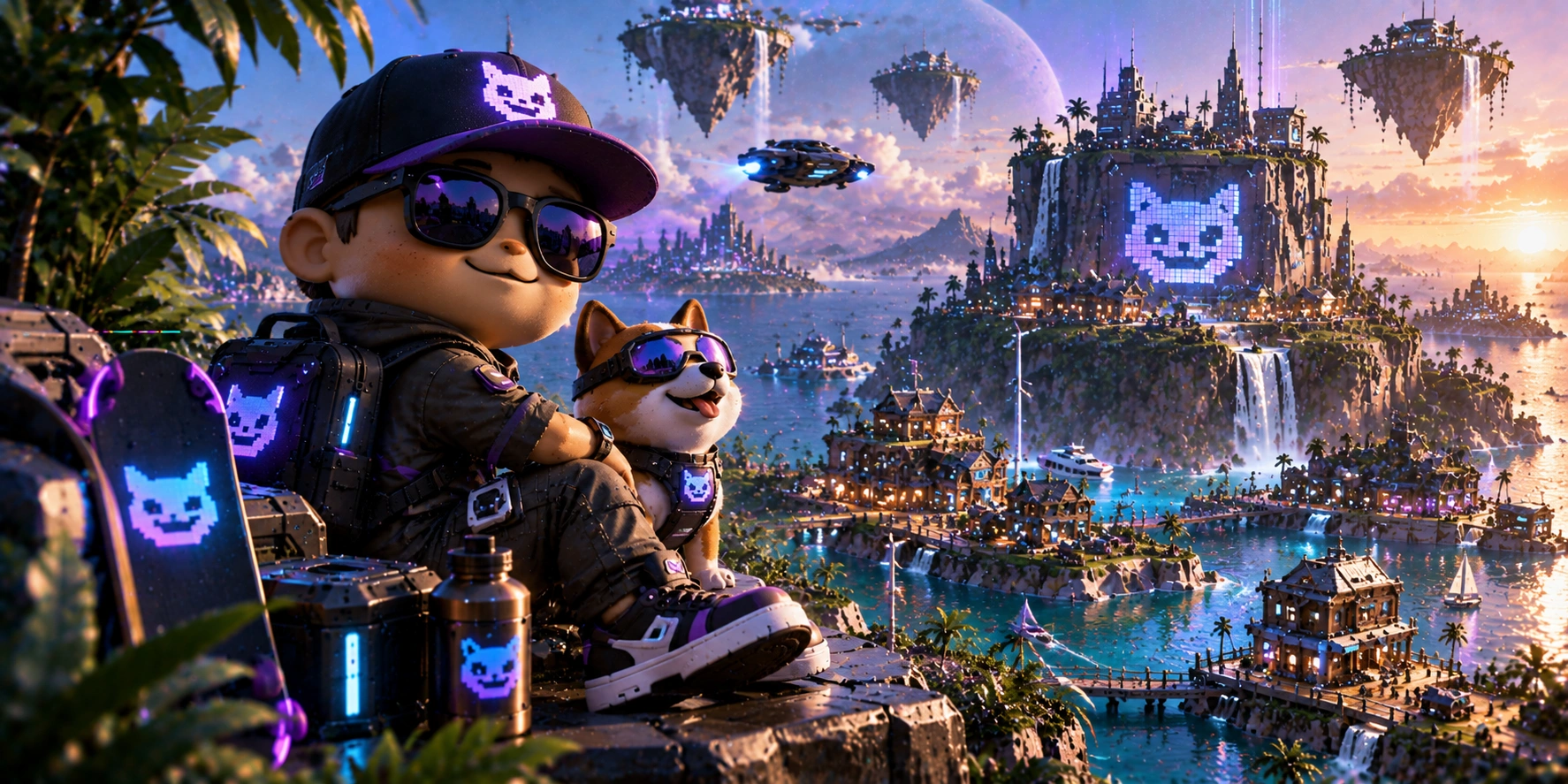
Pumpville is designed as a persistent social world rather than a collection of isolated blockchain mini-games. Players create a character, move around a shared map, meet other users, and choose their own activities. Available options include fishing, mining, resource gathering, treasure hunting, crafting, quests, PvE combat, and PvP. Social features include friends, private messages, gifts, and emotes.
Progression is tied to experience, resources, equipment, and collectible items. Users can obtain avatars and pets, gather materials, craft weapons and tools, cook food, and use items to continue exploring the world. Stamina limits certain activities and regenerates over time or through prepared food, connecting gathering and cooking with the broader progression system.
The competitive layer includes the Fight Pit and arena gameplay. The game is developing modes designed for both open PvP battles and more structured matches. In June 2026, the project conducted public testing of an updated Pumpville Arena, while subsequent updates continued to improve combat, weapon interactions, and damage display systems.
The term "v2" is therefore better used as an informal description of the modern version of Pumpville following a series of major updates. Official documentation describes the game as a product under active development and distinguishes between currently available features and planned systems. Available materials do not identify a standalone product officially titled Pumpville World v2.
2. Resources, Crafting, PvP and the In-Game Economy
The core gameplay loop is built around interaction with the world. Players collect stone, wood, and other materials, engage in mining and fishing, obtain items, and convert resources into tools or equipment. The developers regularly adjust resource spawn locations, stamina, weapon characteristics, and other parameters to connect individual activities within a unified economy.
The Marketplace enables value exchange between users. Resources, avatars, pets, accessories, and equipment can be traded, while recent updates expanded listings to include weapons, armor, and tools. This creates a player-driven economy, although the existence of a marketplace does not mean that every in-game item is an NFT: some items and transactions remain within the game's internal infrastructure.
Key Pumpville activities:
- exploring the shared pixel-art world and new areas;
- fishing, mining, and gathering natural resources;
- crafting weapons, tools, and other items;
- cooking and managing stamina;
- completing quests and earning experience;
- PvE battles against enemies and PvP between players;
- arena modes and the Fight Pit;
- collecting avatars, pets, and cosmetic items;
- trading through the player marketplace;
- social interaction, friends, messages, and community events.
This approach distinguishes Pumpville from GameFi projects where gameplay is primarily centered on token transactions. The free in-game currency and standard gameplay activities allow players to progress without being required to purchase PUMPVILLE, while blockchain is used for selected elements of the economy.
Some mechanics listed in the roadmap remain under development or may change. The documentation mentions new arena modes, seasonal events, staking, additional currency mechanics, partner zones, and other features, but planned elements should not be treated as already implemented solely because they appear on the roadmap.
3. PUMPVILLE: Token, Coins and the Burn Model
The Pumpville economy uses two primary currencies. Coins are a free off-chain currency that can be earned through gameplay and spent on basic items, fishing equipment, avatars, pets, and consumables. PUMPVILLE is the ecosystem's tradable token on Solana, designed for premium items and selected Web3 mechanics.
PUMPVILLE was launched through Pump.fun using a fair launch model. Its maximum supply is set at 1 billion tokens. A significant portion of the supply is in circulation, while subsequent token burns gradually reduce the available supply.
| Element | Purpose | Type | Blockchain Connection |
|---|---|---|---|
| Coins | Basic purchases and rewards | In-game currency | Off-chain |
| PUMPVILLE | Premium items and project economy | Solana token | Traded on-chain |
| Marketplace | Trading in-game items | Player-to-player market | Supports the PUMPVILLE economy |
| Burn | Reducing token supply | Tokenomics mechanism | Tokens are destroyed on-chain |
| Treasury | Rewards, events, and development | Ecosystem reserve | Receives a share of PUMPVILLE spending |
One of the main features of the tokenomics model is the distribution of PUMPVILLE spent through supported in-game mechanics. According to project documentation, 50% of this amount is permanently burned, while the remaining 50% goes to the treasury for player rewards, events, marketing, and ecosystem development. In-game token usage therefore creates both a token sink and a source of treasury funding.
However, some methods of earning PUMPVILLE have previously been described as planned or experimental features, including selected wagered games, golden chests, and staking. The existence of the token should therefore not automatically be interpreted as guaranteed play-to-earn income. PUMPVILLE's market price is determined by external demand and liquidity and may move independently of activity within the game itself.
4. Solana Mobile Seeker and the Pumpville Mobile Version
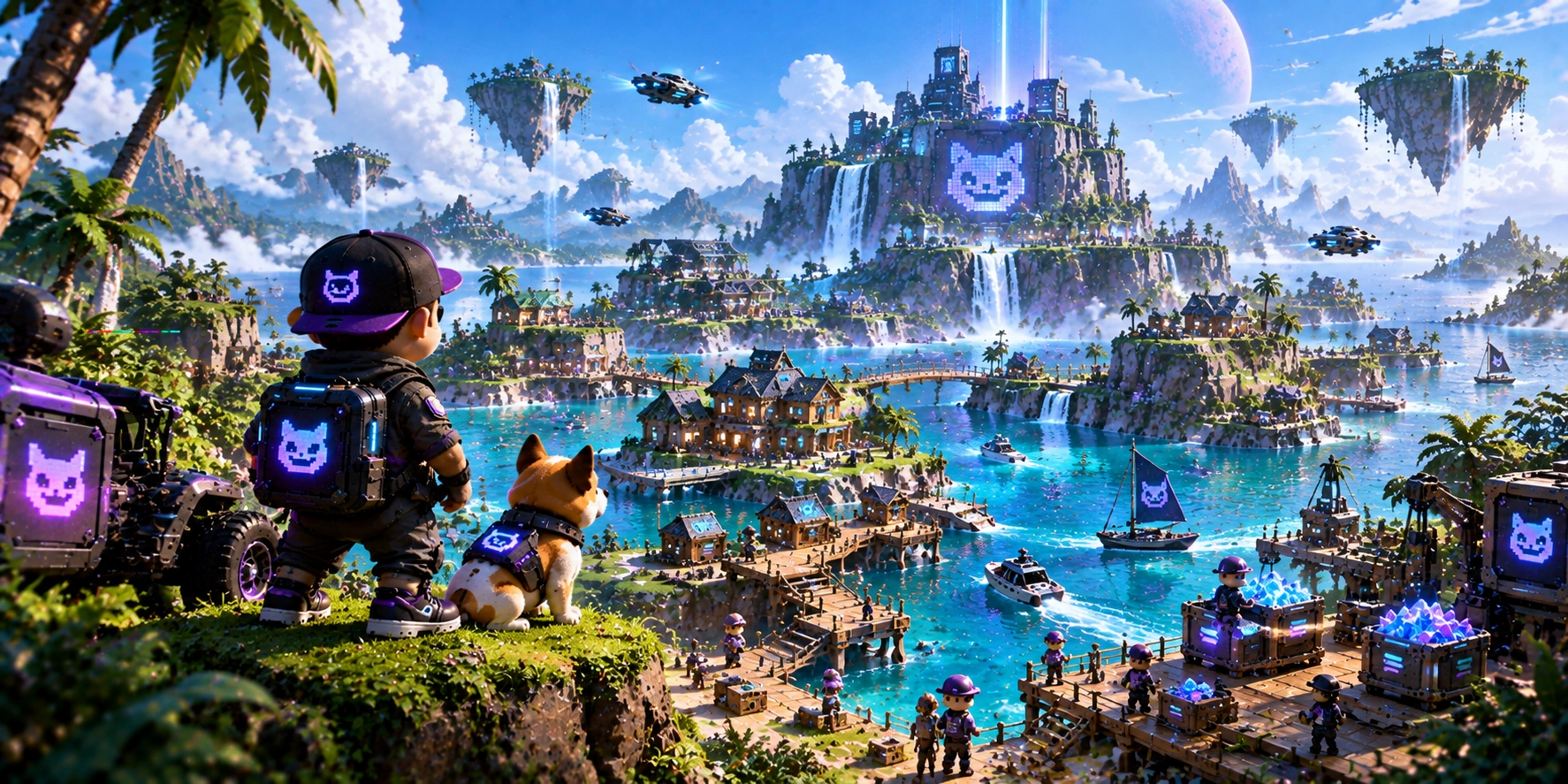
An important stage in Pumpville's development was its expansion into the Solana Mobile ecosystem. In spring 2026, the project became one of the winners of the MONOLITH Hackathon organized with participation from Solana Mobile and RadiantsDAO. More than 400 projects from 66 countries participated in the competition, while Pumpville was recognized as a mobile multiplayer game featuring gathering, trading, combat, and its own economy.
In late June 2026, Pumpville became available in the Solana dApp Store for Seeker. This is not simply a mobile web page: an Android application is distributed for the device and continues to receive updates. According to the Seeker catalog, version 1.2.1 was updated on August 30, 2026, while the team continued bringing new UI, gathering, combat, cooking, and social features to the mobile client.
The connection with Seeker became deeper during Seeker Summer Round 3. Players were offered special quests: connect a Seed Vault Wallet, create an account, receive a Welcome Pack from the Wizard Toly character, and then find his lost phone through a fishing quest. Participants received badges for completing these tasks as part of the Solana Mobile campaign.
The Pumpville team reported more than 8,000 new players during the first 24 hours of its participation in Seeker Summer. This figure represents a specific acquisition campaign rather than the number of permanently active players. Nevertheless, the integration demonstrates a practical use of Solana Mobile infrastructure: Seeker serves as an application distribution channel, while Seed Vault provides a way to interact with a Solana wallet without transferring private keys into a conventional mobile application.
5. Pumpville World Development, Web3 Mechanics and Risks
Pumpville is developing gradually, with the team updating gathering, crafting, combat, social features, and the marketplace. The roadmap also includes partner zones, new biomes, transportation, user-created quests, and governance, although these elements should not be considered fully implemented.
Web3 primarily serves an economic and infrastructure role. Movement, fishing, resource gathering, and combat do not require every action to be recorded on Solana. The on-chain layer is used for PUMPVILLE and related operations, while the core game logic remains off-chain.
The main risks are associated with the project's early stage and the PUMPVILLE token. Its price depends on demand, liquidity, and player activity. The burn mechanism reduces supply but does not guarantee an increase in token value.
Pumpville already offers an accessible game world, gathering, fishing, crafting, combat, social features, a marketplace, and a mobile version for Seeker. At the same time, staking, certain token-reward mechanics, governance, and expanded partner zones remain at different stages of development, meaning that the economy and game balance may change.
Pumpville World is best viewed as an evolving social MMO with an additional Web3 layer on Solana. Integration with Solana Mobile, Seed Vault, and Seeker strengthens the project's mobile direction, while the v2 designation is better understood as an updated stage of the project rather than a separately confirmed official release.