
Skiesverse is a blockchain MMORPG that combines tactical RPG mechanics, digital assets, a player-driven economy, and open-world exploration within a single gaming ecosystem. The project blends traditional multiplayer role-playing gameplay with Web3 technologies, enabling players to use NFTs and in-game tokens across different aspects of the experience. The developers place particular emphasis on a production-based economy, player interaction, and the evolution of a virtual world where many resources are created and processed by the community itself. By combining familiar MMORPG mechanics with blockchain infrastructure, Skiesverse represents one of the modern approaches to GameFi development.
Contents
- What Is Skiesverse and How the Web3 Game Works
- Gameplay: World Exploration and Player-Driven Economy
- Tokenomics and NFTs in Skiesverse
- Web3 Technologies Behind the Project
- Key Features and Future Outlook
1. What Is Skiesverse and How the Web3 Game Works
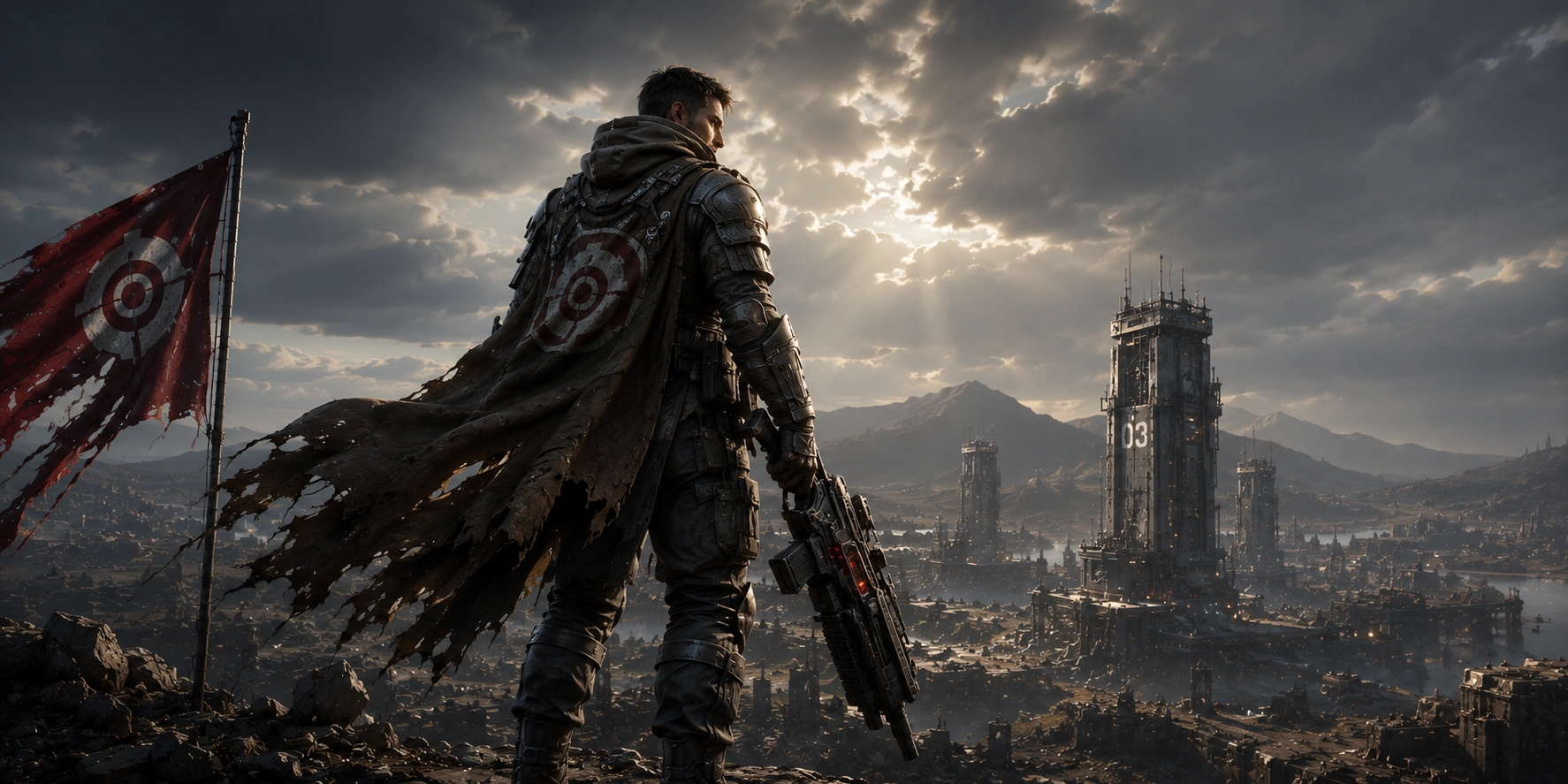
Skiesverse is a multiplayer blockchain game that combines MMORPG gameplay, tactical RPG mechanics, and a player-driven economy. The game is set in the post-apocalyptic world of Adaran, where players explore territories, complete quests, gather resources, build enterprises, and interact through trading, crafting, and clan activities.
The project's core concept is to combine traditional gameplay with digital ownership. NFTs are designed not only as collectible assets but also as functional in-game items, including characters, equipment, businesses, and other assets that influence character progression and participation in the game's economy.
The Skiesverse economy revolves around player activity. Users gather raw materials, process resources, craft equipment and items, and trade them with other players. This creates a continuous circulation of resources and supports a player-driven economy rather than relying solely on pre-generated assets.
At the same time, Skiesverse aims to reduce the entry barrier for new players. Core gameplay can be experienced without purchasing NFTs, while blockchain technology is primarily used where digital ownership verification and economic transactions are required.
2. Gameplay: World Exploration and Player-Driven Economy
Skiesverse combines tactical RPG mechanics, MMORPG gameplay, and a player-driven economic system. Players explore a post-apocalyptic world, complete quests, gather resources, and compete for control of territories. One of the project's defining features is the close integration between gameplay and the in-game economy, where most resources are created and utilized by players themselves.
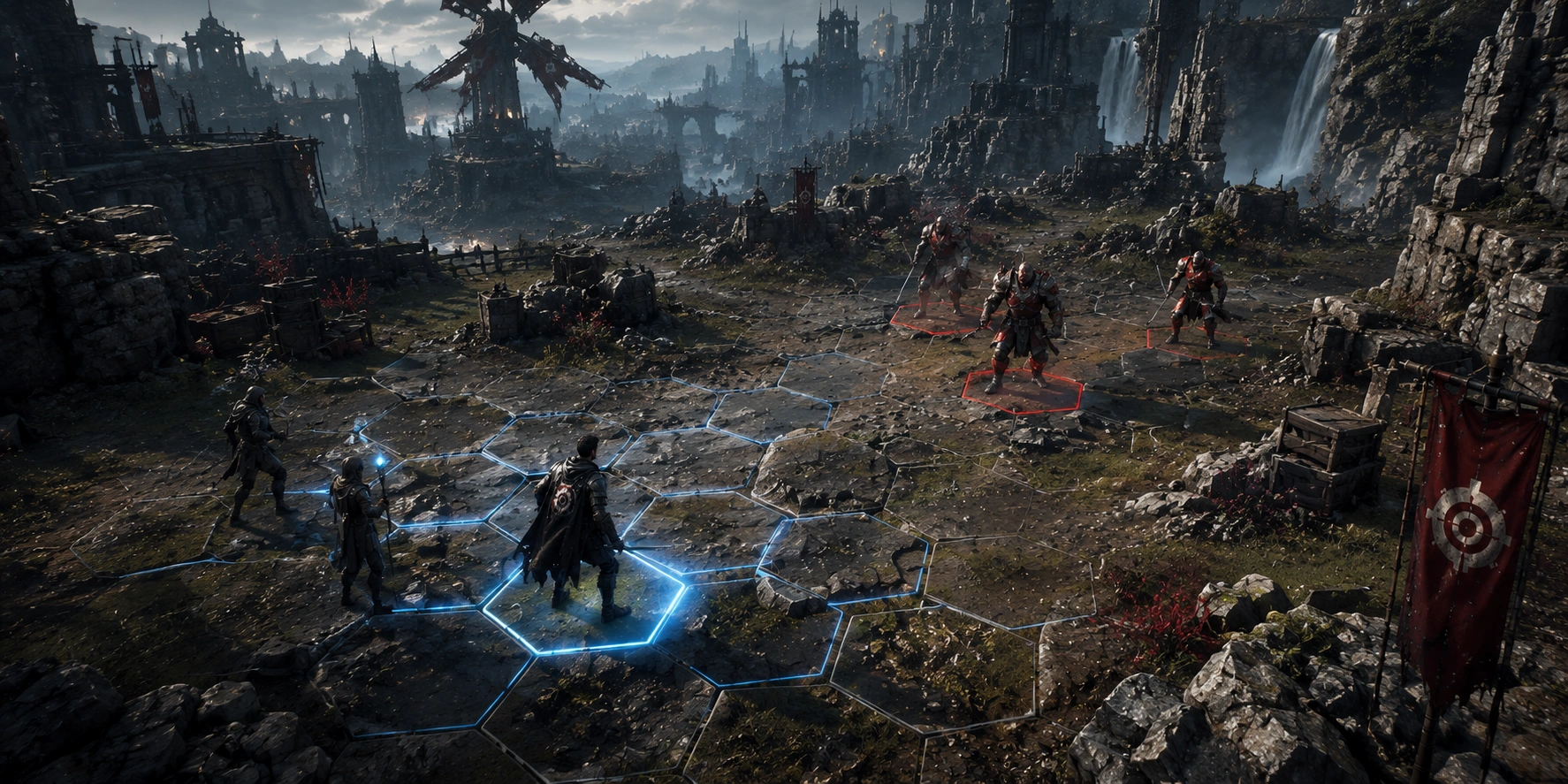
Exploration takes place through a global map connecting multiple regions. Combat is turn-based and fought on a hexagonal battlefield, where positioning, tactical decisions, and efficient use of equipment are often more important than character statistics alone.
The production system plays a major role in the gameplay. Players collect raw materials, refine them, craft weapons, armor, and other items, then either use them personally or sell them on the in-game marketplace. This creates a continuous flow of resources that supports the game's player-driven economy.
Most gameplay calculations, including combat and economic systems, are processed on the server side. This approach helps improve stability while reducing the risk of client-side exploits and unauthorized modifications.
3. Tokenomics and NFTs in Skiesverse
The project's economic model is built around two native tokens, each serving a distinct purpose. This approach separates digital asset operations from everyday in-game activities, reducing reliance on a single utility token and creating a more structured economic system.
The ecosystem includes NFT characters, weapons, armor, and other digital assets. Ownership of these items provides access to additional gameplay opportunities, including character progression, equipment upgrades, and participation in specific economic activities. According to the developers, players can also experience the game through a guest mode without purchasing NFTs.
- Skies Coin is used for NFT-related activities, item upgrades, asset rentals, and several clan management functions.
- Adaran Coin supports most day-to-day in-game operations, including rewards, resource trading, jobs, and interactions within the game's economy.
- NFT assets serve practical gameplay purposes rather than functioning solely as collectibles.
- Part of the economy is based on player interaction through production, trading, and business management.
The separation of responsibilities between the two tokens is part of the project's player-driven economy, which is designed to maintain a continuous circulation of resources while supporting economic balance. The dual-token model also distinguishes routine gameplay activities from digital asset management, making the overall economy more efficient and organized.
In addition, the value of NFTs is determined not only by ownership but also by their practical use within the game, including character development, production, and trading. This approach reflects a broader GameFi trend in which blockchain technology supports the in-game economy instead of serving as its primary purpose.
4. Web3 Technologies Behind the Project
Skiesverse is being developed as a cross-platform Web3 game for PC and mobile devices. Built with the Unity engine, the project relies on Ethereum scaling technologies, including Immutable and zkEVM, to support NFTs and digital asset transactions with improved performance and lower transaction fees.
The developers separate gameplay from blockchain functionality. World exploration, combat, resource gathering, and production are processed on the server side, while blockchain technology is mainly used to verify ownership of NFT assets and facilitate economic transactions. This architecture reduces the dependence of gameplay on blockchain transaction speeds.
Another important component is the project's circular economy. Players gather resources, refine them, craft equipment, and return finished products to the game world, allowing economic activity to emerge naturally through player interaction rather than relying on pre-generated assets.
Players can connect a crypto wallet to access Web3 features and use NFT assets, although the game can also be explored without purchasing digital items. This allows newcomers to experience the core gameplay before deciding whether to engage with the blockchain-based features.
5. Key Features and Future Outlook
Skiesverse is among the Web3 projects that aim to combine a traditional MMORPG experience with a player-driven economy and blockchain technology. Rather than focusing exclusively on NFT trading, the game emphasizes production chains, clan systems, territorial control, and meaningful player interaction within a persistent virtual world.
According to the project's roadmap, future development includes expanding the game world with new regions, user-generated content, dungeons, story-driven quests, and additional multichain infrastructure. As with many Web3 games currently under active development, the timeline for individual milestones may change as the project evolves.
| Feature | Skiesverse |
|---|---|
| Genre | Post-apocalyptic tactical MMORPG / RPG |
| Game Economy | Player-driven circular economy with resource production |
| NFT Assets | Characters, weapons, armor, businesses, and other in-game assets |
| Tokens | Two native tokens — Skies Coin and Adaran Coin |
| Core Gameplay | World exploration, resource gathering, crafting, clans, PvP, and business management |
| Supported Platforms | Web, PC, and mobile devices (according to the project roadmap) |
| Blockchain Infrastructure | Immutable, zkEVM, and Web3 wallet integration |
Skiesverse is an example of a project seeking to combine traditional MMORPG mechanics with digital ownership and a player-driven economy. Its concept extends beyond NFT integration by creating a virtual world where production, trade, business management, and territorial control become interconnected parts of a unified economic system. The project's long-term development will depend on the implementation of its roadmap, the expansion of game content, and the continued growth of its player community.











