
The Ethereum Layer 2 ecosystem is entering a stage that many analysts describe as a period of natural selection. While the market rapidly expanded with new rollups and specialized networks in 2023–2025, by 2026 it has become clear that not every project will be able to retain users, liquidity, and developer activity. Competition is shifting from purely technical advantages to ecosystem quality, audience access, and economic sustainability. This is why the question of which L2 networks can secure long-term positions is becoming one of the key issues for Ethereum infrastructure.
Contents
- Why the Ethereum Layer 2 Market Has Entered a Consolidation Phase
- What Factors Determine Layer 2 Survival in 2026
- Which Networks Have the Best Chance to Maintain Leadership
- Comparison of the Largest Ethereum Layer 2 Networks
- Why Many L2 Networks Will Disappear and What the Market May Look Like After Consolidation
1. Why the Ethereum Layer 2 Market Has Entered a Consolidation Phase
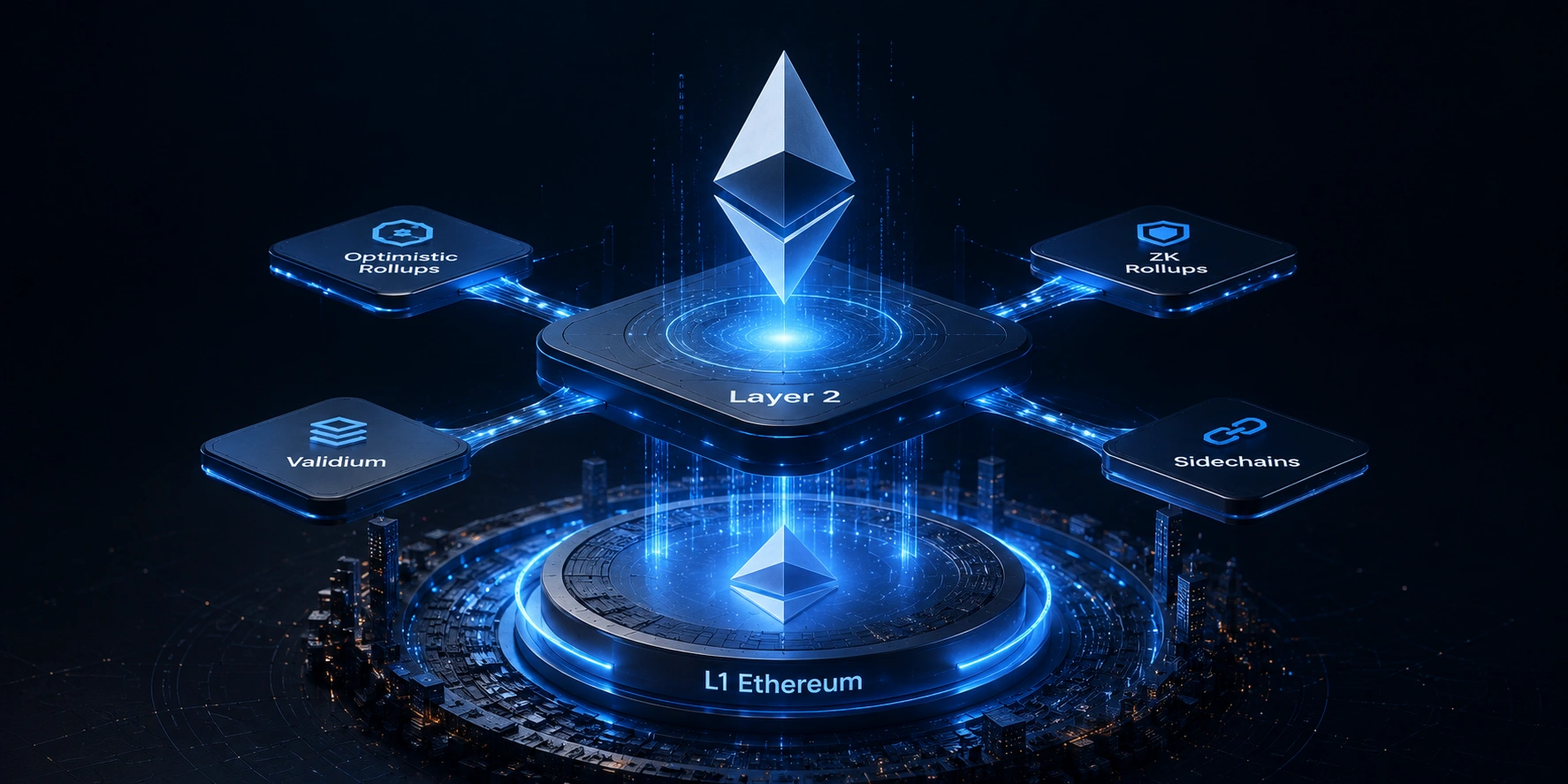
The emergence of Layer 2 solutions was a response to Ethereum’s main limitation: restricted throughput on the base layer and high transaction fees. Rollup networks made it possible to move most transaction processing outside Layer 1 while preserving Ethereum security through data publication and cryptographic proofs.
The situation changed significantly after the implementation of EIP-4844, also known as Proto-Danksharding. The new data storage mechanism based on blob transactions substantially reduced the cost of publishing data for rollup networks, which led to a major decline in user fees. However, lower infrastructure costs also made it easier to launch new Layer 2 networks, causing rapid growth in the number of projects with similar functionality.
Previously, competition was largely built around cheaper transactions. By 2026, this factor is no longer enough to define leadership. Users can already perform operations at very low cost across many networks. Liquidity, the number of applications, real activity levels, and the ability of an ecosystem to develop without constant external funding are becoming more important.
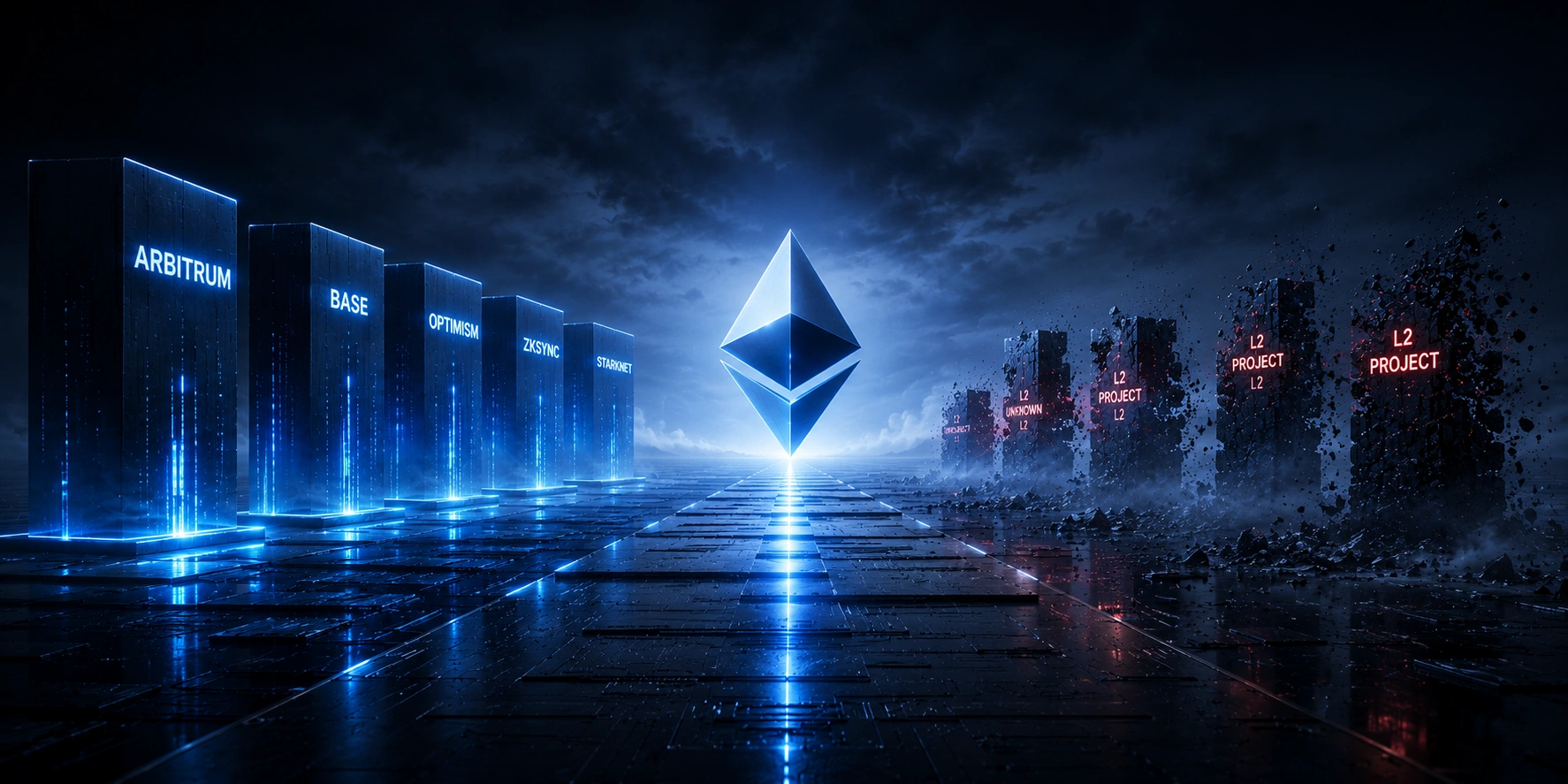
For this reason, the market is gradually moving toward consolidation. Analysts note that most users and capital are becoming concentrated in a limited number of major networks, while dozens of smaller rollups face difficulties attracting developers and maintaining activity.
2. What Factors Determine Ethereum Layer 2 Survival in 2026
Technical architecture remains an important part of success, but it no longer guarantees leadership on its own. Most modern Layer 2 networks use established Optimistic Rollup or Zero-Knowledge Rollup models, which means the differences between them are gradually narrowing.
Today, the ecosystem plays a much larger role. The more decentralized applications, liquidity, and users are concentrated within a network, the harder it becomes for competitors to pull that audience away. This is why mature ecosystems gain an additional scale advantage: new projects prefer to launch where users and capital already exist.
Another key factor is the network’s distribution model. For example, projects integrated with major crypto exchanges or technology platforms gain access to an almost ready-made user base. This can significantly reduce the cost of attracting new participants compared with independent L2 networks.
The economics of the network are also becoming increasingly important. Many Layer 2 projects launched with large user incentive programs. After token distributions ended, part of the activity disappeared because a significant share of transactions had been driven mainly by rewards. As a result, the market is increasingly evaluating not the raw number of transactions, but real application usage, stable fee revenue, and long-term developer activity.
3. Which Networks Have the Best Chance to Maintain Leadership
Despite the existence of dozens of Layer 2 networks, the market is gradually concentrating around a limited number of ecosystems. This is linked not only to the technical advantages of individual networks, but also to accumulated liquidity, user numbers, support from major companies, and infrastructure maturity. That is why analysts increasingly speak about market consolidation rather than the continued expansion of successful rollups.
Today, leadership is defined by several criteria at once: total value locked or secured, the number of active developers, the diversity of decentralized applications, the speed of upgrades, and architectural security. Low fees alone are no longer a strong competitive advantage because most modern rollup networks offer comparable transaction costs.
- Arbitrum — maintains a strong position thanks to one of the largest DeFi ecosystems, deep liquidity, and the development of Arbitrum Orbit for launching specialized chains.
- Base — continues to grow through integration with the Coinbase ecosystem and a focus on consumer-facing applications.
- Optimism — focuses on the Superchain and OP Stack, bringing multiple compatible Layer 2 networks into a shared infrastructure layer.
- Starknet — remains one of the leading ZK-rollup networks due to its use of STARK proofs and high computational scalability.
- zkSync Era — continues to develop the Zero-Knowledge Rollup segment, focusing on fast transaction confirmation and Ethereum compatibility.
The most resilient networks are likely to be those that already have established ecosystems and can attract users without large-scale subsidy programs. Integration with major centralized platforms, payment services, and institutional market participants can also provide an additional advantage.
Most new Web3 applications are likely to form around these ecosystems. At the same time, smaller independent L2 networks will find it increasingly difficult to compete for liquidity, as developers tend to launch products where a broad audience already exists.
4. Comparison of the Largest Ethereum Layer 2 Networks
Each of the largest Layer 2 networks follows its own development strategy. Some focus on the institutional sector, others target mass-market users, while others build specialized solutions for application scaling and computation.
When choosing a platform, developers evaluate not only transaction costs, but also infrastructure maturity, developer tools, ecosystem support, and long-term growth prospects.
| Project | Core Technology | Key Advantages | Main Limitations |
|---|---|---|---|
| Arbitrum | Optimistic Rollup | Large DeFi ecosystem, deep liquidity, Arbitrum Orbit | Strong competition within its own ecosystem |
| Base | OP Stack | Coinbase integration, fast-growing user base | No native governance token |
| Optimism | Optimistic Rollup | Superchain, modular architecture, broad OP Stack adoption | Lower liquidity compared with Arbitrum |
| zkSync Era | ZK Rollup | Fast transaction confirmation, cryptographic proofs | Ecosystem remains smaller than leading Optimistic Rollups |
| Starknet | STARK Rollup | High computational efficiency and scalability | More complex development environment |
In the coming years, the differences between networks will be defined less by transaction fees and more by ecosystem depth and the number of applications with real demand. These indicators are becoming decisive for both developers and users.
5. Why Many L2 Networks Will Disappear and What the Market May Look Like After Consolidation
Most new Layer 2 networks were launched during a period of rapid market growth, when user incentive programs, token distributions, and temporary financial rewards were the main tools for attracting activity. After these campaigns ended, some users left the ecosystems and liquidity volumes gradually declined. As a result, many smaller networks faced a shortage of activity and weaker developer interest.
Infrastructure standardization is another important factor. Thanks to OP Stack, Arbitrum Orbit, and similar tools, launching a new Layer 2 has become significantly easier. However, this also lowers the technological barrier to entry and makes the unique advantages of individual projects less visible. If a network does not offer a strong ecosystem, specialized services, or a stable user base, it becomes difficult to compete with recognized leaders.
Security is also becoming a key criterion. The development of decentralized fraud proofs and the transition of major Optimistic Rollups toward more mature protection models raise the standards for the entire sector. Users and institutional participants increasingly prefer networks with proven reliability, transparent architecture, and a longer operating history.
By the end of 2026, the Ethereum Layer 2 market is likely to become significantly more concentrated. Instead of dozens of competing rollups, most activity may be centered around several major ecosystems capable of providing a high level of security, sufficient liquidity, mature infrastructure, and a stable flow of new applications. For Ethereum as a whole, this consolidation may become a natural stage of development because it can reduce liquidity fragmentation, improve service compatibility, and make Layer 2 easier to use for both developers and end users.











