
The Nemesis is an ambitious blockchain project that combines virtual worlds, gameplay mechanics, and Web3 economy into a single platform. By incorporating elements of play‑to‑earn, NFTs, AR/VR, and the metaverse, the project allows users not only to interact within virtual spaces but also to earn from it. Users can own digital assets like lands, NFTs, items, and tokens, which makes The Nemesis appealing to both gamers and brands and content creators.
- The Concept and Mission of The Nemesis Project
- Tokenomics and Internal Economy: NEMS, COINS, NFT, and Lands
- Virtual Worlds and Metaverse Features: AR/VR Integration and Social Interaction
- Gameplay Mechanics and P2E Opportunities: Interaction with Brands and Content Monetization
- Project Development and Potential Risks: Scaling Paths and Competition
The Concept and Mission of The Nemesis Project
The Nemesis is a multi-layered ecosystem that aims to integrate virtual worlds, social interaction, and the Web3 economy. The core focus of the project is to create a metaverse where users can not only play but interact with content, create virtual worlds, earn from digital assets, and participate in important economic processes. The platform is designed for both gamers and content creators, providing tools to work with NFTs, tokens, and virtual worlds. The main concept of The Nemesis lies in democratizing access to Web3, allowing Web2 users to easily enter the metaverse and start interacting with digital assets.
The project is positioned as more than just a game: it is an ecosystem where users are not limited to gaming experiences but can also interact with virtual worlds, become owners of lands and assets, and participate in commercial and creative activities.
Tokenomics and Internal Economy: NEMS, COINS, NFT, and Lands
The NEMS token is the main tool in The Nemesis economy. It serves as a medium of exchange and is an ERC‑20 token based on Ethereum. NEMS is used to purchase virtual lands (Lands), in-game items, NFTs, and to convert the in-game currency COINS.
In addition to NEMS, the game uses a stable in-game currency called COINS, which is pegged to 0.01 USD and is used for everyday transactions such as purchasing skins, event tickets, accessories, and more. NFTs and Lands play an important role in the ecosystem — digital assets that provide ownership rights and can be exchanged or sold. Creating and purchasing virtual lands becomes a key element of the gameplay experience, offering users not only entertainment but also financial benefits.
| Resource | Percentage of Total Token Supply |
|---|---|
| P2E Rewards (Player Rewards) | 35% |
| Company Reserve | 24% |
| Creator Program | 15% |
| Team and Founders | 10% |
| Liquidity for CEX & DEX | 10% |
| Private Sale | 3% |
| Advisors | 3% |
This distribution helps maintain a balance between the long-term sustainability of the project, incentives for players and developers, and the ability to scale and attract new users.
Virtual Worlds and Metaverse Features: AR/VR Integration and Social Interaction
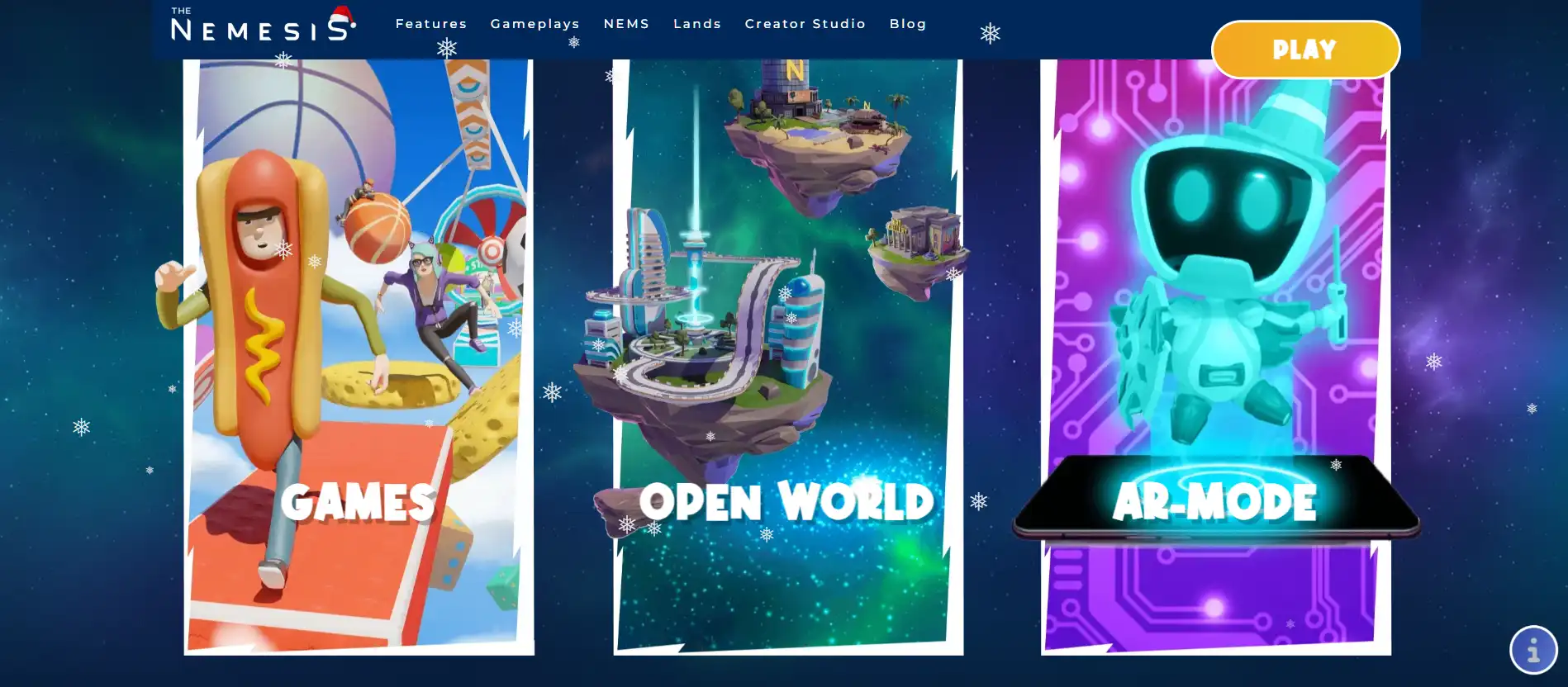
The Nemesis offers a unique experience for interacting with virtual worlds, supporting both AR (augmented reality) and VR (virtual reality) technologies. The project allows users to “project” virtual assets into the real world, opening new opportunities for social activity and shared experiences. Through mobile applications, users can interact with digital characters and objects, exchange them, take photos, and share them on social networks, which increases engagement.
Additionally, The Nemesis plans to expand its AR/VR support, allowing users to immerse themselves in deeper virtual worlds through VR headsets. Thus, the project not only attracts players from traditional platforms but also develops comprehensive tools for the development of new formats of interaction.
Beyond the technological component, the project emphasizes creating a strong social aspect. Users can build their virtual homes, host events, organize social interactions, and participate in quests and competitions. The economy of the metaverse actively supports content creation and collaboration between users and brands.
Gameplay Mechanics and P2E Opportunities: Interaction with Brands and Content Monetization
The gameplay mechanics of The Nemesis encompass elements of P2E (play‑to‑earn), where users can earn in-game currency COINS and NEMS tokens by engaging in various activities within the virtual space. The platform actively supports the creation and purchase of NFTs, including characters, skins, accessories, and virtual lands (Lands), which are valuable assets in the game.
Important Opportunities for Players:
-
Earning through P2E: users can earn COINS and NEMS by participating in various activities in the metaverse, including gaming and social interaction.
-
Owning and Trading NFTs: the ability to own NFTs such as skins, items, and characters, which can be traded and sold on the marketplace.
-
Virtual Lands (Lands): purchasing and owning lands in the virtual world. This is not just a game, but an opportunity to own a real digital asset.
-
Content Creation: users can create their own worlds, landscapes, and content, then monetize them through sales or rentals.
Additionally, The Nemesis actively collaborates with brands, providing them with a platform to create virtual events, promote products and services. Companies can use the metaverse as a new marketing channel, interacting with users through creative activities, introducing virtual goods, and collaborating with content creators. Interaction with brands and commercial activities allows participants in the metaverse to earn both in real life and in the virtual space.
Project Development and Potential Risks: Scaling Paths and Competition
Like any ambitious project, The Nemesis faces several key risks. First, the metaverse and Web3 market remains highly competitive. Every project strives to capture user attention, and not all will survive. Issues with attracting and retaining users, changes in the target audience's interests, as well as volatility in the crypto market could impact the long-term stability of the project.
Moreover, the economic model of The Nemesis relies on the liquidity of NFTs and virtual lands, as well as the stability of demand for NEMS and COINS tokens. A decline in the price of NFTs or other virtual assets could seriously undermine the value of the ecosystem.
Nonetheless, the project has ambitions for scaling. In 2025, a fundraising round is planned to attract funds for further development, marketing, and expanding the user base. This will provide the project with additional resources to strengthen its position in the market and expand functionality.
However, success will depend on The Nemesis's ability to maintain a balance between innovation, user experience, and a stable economy. Real risks associated with cryptocurrency market volatility and competition in the metaverse space should not be underestimated.











