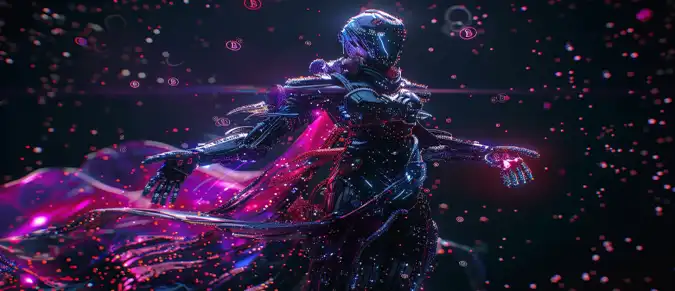

The development of blockchain technology has introduced a new gaming model where users gain true ownership of digital assets. Aether Games is one of the notable projects in this space, combining games, an NFT-based economy, its own token, and a marketplace into a unified ecosystem. Unlike traditional online games, players here can fully own, trade, and use their assets independently. This article explores the technology, economic model, and potential of Aether Games within the GameFi industry.
Contents
- General concept and goals of Aether Games
- Technological architecture and blockchain foundation
- Games and products of the Aether Games ecosystem
- Economic model and token utility
- Industry impact and future development prospects
1. General concept and goals of Aether Games
Aether Games is a development studio and Web3 ecosystem that creates gaming worlds where digital assets are part of a real economy. The main goal of the project is to combine traditional gameplay with blockchain technology, giving players true ownership of in-game items. Unlike traditional games, where developers control all assets, ownership here is secured on the blockchain, ensuring transparency and independence.
The project focuses on building a unified gaming universe with deep lore and interconnected products. This allows players to use their digital assets across multiple games and services within the ecosystem, increasing their value and utility. The platform is designed for both Web3 users and traditional gamers, offering an accessible and intuitive experience without requiring technical knowledge.
A key part of the strategy is a transmedia approach that includes different game genres and multimedia content. This helps expand the audience and create a cohesive digital franchise where each product contributes to the overall universe. It also strengthens the community and increases long-term ecosystem value. Developers aim to simplify blockchain interactions, making them seamless and user-friendly. This reduces the entry barrier and makes adoption easier for new users. In the long term, this model could become a new standard for digital ownership in gaming.
2. Technological architecture and blockchain foundation
The Aether Games ecosystem is built on Ethereum and Polygon blockchains. This combination ensures both security and scalability. Ethereum provides reliability and decentralization, while Polygon enables faster transactions with lower fees. As a result, users can interact with digital assets efficiently and cost-effectively.
The blockchain performs several key functions. First, it records ownership of NFTs and other digital assets. Second, it ensures transparency for all transactions, including buying, selling, and trading items. Third, smart contracts automate processes such as asset creation and reward distribution.
The architecture also includes a marketplace, gaming services, and token management systems. These components work together to create a unified infrastructure. This allows users to move assets between games while preserving their value. Wallet integration further simplifies access to digital assets, making the system more accessible even for non-technical users.
This design makes the ecosystem flexible and scalable. New features and games can be added without major restructuring. The modular architecture also enables gradual innovation while reducing risks and improving overall system stability.
3. Games and products of the Aether Games ecosystem
One of the key strengths of Aether Games is the diversity of its gaming products. Each game offers a unique experience while remaining connected through a shared economy and universe. This creates a cohesive digital world where player actions and assets can have cross-platform value. This approach increases engagement and encourages long-term participation.
Main ecosystem products include:
- Trading card game — allows players to collect decks, battle opponents, and use NFT-based cards.
- Auto-battler — a strategic game featuring automated combat mechanics and tactical gameplay.
- Multimedia content — expands the universe and strengthens narrative depth.
- Marketplace — enables trading and exchange of digital assets.
- NFT asset system — provides ownership and progression of in-game items.
Each product is designed for interoperability within the ecosystem. Players can use their assets across different games, increasing their overall value. Multiple game genres attract diverse audiences and help build a strong community. This also reduces reliance on a single product.
Developers also focus on high-quality graphics and user interface design. This ensures competitiveness with traditional games. Modern visuals and immersive gameplay attract both Web3 users and mainstream gamers.
4. Economic model and token utility
The project’s economy is built around the $AEG token and NFTs. The token serves multiple purposes, including payments, participation in ecosystem activities, and asset creation. NFTs represent unique digital items that can be used in games or traded on the marketplace. Together, they form the foundation of the ecosystem’s digital economy.
| Element | Function | Player benefit |
|---|---|---|
| $AEG token | Main payment currency | Allows players to purchase items and participate in the economy |
| NFT | Unique digital assets | Provide ownership of in-game items |
| Marketplace | Trading platform | Allows buying and selling of assets |
| Staking | Reward mechanism | Allows users to earn additional tokens |
This model creates a self-sustaining digital economy. Players can earn value through gameplay and asset ownership. The native token enables internal economic control, increasing ecosystem independence.
Blockchain transparency ensures all transactions are verifiable. This builds trust and reliability. Over time, such economic models may become standard in digital gaming.
5. Industry impact and future development prospects
Aether Games represents a new generation of blockchain gaming platforms focused on decentralization and player ownership. This approach gives players more control and creates a more transparent ecosystem. Unlike traditional games, players become active participants in the digital economy.
The ecosystem is scalable and can expand through new games and features. Blockchain technology ensures secure asset ownership and transparent transactions. This creates a strong foundation for long-term growth and adoption.
In the future, Aether Games could integrate into the broader Web3 ecosystem, enabling new use cases and interoperability. By combining gameplay, NFTs, and digital economics, the project creates a next-generation gaming ecosystem with strong growth potential.











