

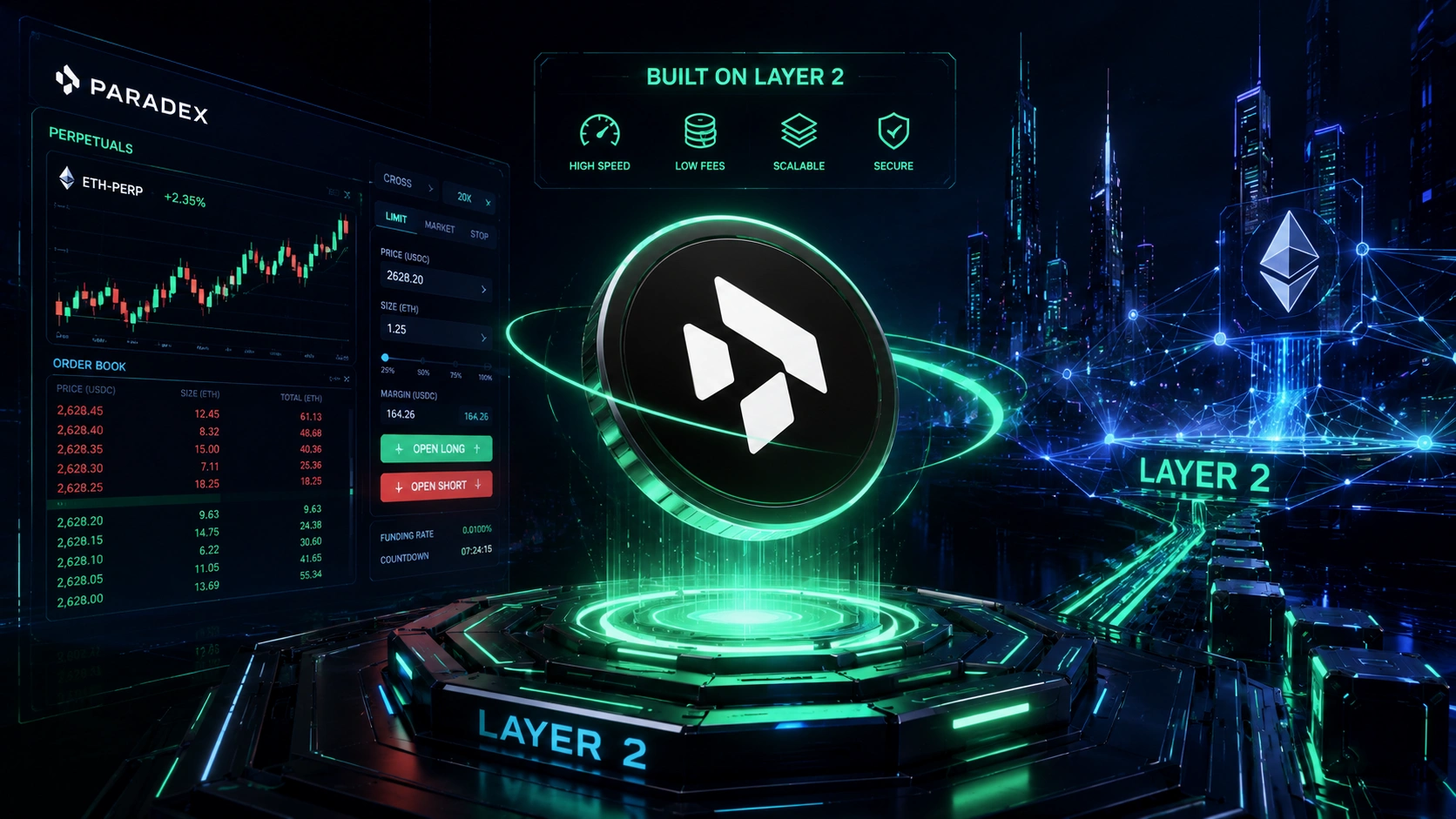
Paradex is a decentralized trading platform for cryptocurrency derivatives built on Ethereum Layer 2 technology. The project is designed for users who require high-speed order execution, low transaction costs, and self-custody of digital assets without relying on a centralized intermediary. Unlike most traditional decentralized exchanges that use automated market makers (AMMs), Paradex is based on a central limit order book (CLOB) model. The emergence of platforms like Paradex reflects the broader evolution of the DeFi ecosystem toward more sophisticated financial infrastructure and professional-grade trading solutions.
Contents
- What Is Paradex and What Problem Does It Solve?
- How the Paradex Architecture Works
- Key Features of the Paradex Platform
- Paradex Compared to Other DEX Models
- Advantages, Limitations, and Future Outlook of Paradex
1. What Is Paradex and What Problem Does It Solve?
Paradex is a decentralized exchange designed for trading cryptocurrency derivatives. Its primary focus is on perpetual futures contracts, allowing traders to open long and short positions without a fixed expiration date. These instruments are widely used for hedging, speculation, and managing market exposure in the digital asset ecosystem.
Unlike many early decentralized exchanges that primarily facilitated spot token swaps through liquidity pools, Paradex adopts an order book model. This allows users to place both market and limit orders, with prices determined by matching buy and sell orders instead of relying on automated pricing algorithms.
Another distinguishing feature of the platform is its combination of decentralized asset custody with a trading experience similar to that of centralized exchanges. Users retain full control of their funds through Web3 wallets, while settlements are processed using Layer 2 infrastructure. This approach reduces congestion on the Ethereum mainnet and significantly improves transaction speed.
The emergence of platforms such as Paradex reflects the ongoing evolution of decentralized finance. While the first generation of DEXs focused mainly on token swaps, newer protocols increasingly provide advanced trading infrastructure, capital management tools, and professional-grade financial products.
2. How the Paradex Architecture Works
Paradex is built on Ethereum Layer 2 technology, enabling high transaction throughput while maintaining the security guarantees of the Ethereum blockchain. By processing transactions off the main chain and settling them securely, the platform achieves lower fees and faster execution compared to transactions conducted directly on Ethereum.
Order execution and final settlement are handled separately. This architecture allows trades to be matched quickly while ensuring that completed transactions are ultimately verified and recorded on blockchain infrastructure. The result is improved performance without sacrificing transparency or security.
Paradex also implements a unified cross-margin system. Instead of allocating collateral to individual trading positions, users can utilize a shared collateral balance across multiple markets. This improves capital efficiency and reduces the need to move assets between separate trading accounts.
Security is another core component of the platform. Users connect through non-custodial crypto wallets, maintaining full ownership of their assets at all times. In addition, automated risk management mechanisms continuously monitor collateral levels and help protect the system during periods of increased market volatility.
3. Key Features of the Paradex Platform
Paradex is designed for active cryptocurrency traders seeking advanced derivatives trading tools combined with decentralized asset custody. As the platform evolves, its functionality continues to expand with new trading and infrastructure capabilities.
Most features are tailored for users who prioritize high performance, flexible position management, and minimal execution latency. At the same time, Paradex preserves the core principles of decentralized finance by allowing users to trade without surrendering control of their digital assets.
Paradex currently offers the following features:
- Perpetual futures trading;
- Central limit order book (CLOB) instead of an automated market maker (AMM);
- Low transaction fees enabled by Layer 2 infrastructure;
- Unified collateral management across multiple trading positions;
- Market and limit order support;
- Integration with popular Web3 wallets;
- API access for algorithmic trading;
- High-speed order execution;
- Transparent blockchain settlement;
- Non-custodial asset management.
This combination of features enables traders to implement not only basic trading strategies but also more advanced portfolio management and automated execution systems. Thanks to its API and high-performance infrastructure, Paradex is suitable for users who rely on algorithmic and quantitative trading strategies.
These capabilities make the platform particularly attractive to traders who prefer decentralized derivatives markets without depositing assets on centralized exchanges. In addition, Layer 2 technology helps reduce transaction costs, improve network scalability, and provide a smoother trading experience even during periods of high market activity.

4. Paradex Compared to Other DEX Models
Several trading models exist within decentralized finance. While automated market maker (AMM) exchanges remain the dominant approach for spot trading, order book-based platforms have emerged as a separate category designed for more advanced financial products and professional trading.
Paradex differs from traditional AMM-based DEXs by focusing on derivatives trading through a central limit order book rather than token swaps via liquidity pools. This model resembles centralized exchanges while preserving key DeFi principles such as self-custody, transparent settlement, and blockchain-based infrastructure.
| Parameter | Paradex | Traditional AMM DEX |
|---|---|---|
| Trading mechanism | Order book | Liquidity pools |
| Primary products | Derivatives | Spot trading |
| Price discovery | Matched buy and sell orders | AMM pricing algorithm |
| Slippage | Typically lower with sufficient liquidity | Depends on pool depth |
| Capital efficiency | Unified cross-margin system | Liquidity distributed across pools |
| Target audience | Active and professional traders | General DeFi users |
The comparison illustrates that Paradex is designed for more sophisticated trading scenarios where execution speed, pricing accuracy, and efficient collateral management are essential. In contrast, AMM-based platforms remain better suited for straightforward token swaps and liquidity provision.
Both trading models have distinct advantages and serve different purposes within the DeFi ecosystem. While AMM platforms continue to dominate decentralized token exchange, Paradex targets users seeking advanced derivatives markets, professional trading tools, and an exchange experience closer to traditional financial markets.
5. Advantages, Limitations, and Future Outlook of Paradex
Paradex represents one of the next stages in the evolution of decentralized financial infrastructure by combining non-custodial asset management with professional trading functionality. Layer 2 technology improves scalability, reduces transaction fees, and delivers a significantly smoother trading experience compared to executing transactions directly on the Ethereum mainnet.
Among the platform's strengths are its order book architecture, unified collateral system, support for algorithmic trading, and seamless integration with the Ethereum ecosystem. These characteristics demonstrate how decentralized exchanges are increasingly approaching the functionality traditionally associated with centralized trading venues.
At the same time, cryptocurrency derivatives trading requires a solid understanding of leverage, liquidation mechanisms, and risk management. Because of the high volatility of digital assets, leveraged products can amplify both potential profits and losses, making them more suitable for experienced market participants.
Looking ahead, the long-term development of Paradex will depend on continued liquidity growth, advances in Ethereum scaling technology, and broader adoption of decentralized finance. As professional traders increasingly migrate toward on-chain markets, order book-based decentralized exchanges may play an increasingly important role in the digital asset ecosystem, reflecting the industry's shift from simple token swaps toward comprehensive blockchain-based financial services.











