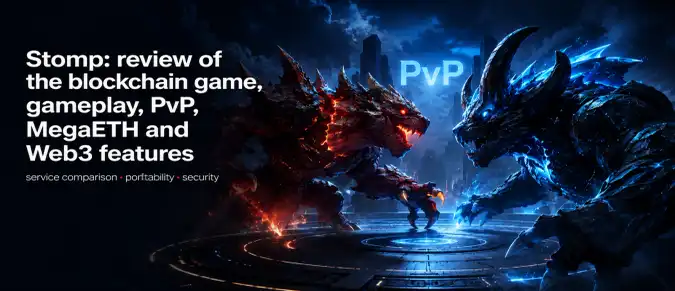

Stomp is a fully on-chain monster battle game built for the high-performance MegaETH blockchain environment. The project combines creature collection, strategic gameplay, and real-time PvP battles, while core game actions are executed and verified through smart contracts. Unlike traditional Play-to-Earn projects, Stomp is not designed as an income-generating platform and does not require players to purchase NFTs before they can start playing. Its primary goal is to explore whether blockchain technology can support fast-paced competitive gameplay without turning the game into a financial application.
Contents
- What Is Stomp and How the Fully On-Chain Game Works
- Stomp Gameplay: Monsters, Strategy, and Real-Time PvP Battles
- MegaETH, Smart Contracts, and Stomp's Technical Architecture
- Comparing Stomp with Traditional and GameFi Games
- The Stomp Ecosystem, Risks, and Future Prospects
1. What Is Stomp and How the Fully On-Chain Game Works
Stomp is a competitive monster battle game where players collect creatures, develop strategies, and compete against other players in PvP matches. Built within the MegaETH ecosystem, the project belongs to the category of on-chain native games, where blockchain technology is used not only to store digital assets but also to execute a significant portion of the game's core logic.
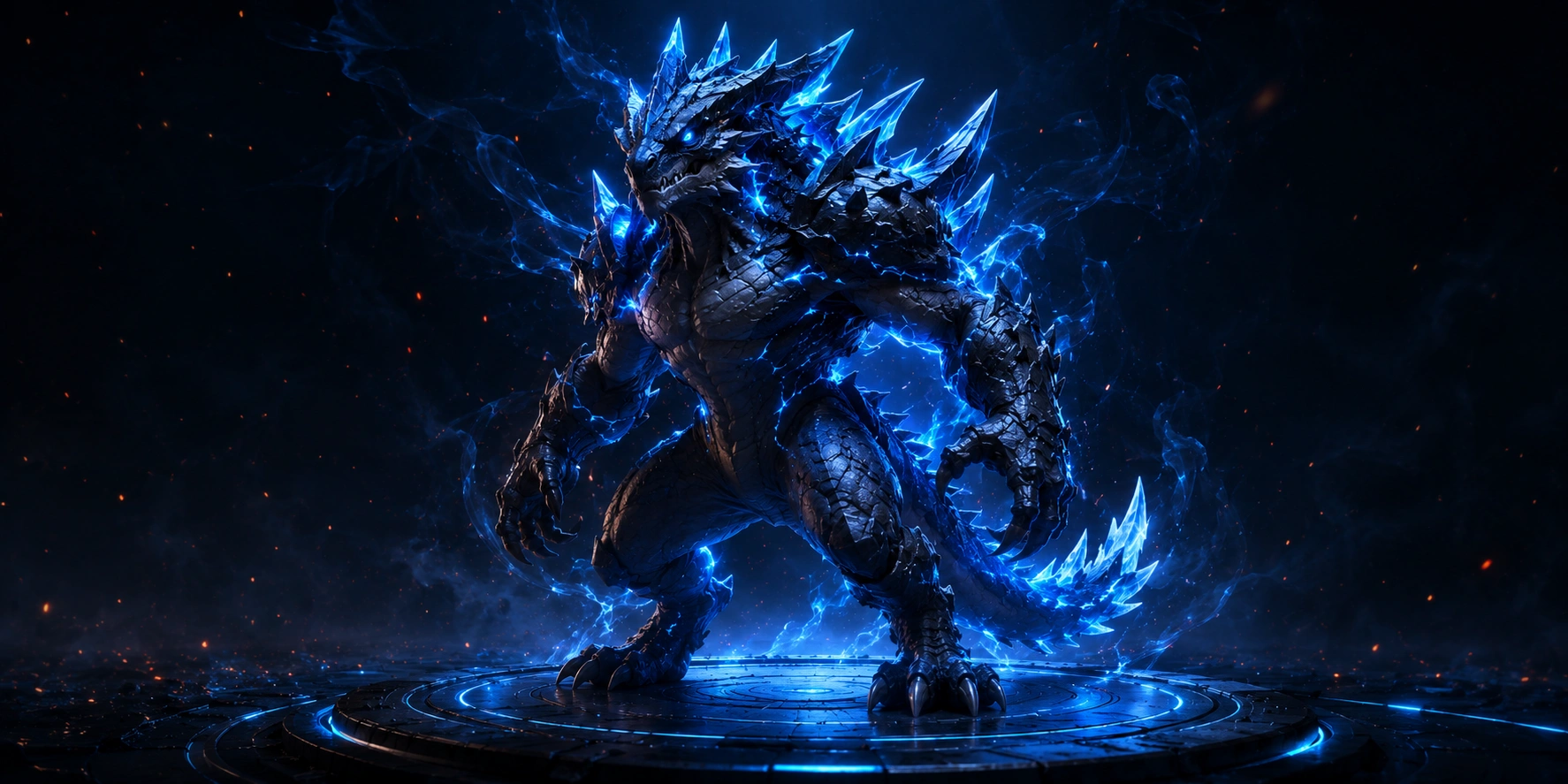
The project is led by Owen Shen, better known in the crypto community as 0xmons. In spring 2026, Stomp progressed beyond its pre-alpha stage, after which the development team expanded the roster of playable monsters and continued refining its competitive mechanics. The available characters include both original creatures and monsters inspired by well-known Web3 communities.
According to the PlayToEarn game directory, Stomp is free to play, currently active, and categorized as a PvP game. The platform also notes that Stomp does not require NFTs and does not follow a Play-to-Earn model. This distinguishes it from many earlier blockchain games, where access to core gameplay often depended on purchasing tokenized characters.
The central idea behind Stomp is to make blockchain technology part of the game's infrastructure rather than an additional financial layer. Players interact with monsters, tactical decisions, and opponents, while the on-chain architecture provides transparent rules, verifiable match states, and the potential for independent developers to build new experiences on top of the game.
2. Stomp Gameplay: Monsters, Strategy, and Real-Time PvP Battles
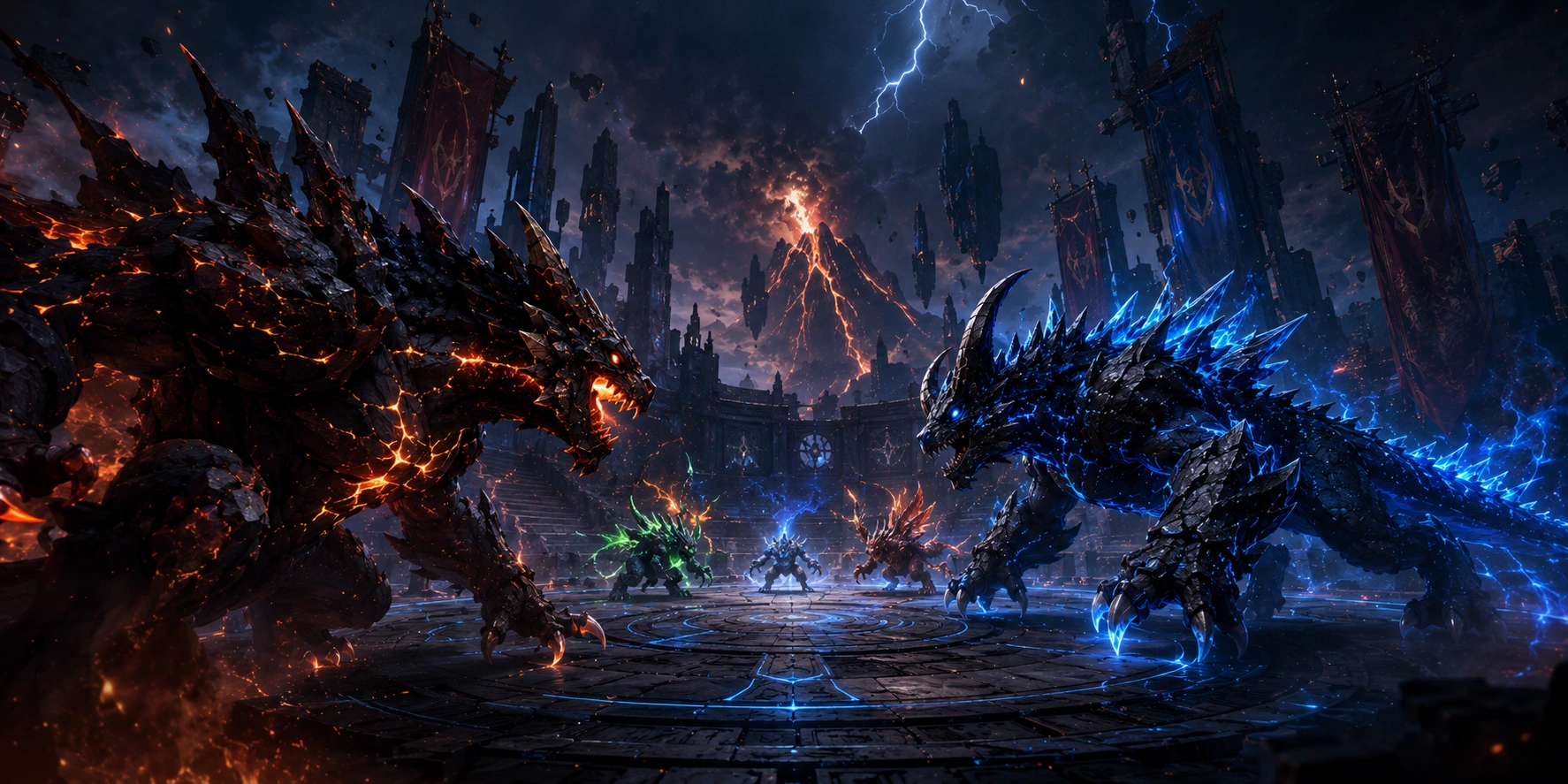
Stomp revolves around collecting and customizing monsters before sending them into competitive battles against other players. The official project description summarizes the gameplay loop as "collect, strategize, and compete in real time," emphasizing creature collection, tactical planning, and fast-paced PvP combat.
Every battle requires players to assemble an effective team and adapt to their opponent's tactics. Success depends not only on the individual strength of each monster but also on how efficiently their abilities work together. This design aims to move away from gameplay where victory is determined primarily by the value of purchased digital assets.
Key gameplay features include:
- collecting fantasy monsters;
- customizing and personalizing creatures;
- building battle strategies;
- real-time PvP matches;
- analyzing opponents' strengths and weaknesses;
- experimenting with different team compositions;
- participating in an evolving on-chain gaming ecosystem.
The absence of mandatory NFTs lowers the entry barrier and allows players to evaluate the game based on its mechanics rather than financial investment. New users can begin playing immediately without purchasing digital assets while gradually learning the game's monsters, strategies, and blockchain infrastructure.
The long-term success of this gameplay model will largely depend on strategic depth. For any competitive PvP game, balanced creatures, transparent rules, reliable matchmaking, and the absence of dominant strategies are essential for maintaining player engagement.
3. MegaETH, Smart Contracts, and Stomp's Technical Architecture
Stomp uses MegaETH as its infrastructure layer to process high-speed on-chain interactions. This is particularly important for gaming because traditional blockchains often struggle with latency, limited throughput, and expensive transactions. Running gameplay logic on a high-performance network helps deliver an experience that is closer to conventional multiplayer games.
The development team places significant emphasis on smart contract optimization. Technical documentation describes several efficiency techniques, including reusing storage slots after matches end, consolidating multiple functions into a single contract to reduce external calls, compact data packing, and moving some state analysis to the client side. These optimizations are designed to minimize gas consumption while preserving fully on-chain execution.
The fully on-chain architecture makes game rules and match outcomes publicly verifiable. In theory, it also enables developers to build third-party interfaces, analytics platforms, alternative game clients, and entirely new game modes that share the same underlying smart contract state.
However, this architecture also introduces additional challenges. Developers must ensure contract security, protect matches from automated exploits, and maintain low transaction costs as the player base grows. Unlike traditional online games, fixing errors in on-chain game logic can be significantly more complex once smart contracts have been deployed.
4. Comparing Stomp with Traditional and GameFi Games
Stomp occupies a unique position between conventional online PvP games and classic GameFi projects. While it relies on blockchain technology to execute gameplay logic, it does not present token earnings as the primary motivation for participation. As a result, strategic gameplay is intended to remain more important than financial incentives.
The project's key differentiators include its open infrastructure, the absence of mandatory NFTs, and the use of MegaETH to support high-speed gameplay. Comparing these characteristics helps illustrate both the strengths and limitations of its design.
| Feature | Stomp | Typical GameFi Game | Traditional Online Game |
|---|---|---|---|
| Genre | On-chain PvP battler | RPG, strategy, or card game | Varies by title |
| Game Logic | Largely executed on-chain | Partially on-chain or centralized | Runs on developer-controlled servers |
| NFT Requirement | Not required | Often required | Not used |
| Play-to-Earn | Not part of the project | Frequently a major component | Typically absent |
| Accessibility | Free-to-play | Free or paid | Free or paid |
| Rule Verification | Handled through smart contracts | Depends on architecture | Controlled by the developer |
This model enables blockchain technology to enhance gameplay without forcing monsters to become speculative investment assets. Players gain access to a transparent and verifiable gaming environment without assuming the risks associated with purchasing NFTs before experiencing the gameplay.
At the same time, being fully on-chain does not automatically make a game enjoyable. Stomp must still compete with traditional PvP titles in terms of match quality, user experience, strategic depth, and its ability to build and retain an active player community.
5. The Stomp Ecosystem, Risks, and Future Prospects
Stomp's future largely depends on the continued development of MegaETH and growing interest in fully on-chain games. If the network can consistently deliver low-cost, high-performance transactions under heavy demand, the project will have greater opportunities to expand its player base, introduce new monsters, and increase gameplay complexity.
One of the project's potential advantages is its open architecture. Smart contracts make it possible to build complementary applications around the core game, including analytics platforms, tournament systems, alternative clients, and community-created modifications. However, developing such an ecosystem will require comprehensive documentation and reliable technical standards.
The main risks stem from the project's early stage of development, its limited operational history, and its dependence on the MegaETH infrastructure. Player retention also remains an open challenge. While fully on-chain technology may attract developers and blockchain enthusiasts, mainstream audiences will ultimately expect an intuitive interface, stable matchmaking, and consistently updated content.
Stomp can be viewed as an experiment exploring a new model of blockchain gaming where transparent gameplay matters more than speculative token economies. By removing mandatory NFTs and avoiding the Play-to-Earn model, the project focuses instead on monster collection, strategic gameplay, and competitive real-time PvP battles. Its long-term success will depend on whether the team can transform the technical capabilities of a fully on-chain architecture into an engaging and sustainable gaming experience.











