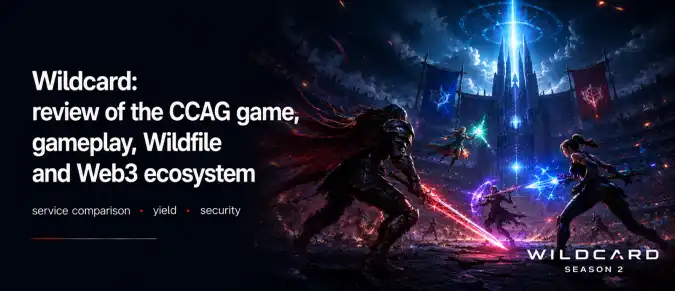

Wildcard is a competitive multiplayer game developed by The Wildcard Alliance that combines collectible card mechanics, direct hero control, and team-based arena battles. The project went through several stages of closed testing before reaching a broader audience in 2025 through Steam, Organized Play, and preparations for Early Access. The current version should be distinguished from Wildcard’s earlier positioning as a conventional Web3 game: the developers have separated the core free-to-play CCAG from a dedicated blockchain metagame. Current public materials also do not confirm a transition to Immutable: the project’s early infrastructure was associated with Polygon, while the team later selected Arbitrum as its new blockchain direction.
Contents
- What Is Wildcard and How Does Its Competitive CCAG Work?
- Champions, Summons, and Team Battles
- Wildfile, Wildpass, WC, and the Web3 Economy
- Polygon, Arbitrum, and Blockchain Infrastructure
- Wildcard Development, Seasons, and Ecosystem Outlook
1. What Is Wildcard and How Does Its Competitive CCAG Work?
Wildcard is developed by The Wildcard Alliance, a studio founded by Paul Bettner and Katy Drake Bettner. Paul Bettner previously contributed to projects including Words With Friends, Age of Empires, and Lucky’s Tale. In 2022, the company raised $46 million in a Series A round led by Paradigm with participation from Griffin Gaming Partners and other investors.
Wildcard was initially described as a hybrid of MOBA, real-time strategy, and collectible card game mechanics. As development progressed, the team adopted the term Collectible Card Action Game, or CCAG. The core concept remained the same: players directly control a Champion in a 3D arena while using a custom deck to summon creatures and access different tactical options.
Matches focus on team-based PvP. The current structure uses 2v2 battles, meaning success depends not only on deck composition but also on coordination with a teammate. Players must control their Champion’s position, choose the right moment to deploy Summons, react to opponents, and manage resources in real time.
Wildcard was also designed with spectators in mind. From an early stage, the developers aimed to make matches engaging both to play and watch. This concept later expanded through the Exhibition Series, Organized Play, livestreams, and integration with the Thousands infrastructure.
2. Champions, Summons, and Team Battles
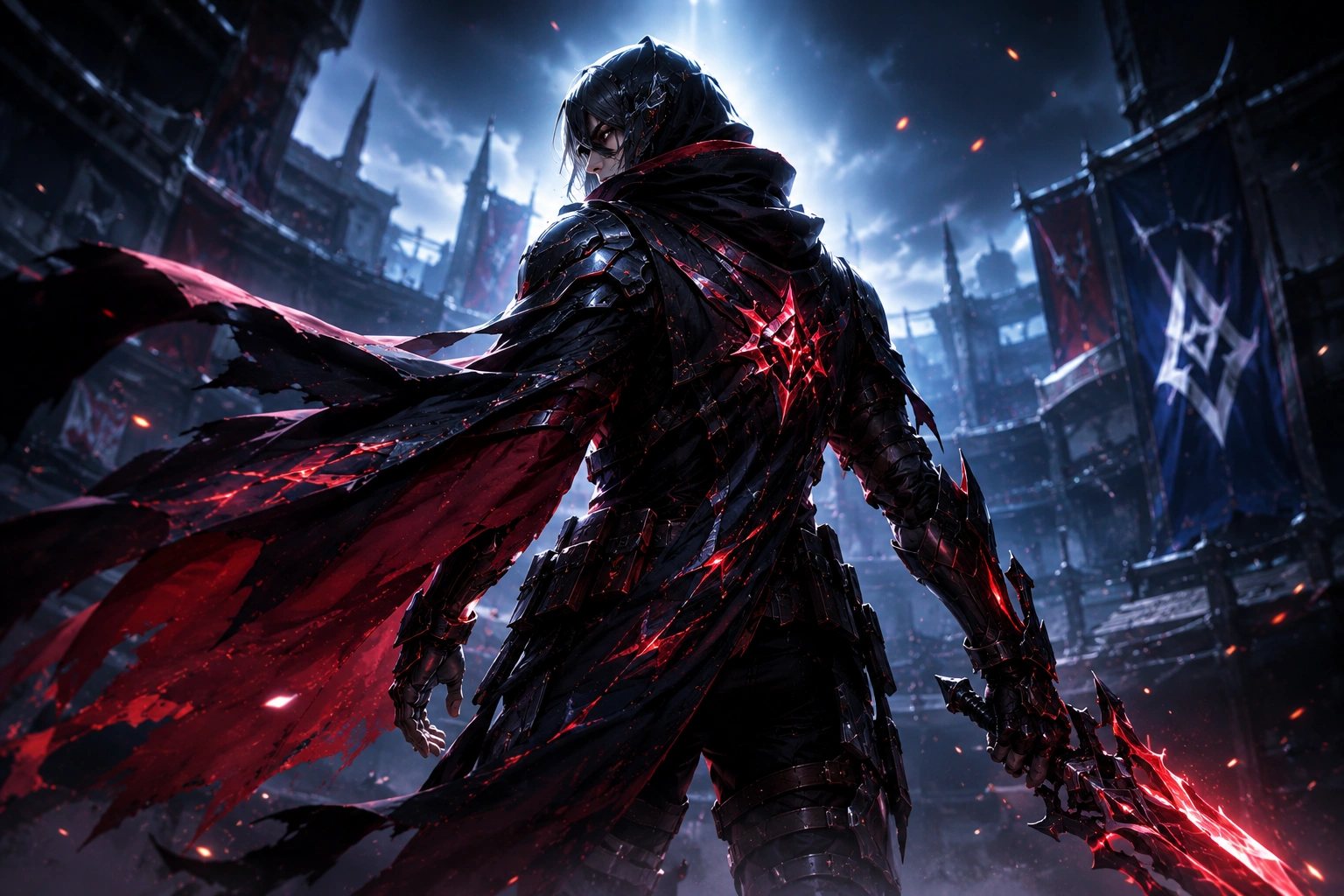
The central playable character is the Champion. Each hero has unique abilities, movement characteristics, and tactical options. Featured Champions include Bolgar, Locke, Ragna, Neva, and Lily, with each character associated with a Sidekick and a distinct approach to combat.
The second major component is Summons. These creatures and mechanical units are deployed onto the arena through cards. Each Summon performs a specific function: some focus on attacking, while others support allies, control space, or create additional tactical effects. As a result, deck construction directly influences match strategy.
| Component | Type | Role in Wildcard |
|---|---|---|
| Champion | Playable Hero | The player’s main character with unique abilities and a distinct combat style |
| Sidekick | Companion Character | Associated with a specific Champion and their in-game identity |
| Summons | Combat Creatures | Deployed onto the arena for offensive, defensive, or support functions |
| Deck | Card Deck | Determines the player’s available Summons and tactical options |
| Arena | PvP Battlefield | The environment for team battles and interactions between summoned units |
| Fortune and Fame | Game Currencies | Used within the core free-to-play version of Wildcard |
The combination of action gameplay and card mechanics distinguishes Wildcard from traditional digital CCGs. After playing a card, the user does not simply wait for an automated outcome but continues to participate directly in combat. Positioning, timing, and coordination are therefore as important as deck composition.
This structure also makes balancing more complex. Developers must account for Champion characteristics, the strength of individual Summons, card interactions, and team combinations. During the Alpha stage, these elements were regularly adjusted through patches, new creatures, and balance changes based on testing.
3. Wildfile, Wildpass, WC, and the Web3 Economy
Wildcard’s Web3 layer developed separately from its core gameplay loop. One of the project’s early assets was Wildpass, an NFT collection created for early community participants. It was later followed by Wildfile, a soulbound NFT designed to record a user’s history within the Wildcard Universe.
Wildfile should not be viewed as a conventional tradable game item. It was designed as a persistent digital identity capable of recording participation in events, collectible assets, and other user activity. Its soulbound structure means that the NFT is not intended to be freely transferred between owners.
Key Elements of the Wildcard Gaming and Web3 Ecosystem:
- a competitive free-to-play CCAG as the core gaming product;
- team-based PvP matches in a 2v2 format;
- Champions with different abilities and playstyles;
- Summons deployed through a custom card deck;
- Fortune and Fame as currencies of the core game;
- Wildpass as an early collectible NFT;
- Wildfile as a soulbound profile for ecosystem participants;
- WC as an asset associated with the separate blockchain metagame;
- Thousands as infrastructure connecting spectators, creators, and the community;
- separation between the core game and crypto economy.
An important development was the team’s decision to clearly separate Wildcard CCAG from the Wildcard Meta Game. According to the official Creator Guide, the core CCAG operates as a conventional free-to-play game and does not require cryptocurrency. WC and blockchain mechanics belong to the separate metagame rather than the basic competitive matches.
This separation reduces Web3 requirements for regular players. Users do not need to purchase a token or NFT to participate in competitive matches. Blockchain instead acts as an additional layer for identity, community features, creator economy mechanics, and selected metagame functions rather than serving as a mandatory gateway to the core gameplay.
4. Polygon, Arbitrum, and Blockchain Infrastructure
Wildcard’s blockchain strategy has changed alongside the development of the project. When the game was initially announced in 2022, the team stated that its Web3 infrastructure would be associated with Polygon. Early ecosystem components, including Wildpass and Wildfile infrastructure, appeared during this phase.
The direction later changed. In 2025, Wildcard joined the first investment cohort of Arbitrum Gaming Ventures, where the project was presented as a 2v2 collectible card action game. Program materials indicated that Wildcard had selected Arbitrum as its new blockchain direction.
During the same year, Wildcard and the related Thousands project announced additional funding focused on game development, the creator economy, and on-chain infrastructure. The round was co-led by Arbitrum Gaming Ventures and Paradigm. Thousands is designed to track and economically reward the influence of creators and community members who attract new audiences.
The Wildcard CCAG itself does not require combat actions to be executed on-chain. Champion movement, abilities, Summon deployment, and match calculations are handled by conventional game infrastructure. This follows a hybrid Web3 gaming model in which blockchain supports assets and economic mechanics without processing every high-frequency gameplay action.
5. Wildcard Development, Seasons, and Ecosystem Outlook
In 2025, Wildcard expanded testing through Steam. Alpha 4 and Alpha 5 introduced updates to creatures, balance, and gameplay mechanics, after which the project moved toward Organized Play and the Road to DreamHack competition series.
In October 2025, the game participated in Steam Next Fest while the developers prepared for the transition from Alpha to Early Access. By this stage, Wildcard was developing into a full free-to-play competitive game aimed not only at Web3 users but also at the broader Steam gaming audience.
The name “Wildcard Season 2 (Immutable)” requires clarification. Available confirmed materials do not position the project as an Immutable game: its current blockchain strategy is associated with Arbitrum following its earlier Polygon phase. Likewise, the term Season 2 should not automatically be interpreted as a separate version of the game without confirmation of a specific seasonal campaign.
The main risks involve PvP balance, player retention, development of the competitive scene, and integration of the Web3 economy. Digital assets should not provide advantages that could undermine competitive balance.
Wildcard is increasingly separating its core game from its blockchain layer. The CCAG focuses on 2v2 battles, Champions, Summons, and deck building, while Wildfile, WC, and Thousands form the broader Web3 ecosystem. The project’s prospects will depend on gameplay quality, audience activity, and its ability to develop on-chain mechanics without making cryptocurrency a requirement for participating in the game.











