
Wildcard is a free-to-play competitive game from The Wildcard Alliance that combines collectible cards, deckbuilding, and dynamic arena battles. The project is led by Paul Bettner and Katy Drake Bettner, who previously worked on titles including Words With Friends, Lucky’s Tale, and Age of Empires. Wildcard was initially developed with a strong focus on NFTs and digital collectibles, but its architecture evolved during 2025–2026: the core PC game became increasingly separated from the blockchain economy, while the Web3 layer shifted toward $WC, the Wildcard Premier League, and the related Thousands infrastructure. Current project materials point to Arbitrum as the blockchain environment for the ecosystem’s token economy, meaning that describing Wildcard simply as an Immutable-based game no longer reflects its current technical model.
Contents
- What Is Wildcard and How The Wildcard Alliance Game Works
- Wildcard Gameplay: Champions, Summons, Cards and Arena Battles
- Wildcard Web3 Ecosystem: $WC, NFTs, Wildfile and Arbitrum
- Wildcard Features, Progression and Digital Assets
- Wildcard Development and Its Prospects in Web3 Gaming
1. What Is Wildcard and How The Wildcard Alliance Game Works
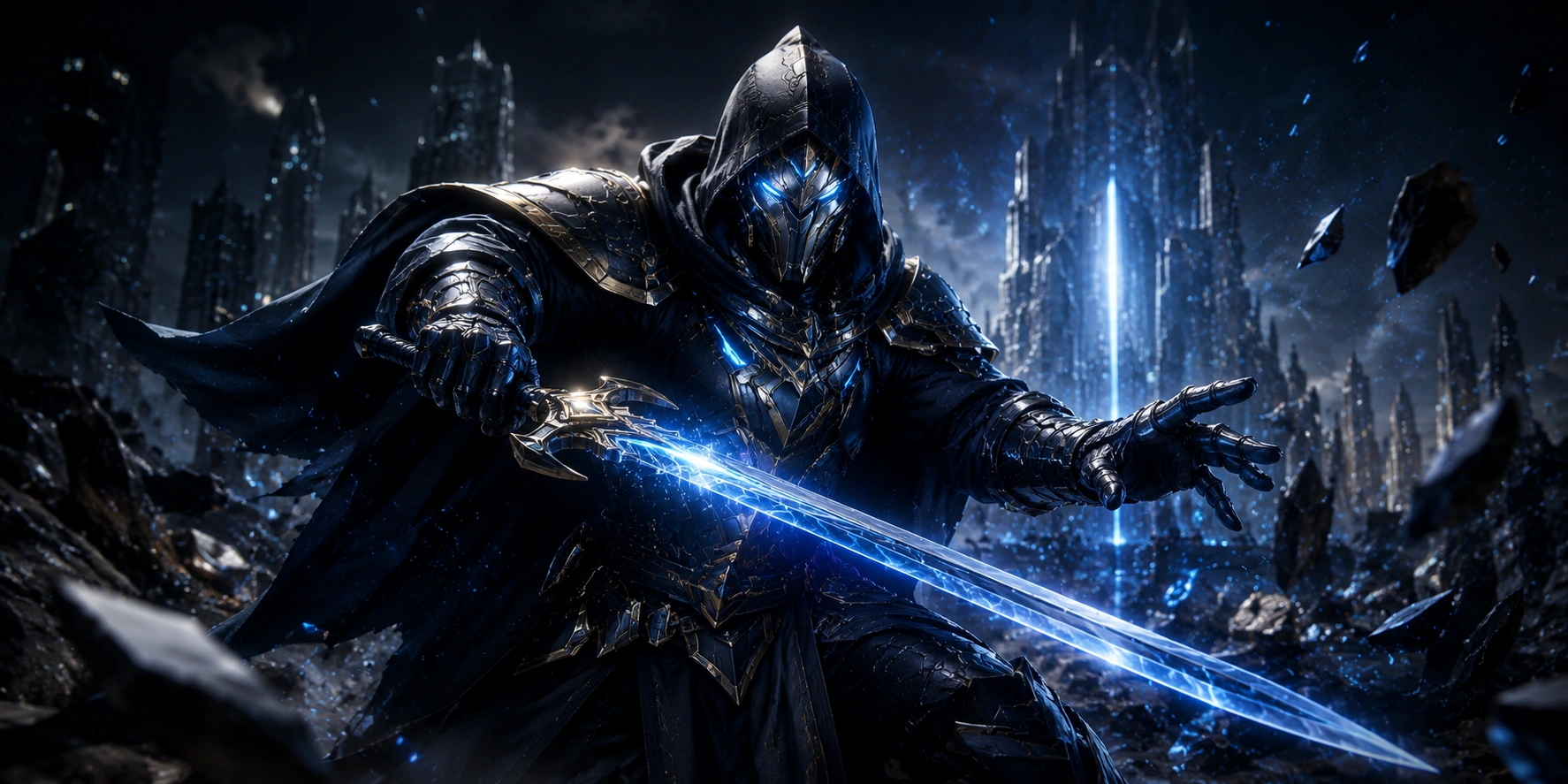
Wildcard is being developed as a competitive multiplayer game that combines strategic deckbuilding with real-time character control. The developers describe the format as a Collectible Card Action Game, or CCAG. Structurally, the project sits between a card strategy game, a MOBA, and arena action: players prepare a selection of creatures before a match and then actively participate in combat alongside the units they summon.
The game is developed by The Wildcard Alliance under the leadership of Paul Bettner and Katy Drake Bettner. In 2022, the company raised $46 million in a funding round involving Paradigm, Griffin Gaming Partners, and other investors. In June 2025, Wildcard and the related Thousands project announced another $9 million funding round co-led by Paradigm and Arbitrum Gaming Ventures.
Wildcard entered Steam Early Access on October 21, 2025, as a free-to-play Windows game. The developers indicated that the Early Access period could last for up to a year and would be used to balance mechanics and introduce additional Champions, factions, Summons, and arenas. The current version should therefore not be considered the final configuration of the game.
Wildcard was initially positioned much more explicitly as a Web3 game. The team released NFTs, developed Wildpass, and experimented with blockchain-based user profiles. The strategy later evolved: the main game client became increasingly focused on a traditional free-to-play audience, while tokens, digital ownership, and economic mechanics moved into a connected but distinct ecosystem layer.
2. Wildcard Gameplay: Champions, Summons, Cards and Arena Battles
The core gameplay combines direct control of a Champion with the use of Summon cards. Before entering a match, players build a deck that determines which creatures and strategic options will be available. During combat, the Champion moves freely around a three-dimensional arena, uses individual abilities, and summons creatures from the prepared deck.
Summons perform different roles. Some focus on offense and pressure, while others defend positions, control areas, or provide additional effects to allied units. Once summoned, creatures operate largely autonomously, although their effectiveness depends heavily on when and where they are deployed. Players therefore have to control their Champion while simultaneously managing deck resources and battlefield positioning.
The objective is not limited to eliminating opposing characters. A team must break through the opponent’s defenses, advance across the arena, and destroy the designated target. This structure makes map control and the coordinated advancement of Summons more important than simply accumulating eliminations.
During Early Access, a deck includes ten Summons and three Wildcards that influence the selected strategy. Characters and creatures have different attributes and interactions, meaning that match outcomes depend on deckbuilding, mechanical execution, and matchup knowledge. During 2026, the developers also experimented with the competitive format, including a shift from the earlier emphasis on 2v2 toward 1v1 as the primary ranked mode.
3. Wildcard Web3 Ecosystem: $WC, NFTs, Wildfile and Arbitrum
Wildcard’s blockchain infrastructure has gone through several stages of development. One of its earliest digital assets was the Genesis Wildpass, a collection of 4,444 NFTs originally issued on Polygon. Wildpass provided access to selected events, playtests, future mint campaigns, and other ecosystem opportunities. The team later announced the migration of Wildpass from Polygon to Ethereum.
Another component is Wildfile, a non-transferable blockchain-based user profile. It is designed to record a participant’s activity, collectibles, and related achievements across the ecosystem. Unlike a conventional tradable NFT, Wildfile primarily functions as a digital identity and a record of the user’s interaction with the project.
| Component | Purpose | Role in the Wildcard Ecosystem |
|---|---|---|
| Wildcard Game | Free-to-play CCAG | Competitive battles, Champions, Summons and deckbuilding |
| $WC | ERC-20 token | Economic asset for Wildcard Premier League and related Web3 mechanics |
| Wildfile | Non-transferable Web3 profile | Records activity, collectibles and ecosystem participation |
| Genesis Wildpass | Collectible NFT | Historically provides access to selected ecosystem opportunities |
| Wildcard Premier League | Web3 economic layer | Franchises, competitions, community participation and reward distribution |
| Arbitrum | Blockchain Layer 2 | Infrastructure for the current $WC model and on-chain economy |
The central crypto asset in the current model is $WC. According to the Wildpaper, it is an ERC-20 token with a fixed maximum supply of 88,888,888 tokens. The stated distribution model allocates the supply to the community without separate percentage allocations for the team, founders, investors, or advisors. The initial retroactive distribution program covers 17.8 million $WC, representing approximately 20% of the total supply.
The token is primarily associated with the Wildcard Premier League rather than being required to pay for every action inside the PC game. Project documentation describes Franchise Assets, manager participation, rewards, and other economic mechanisms. $WC liquidity is connected to Arbitrum and the WC/USDC pair, making Arbitrum a more relevant blockchain context for the current ecosystem than Immutable.
4. Wildcard Features, Progression and Digital Assets
One of Wildcard’s notable design choices is the separation between the core game and its crypto infrastructure. Players do not need an NFT or token to access the basic Wildcard experience. The Steam version is free to play, while its core progression revolves around matches, challenges, rewards, card packs, and seasonal systems.
This approach differs from early GameFi projects in which purchasing an NFT could be a prerequisite for participation. Wildcard uses a conventional gaming structure as its primary layer, while blockchain technology is reserved for specific collectible, identity, ownership, and economic use cases.
Key Wildcard Features:
- free-to-play competitive PC game;
- combination of card deckbuilding and real-time combat;
- Champions with distinct playstyles and abilities;
- Summons deployed onto the arena through cards;
- three-dimensional PvP battles with tactical map control;
- progression through challenges, rewards and card packs;
- Genesis Wildpass and other collectible Web3 assets;
- Wildfile as a blockchain-based ecosystem profile;
- $WC as the token associated with Wildcard Premier League;
- Arbitrum infrastructure for the current on-chain economy.
Collectibles form another part of the ecosystem. The developers have experimented with Flair, digital items associated with Wildfile, while Wildpass served as an early community asset. Ownership of these NFTs does not automatically translate into an advantage in every competitive match, so collectible and economic functions should be distinguished from gameplay balance.
From a player perspective, this architecture reduces the dependence of the core gaming experience on cryptocurrency market conditions. The Web3 layer nevertheless retains typical risks: the market value of $WC and NFTs can fluctuate significantly, liquidity depends on demand, and the tokenomics and Premier League systems remain subject to further development.
5. Wildcard Development and Its Prospects in Web3 Gaming
Wildcard’s development illustrates a broader shift in how parts of the gaming industry approach blockchain technology. During its earlier stages, NFTs and Web3 played a prominent role in the project’s positioning. As the game moved closer to a wider release, the team increasingly separated the core game from the crypto economy, allowing Wildcard to function as a standalone free-to-play product without requiring blockchain interaction for its basic gameplay loop.
The Web3 component has not disappeared. In 2025, Wildcard and Thousands secured funding from Paradigm and Arbitrum Gaming Ventures, while Arbitrum Foundation materials indicate that Wildcard Alliance and Thousands moved into the Arbitrum ecosystem. The $WC token and Wildcard Premier League introduce a separate participation model designed not only for active players but also for collectors, content creators, and other community participants.
At the gameplay level, Wildcard continues to evolve through Early Access. The team has planned additional Champions, Houses, Summons, and arenas, while updates during 2026 indicate that the competitive structure itself remains experimental. This is an important factor when evaluating the project, since rules, balance, progression, and available modes may change substantially before the final release.
Wildcard represents a Web3 gaming model in which blockchain technology is gradually moving away from the center of the gameplay experience and becoming a separate economic and infrastructure layer. The core product must compete with conventional multiplayer games through its deckbuilding, combat system, and competitive balance, while $WC, Wildfile, Premier League, and digital assets extend the ecosystem beyond individual matches. Its long-term prospects will depend on player retention after Early Access, the depth of the metagame, development of the competitive scene, and whether its Web3 mechanics can provide additional utility without making tokens or NFTs a requirement for participation.











