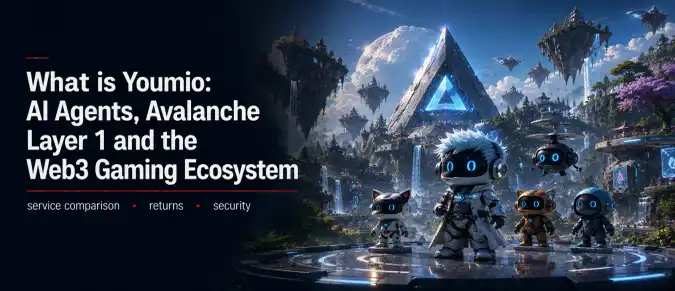

Youmio is a blockchain ecosystem at the intersection of artificial intelligence, Web3, and gaming virtual worlds, built around autonomous 3D agents called Mios. The project emerged from the evolution of Today The Game, which was originally developed as an AI-driven life simulation before expanding into a broader infrastructure for intelligent agents. In 2025, Youmio selected Avalanche technology to build a specialized Layer 1 where AI agents can have their own wallets, identities, mutable states, and modular skills. The gaming direction continues through Youmio Worlds, although the broader concept extends beyond a single game and envisions Mios operating across different applications and digital environments.
Contents
- What Is Youmio and How Is the Project Connected to AI Gaming?
- How Autonomous AI Agents Work in Virtual Worlds
- Youmio Layer 1 and Avalanche: Blockchain Infrastructure
- Project Features: Wallets, Memory, Skills, and Digital Assets
- Youmio Development and the Future of AI Agents in Web3 Gaming

1. What Is Youmio and How Is the Project Connected to AI Gaming?
Youmio's history is connected to Today The Game, a project developed as a social simulation featuring AI-powered characters. The team experimented with game worlds where virtual inhabitants could respond to user actions and create more dynamic scenarios than traditional NPCs based on predefined dialogue. The concept was later expanded, and Today evolved into the Youmio ecosystem.
The project is led by Michael O'Connor, who has experience in the gaming industry, while director Benjamin O'Cleary is also named among its key contributors. The team brings together specialists in game development, artificial intelligence, and interactive technologies. Before transitioning to Youmio, the project raised approximately $5 million in funding from investors including Sfermion and GSR.
The core idea of the modern platform is to create portable AI agents. Instead of limiting an intelligent character to a single game, Youmio envisions one agent existing across multiple applications and virtual environments. The agent can retain its identity and certain elements of its state while gaining new capabilities depending on the connected application.
For this reason, Youmio should not be viewed solely as a standalone blockchain game. Gaming remains an important part of the ecosystem, but Mios and the specialized Layer 1 form an infrastructure layer. This architecture is intended for developers of games, AI applications, and other services that require digital characters with persistent identities.
2. How Autonomous AI Agents Work in Virtual Worlds
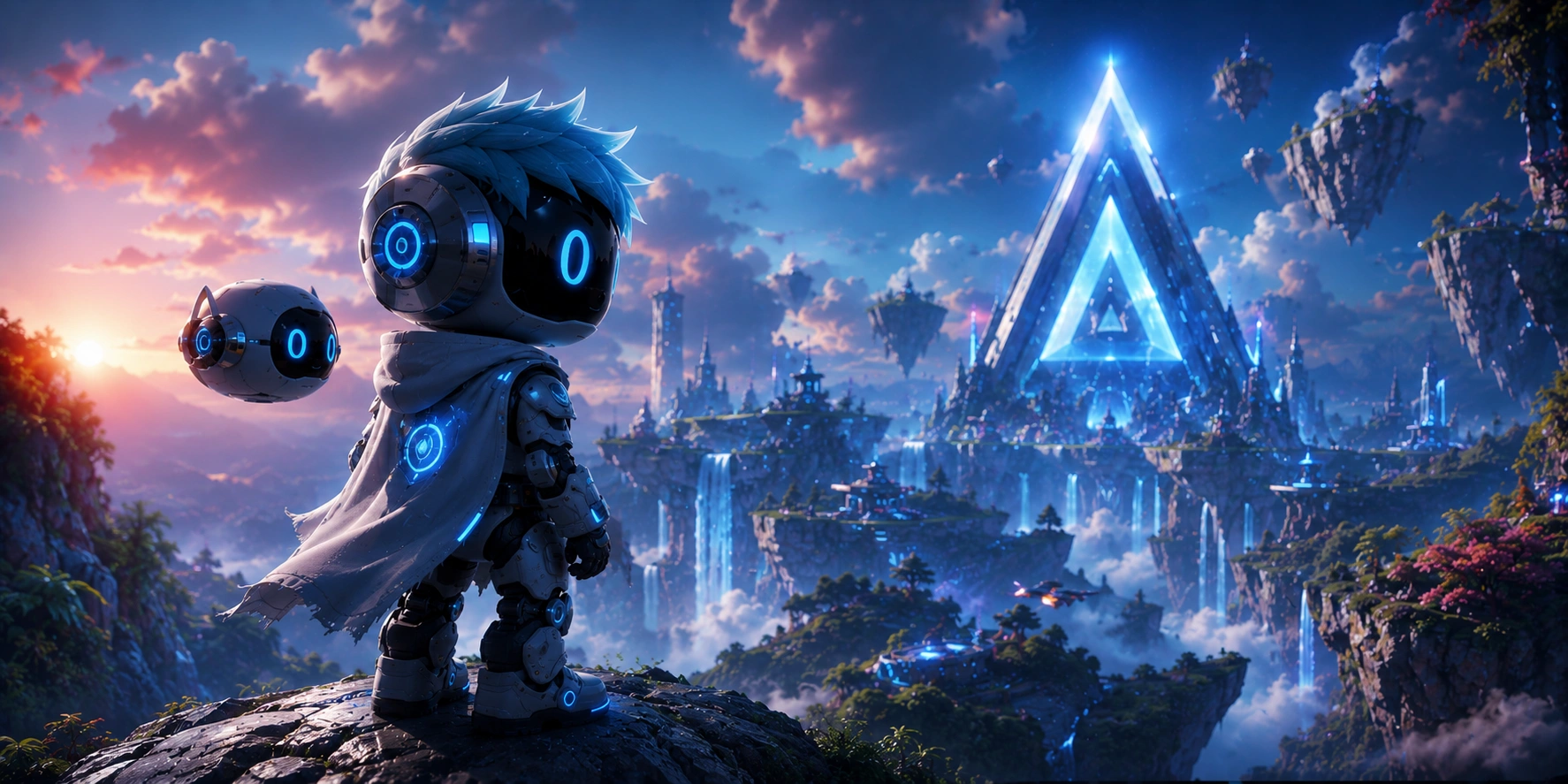
Mios are three-dimensional AI characters created using Youmio's tools. Users can shape an agent's appearance, personality traits, and functional capabilities. Unlike a static gaming avatar, a Mio is designed to evolve through interactions and retain part of the accumulated context.
The architecture is described as multi-agentic: an individual Mio can use several specialized components to perform different tasks. Skills can be added modularly, meaning that a character's functionality does not have to remain limited to the capabilities defined when it was initially created. This approach makes it possible to expand an agent over time without developing an entirely new character from scratch.
Youmio Worlds develops the gaming side of the concept. This direction evolved from Today The Game and focuses on virtual environments populated by AI characters. Users can interact with agents and influence the development of the environment, while the behavior of virtual inhabitants is intended to be less dependent on rigid, prewritten scenarios.
The main difference from traditional NPCs is agent persistence. A conventional game character exists inside the database of a particular game, while Youmio aims to create an identity that can be used across multiple digital environments. Practical implementation of this portability depends on support from applications and developers, so this part of the ecosystem is developing gradually.
3. Youmio Layer 1 and Avalanche: Blockchain Infrastructure
In July 2025, Youmio announced the development of its own Layer 1 using Avalanche infrastructure. The network is designed specifically for AI agents and agent-driven applications. Unlike a general-purpose blockchain, its architecture is intended to account for the continuously changing state of software agents and their interactions with applications, games, and digital assets.
Under the Youmio model, each agent can have its own wallet, a set of modular skills, and a mutable metadata state. The results of certain actions can receive cryptographic verification. This allows the blockchain to create a verifiable history for an agent, while AI computation and gameplay can still be processed off-chain.
| Component | Purpose | Role in the Youmio Ecosystem |
|---|---|---|
| Youmio Layer 1 | Agent-oriented blockchain | Identity, state, and on-chain operations for AI agents |
| Avalanche | Blockchain infrastructure | Technology foundation for Youmio's specialized network |
| Mios | 3D AI agents | Intelligent characters for games, applications, and virtual worlds |
| Agent Wallet | Digital wallet | Allows an agent to interact with on-chain assets |
| Modular Skills | Agent capabilities | Expand Mio functionality across different applications |
| Cryptographic Proofs | Verifiable records | Verify the provenance of specific actions and outputs |
The choice of Avalanche is connected to its specialized Layer 1 architecture and low-latency requirements. AI agents can potentially perform large numbers of operations and interact with one another more frequently than typical users of cryptocurrency applications. The infrastructure therefore needs to support rapid state exchanges and transaction finality.
Youmio also became one of the projects associated with Avalanche's InfraBUIDL(AI) program, which focuses on infrastructure at the intersection of blockchain and artificial intelligence. Youmio's testnet operated in 2025, while subsequent development included moving parts of the ecosystem and user assets toward mainnet infrastructure.
4. Project Features: Wallets, Memory, Skills, and Digital Assets
One of Youmio's central objectives is to create a verifiable identity for AI agents. In a centralized game, information about a character is controlled by the server operator. Under the Youmio model, selected information about identity, provenance, and actions can be recorded through blockchain infrastructure, creating an additional verification layer.
However, not all information needs to be stored directly on-chain. Full AI memory, language-model processing, and three-dimensional game logic require considerably more computational resources than it would be practical to process through a blockchain. DLT is therefore primarily used for elements where ownership, provenance, state, and verifiability are important.
Key Features of Youmio:
- three-dimensional Mios AI agents with evolving characteristics;
- Youmio Worlds gaming and virtual environments;
- a specialized Avalanche Layer 1 for agent-driven applications;
- a dedicated digital wallet for each supported agent;
- mutable metadata state for tracking character development;
- modular skills for expanding Mio capabilities;
- cryptographic verification of selected outputs and actions;
- agent portability across supported digital environments;
- no-code tools for creating custom 3D AI characters;
- a combination of gaming infrastructure, AI, and digital ownership.
Another area of development is the agent tokenization model. Youmio has described an architecture in which a single token can be associated not only with one character but with an ecosystem of interconnected agents. Reward rules can take into account usage, behavior, or parameters defined by the creator. This differs from models in which every AI agent necessarily requires its own separate token.
At the same time, this model introduces additional risks. The market value of digital assets associated with agents can depend on speculative demand, while an on-chain history does not guarantee the quality of an AI model or the accuracy of its decisions. Users also need to consider privacy, wallet security, and the amount of information an agent can access through connected services.
5. Youmio Development and the Future of AI Agents in Web3 Gaming
The transition from Today The Game to Youmio illustrates a shift in the project's strategy. Instead of developing only one AI-powered game, the team began building infrastructure that could potentially support multiple applications. Today evolved into Youmio Worlds while retaining its role as a virtual environment for experimenting with autonomous characters.
In 2025, a key milestone was the announcement of a specialized Avalanche Layer 1 and the launch of test infrastructure. In early 2026, the transition toward mainnet continued, while participants in the testing phase received digital assets connected to the ecosystem. During spring 2026, the project also conducted its first season of interactions with Mios while maintaining limited access to the developing platform.
A central question for future development is the practical portability of agents. For the model to work fully, a Mio needs to retain a useful identity and state when moving between different games and applications. Achieving this requires not only blockchain infrastructure but also standardized development tools, integrations, and a sufficient number of third-party services.
Youmio represents one approach to combining AI gaming and Web3, where blockchain is used not to record every gameplay action but to support identity, digital ownership, and the verifiable history of autonomous agents. Mios form the user-facing layer, Youmio Worlds demonstrates the gaming use case, and Avalanche Layer 1 provides the infrastructure foundation. The project's long-term prospects will depend on the quality of its AI agents, the number of integrated applications, user data protection, and Youmio's ability to demonstrate practical value for persistent on-chain identities in virtual characters.











