

Arc — is a decentralized platform for developing and growing blockchain-based games, created by the gaming community for the gaming community. The project brings together more than 5,000 game developers, gamers, content creators, marketers, and investors who collectively shape a new GameFi model. Unlike single Web3 games, Arc does not offer one specific product — instead, the platform creates an environment where games are developed, launched, and scaled collaboratively. The core idea behind Arc is that the future of the gaming industry should be built not by major publishers, but by the ecosystem participants themselves, who are directly interested in its long-term growth.
- Arc as a platform for blockchain game development
- The role of the Arc community in platform development
- How the Arc gaming ecosystem works
- Economy and gameplay scenarios on the Arc platform
- How Arc differs from traditional GameFi projects
- Arc’s role in the future of the gaming industry
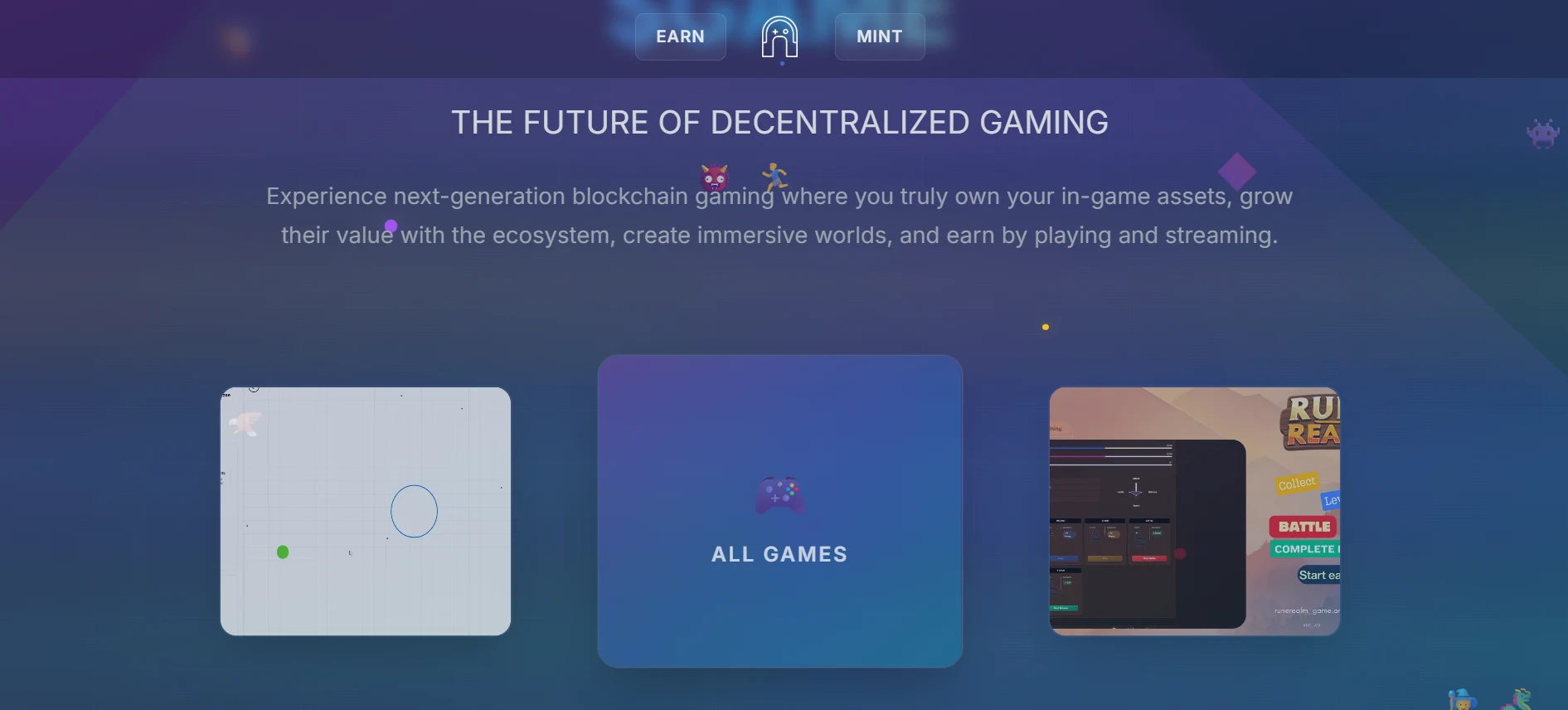
Arc as a platform for blockchain game development
Arc is not a single game and not a single virtual world. It is a platform where multiple games can emerge, created by both independent developers and teams within the community. Arc provides a shared foundation — infrastructure, economic tools, and an audience — allowing developers to focus on gameplay and core mechanics rather than the technical complexity of launching a Web3 project.
The platform was designed as an alternative to the traditional gaming industry model, where key decisions are made by publishers. Within Arc, ecosystem participants themselves influence which games are created, how they evolve, and what economic models they use. This approach lowers the entry barrier for indie developers and enables experimentation with formats, genres, and monetization models without reliance on centralized studios.
It is also important to note that Arc does not impose rigid frameworks or a single game style on developers. The platform is open to different genres — from casual and PvP projects to more complex MMO and strategy games. This makes Arc a flexible environment where both small indie titles and more ambitious game worlds can coexist. For players, this means a constant flow of new content within one ecosystem rather than isolated standalone projects.
The role of the Arc community in platform development
The key feature of Arc is its community, which plays a central role in the platform’s development. There is no strict division between “creators” and “users”: gamers, developers, and creators exist within a single ecosystem and directly influence its future. This approach fosters a sense of shared responsibility and creates a more sustainable growth model.
The Arc ecosystem is shaped by:
-
game developers and game designers
-
players and testers
-
content creators and streamers
-
marketers and community managers
-
investors and partners
This list reflects the real structure of the platform rather than a formal role distribution. Every participant can contribute by sharing ideas, taking part in testing, helping with promotion, or influencing economic mechanics. This format turns Arc into a living ecosystem that evolves alongside the interests of its participants. The community becomes not just a content consumer, but a full co-creator of gaming projects, significantly increasing engagement.
How the Arc gaming ecosystem works
Arc builds its gaming ecosystem around the principle of modularity. This means that different games can use shared platform elements — economy, asset systems, progression mechanics, and community interaction tools. At the same time, each game remains an independent product with its own style, rules, and gameplay.
This approach simplifies the launch of new projects, as developers do not need to build everything from scratch. They can focus on gameplay mechanics while relying on Arc’s existing infrastructure. For players, the ecosystem feels like a unified space where different games are part of a shared environment. Assets, experience, and platform participation can matter across multiple projects, lowering the entry barrier and making the gaming experience more cohesive.
Economy and gameplay scenarios on the Arc platform
The Arc economy is built around in-game assets and community participation rather than speculative models. The platform supports various use cases, allowing developers to choose suitable monetization and player interaction models.
| Gameplay scenario | How Arc is used |
|---|---|
| Game development | Shared infrastructure and audience |
| In-game economy | Tokens and digital assets |
| Player participation | Ownership and influence on projects |
| Monetization | Support for creators and studios |
| Ecosystem growth | Connections between multiple games |
The Arc economic model emphasizes the long-term value of in-game assets. This is important for players who want their time and effort to matter beyond a single game. For developers, this system simplifies long-term support and enables more sustainable relationships with their audience. As a result, the platform creates a balanced economy that benefits all participants.
How Arc differs from traditional GameFi projects
Most GameFi projects are built around a single game and a single economy. Arc takes a different path, focusing on platform-level diversity and scalability. Here, the ecosystem itself matters more than the success of any single release. This reduces risks for both players and developers, as the platform’s growth is not tied to the lifecycle of one game.
Arc also moves away from the “play-to-earn first” model that defined early GameFi projects. The focus is placed on gameplay quality and player experience, while economic elements serve as a supporting layer rather than the main goal. This makes Arc more accessible and appealing to traditional gamers who may be unfamiliar with cryptocurrencies, increasing the platform’s potential to reach beyond the core Web3 audience.
Arc’s role in the future of the gaming industry
Arc reflects a broader trend toward decentralization in the gaming industry and the growing importance of communities. The platform demonstrates that games can be created and developed without strict publisher control or centralized studios. This is especially relevant as players increasingly seek transparency and influence over the projects they engage with.
In the long term, Arc may become an entry point into GameFi for a new audience by offering a clear and flexible participation model. If the community-driven development concept continues to evolve, Arc has the potential to secure a strong position among next-generation gaming platforms and influence how games are created and distributed in the future.











