
Ascenders Chapter 2 is a term associated with the development of Ascenders, a science-fiction blockchain action RPG by Legendary Foundry Games. The project was designed as an open-world experience centered on exploring the planet Ascension, combat, resource gathering, construction, and a player-driven economy. The team selected Avalanche as its blockchain infrastructure, while the economic model incorporated NFTs and two tokens — AGC and GG. However, publicly available information does not establish Ascenders Chapter 2 as a separately released game, and development of both the main Ascenders title and the related Ascenders: Simulation was later discontinued.
Contents
- What Is Ascenders Chapter 2 and How Did the Project Evolve?
- Exploration, Combat, and Building
- Ascenders: Simulation, Land, and the Resource Economy
- NFTs, Avalanche, and Digital Assets in Ascenders
- AGC and GG Tokens and the Current State of the Project
1. What Is Ascenders Chapter 2 and How Did the Project Evolve?
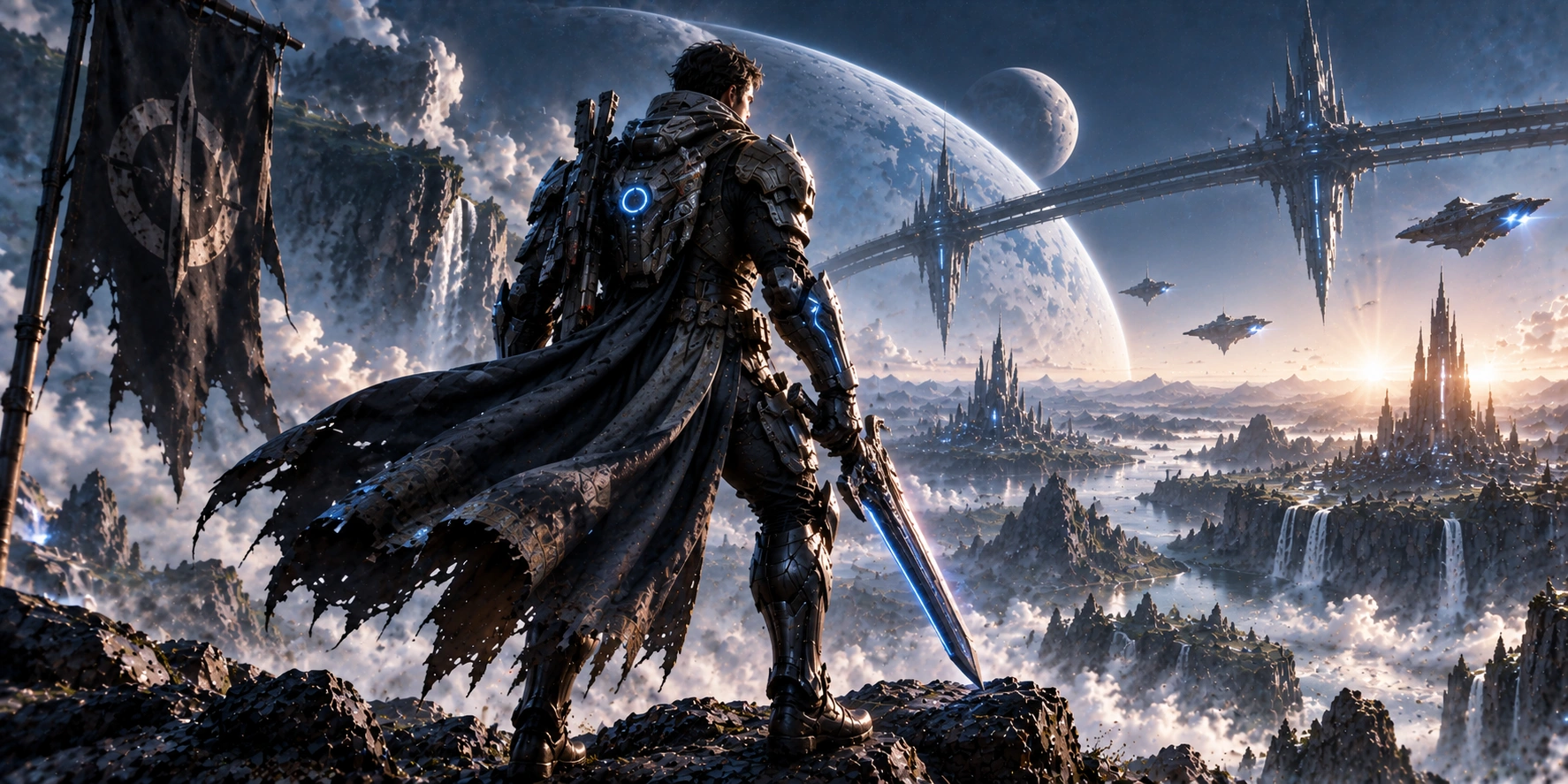
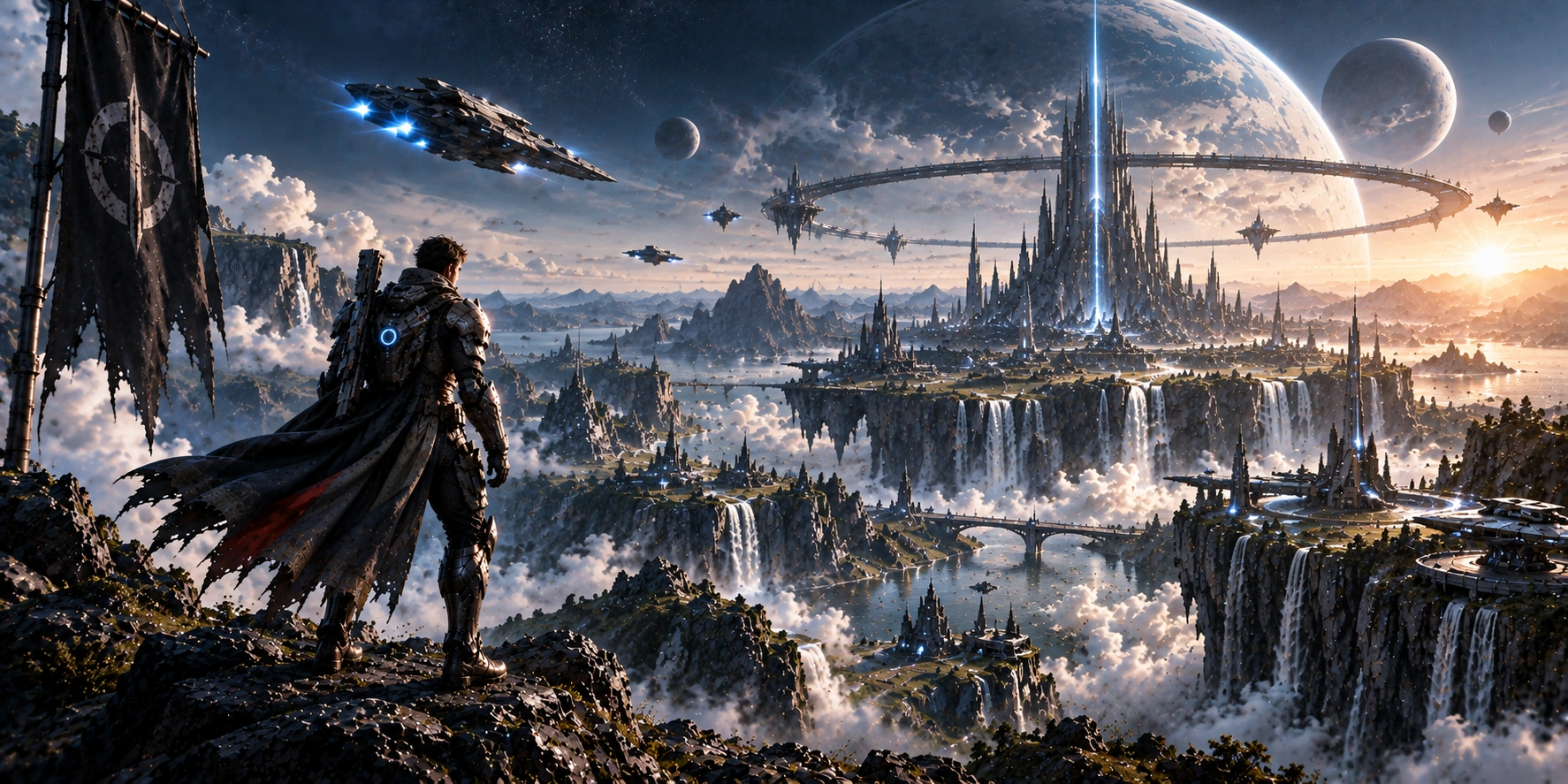
Ascenders was developed by Legendary Foundry Games as a third-person sci-fantasy action RPG. The main setting was intended to be the planet Ascension, an open world featuring different biomes, settlements, resources, enemies, and dungeons. The developers compared its approach to world exploration with The Legend of Zelda: Breath of the Wild, while the economic component was compared with EVE Online.
The concept was built around three interconnected pillars: Explore, Fight, and Build. Players were expected to explore territories and discover resources, participate in battles, and then use collected materials to manufacture items and develop settlements. A significant part of the economic infrastructure was intended to be created and managed by the players themselves.
In 2022, Legendary Foundry Games announced that it had raised $6.4 million in a private funding round. The round was co-led by Paramount Capital, Sino Global Capital, Three Arrows Capital, and Merit Circle, while other participants included DeFiance Capital, Blizzard Fund, Colony Labs, GuildFi, and several Web3 investors. The funding was intended to support team expansion and the continued development of Ascenders.
The project went through several stages of development and received a standalone combat demo. The team later introduced Ascenders: Simulation, a companion game designed to give Premium Land NFT holders a way to use their land and test some of the economic mechanics planned for the main game. For this reason, the term Chapter 2 is more appropriately considered in the context of the ecosystem's development rather than as the confirmed title of a separate full-scale release.
2. Exploration, Combat, and Building
The main Ascenders game was envisioned as an open-world ARPG in which users could choose their specialization and preferred way of interacting with the world. Explorers were expected to discover new territories and search for rare resources, fighters could clear dungeons and participate in PvEvP activities, while builders would use land plots to create economic infrastructure.
The open world was planned to consist of different regions with their own resources, enemies, missions, and characteristics. Exploration also had an economic purpose: discovered materials could be used for crafting or transferred to other participants. Individual areas were expected to expand as the project developed, while world events could influence the surrounding game environment.
Key elements of the gameplay model included:
- exploring the open world of the planet Ascension;
- searching for resources and discovering new territories;
- fighting creatures and other enemies;
- exploring and completing dungeons;
- participating in multiplayer PvEvP activities;
- crafting weapons, equipment, and other items;
- constructing facilities on player-owned land;
- trading resources and crafted items;
- developing guilds and cooperation between different specializations.
Dungeons were planned as separate combat instances accessible from the open world. By defeating enemies, players were expected to obtain resources and other rewards. This connected the combat loop directly with the economy: collected materials could be supplied to producers, transformed into equipment, and then used again for exploration and combat.
Building mechanics complemented this system. Player-owned land was intended to support different structures, ranging from resource-processing facilities to workshops and social buildings. Limited building space was designed to encourage landowners to consider market demand and decide which types of infrastructure would be most useful to other players.
3. Ascenders: Simulation, Land, and the Resource Economy
Ascenders: Simulation was introduced as a companion game for the main action RPG. Its purpose was to allow Premium Land NFT holders to use their plots before the full release of Ascenders while also introducing players to the project's planned economic system.
In Simulation, users managed land plots, placed buildings on available spaces, collected raw materials, produced components, and traded them. Unlike the combat-focused ARPG, the primary emphasis was placed on managing production chains and developing an individual economic operation.
Resources were designed to differ by type and level of processing. Raw materials could pass through production facilities and be transformed into higher-level components. This model was intended to create interdependence between landowners: one player could specialize in resource extraction, another in processing, and a third in manufacturing finished items.
The Simulation documentation also noted that some features were still under development and were expected to be introduced gradually. The described economic mechanics should therefore be considered within the context of the specific version of the game rather than treated as a guaranteed set of features for the main Ascenders title.
4. NFTs, Avalanche, and Digital Assets in Ascenders
Ascenders was designed around the concept of a player-driven economy, with blockchain technology intended to verify ownership of selected game assets and support economic transactions. Avalanche was chosen as the project's underlying blockchain infrastructure. Early documentation also discussed the potential use of a dedicated network for processing game-related transactions.
Land was one of the central Web3 assets in the ecosystem. Landowners were expected to choose buildings and economic specializations, while other players could use the infrastructure they created. This approach connected NFTs not only with digital collecting but also with resource production and the provision of in-game services.
| Element | Role in the Ecosystem | Web3 Mechanism |
|---|---|---|
| Land NFTs | Land for constructing buildings and developing production | Tokenized ownership of in-game land plots |
| Resources | Used for processing, crafting, and trading | Integrated into the player-driven economy |
| Game Items | Weapons, equipment, and other crafted assets | Some items were planned to be issued as NFTs |
| AGC | Governance, staking, and selected ecosystem functions | Governance token with a limited supply |
| GG | Payments, construction, crafting, and upgrades | Utility token for the in-game economy |
| Avalanche | Blockchain infrastructure for the project | Support for Web3 assets and economic transactions |
The original model assumed that a significant portion of goods would be created and distributed by players. Resources discovered by explorers could enter production chains, after which manufactured items would return to the market. Landowners, meanwhile, were expected to provide infrastructure for processing materials, manufacturing equipment, and delivering other services.
Such an economy requires a continuous balance between production and consumption. Excessive issuance of resources or in-game currency can reduce their value, while a limited player base can decrease demand for services and NFTs. The sustainability of this type of system therefore depends not only on tokenomics but also on player activity and demand for the underlying gameplay.
5. AGC and GG Tokens and the Current State of the Project
The Ascenders economy was designed around two tokens. AGC, with a maximum supply of 1 billion tokens, was intended for DAO governance, staking, and other ecosystem functions. GG was designed as a utility token for construction, crafting, item upgrades, and in-game transactions.
However, a significant part of the tokenomics remained a planned model rather than a fully implemented economy. DAO governance, staking, guilds, and some elements of the blockchain infrastructure should not be treated as fully implemented features of the main game. In 2023, reports indicated that development of Ascenders and Ascenders: Simulation had been discontinued due to financial constraints faced by Legendary Foundry Games.
Features described in early whitepapers and roadmaps should therefore be understood as project plans rather than confirmation of an active economy. Ascenders remains an example of a Web3 RPG concept in which an open world, combat, production, NFT land, and tokens were intended to form a unified player-driven economy. However, the original concept was not implemented at its intended scale, making Ascenders Chapter 2 more relevant as part of the project's development history than as an active new chapter of the blockchain game.