
Daylight Energy is an energy DePIN project that connects residential solar panels, batteries, electric vehicles, EV chargers, thermostats, and other distributed energy resources into a unified digital network. Users can connect compatible devices through the mobile app, share energy data, and receive rewards for participating in the ecosystem. Daylight's strategy has gradually expanded beyond the traditional “connect a device and earn points” model: the company is developing residential solar + battery subscriptions, a virtual power plant, and DayFi for financing energy infrastructure through on-chain markets. The energy project should not be confused with the similarly named Daylight service at daylight.xyz, which focuses on on-chain transaction recommendations for crypto wallets and is unrelated to energy DePIN.
Contents
- What is Daylight Energy and how does the energy DePIN work?
- Daylight App: solar panels, batteries, and connected devices
- Sun Points, Energy Subscription, and the Daylight network economy
- Base, DayFi, and the Web3 infrastructure of the energy project
- Daylight development and the future of decentralized energy
1. What is Daylight Energy and how does the energy DePIN work?
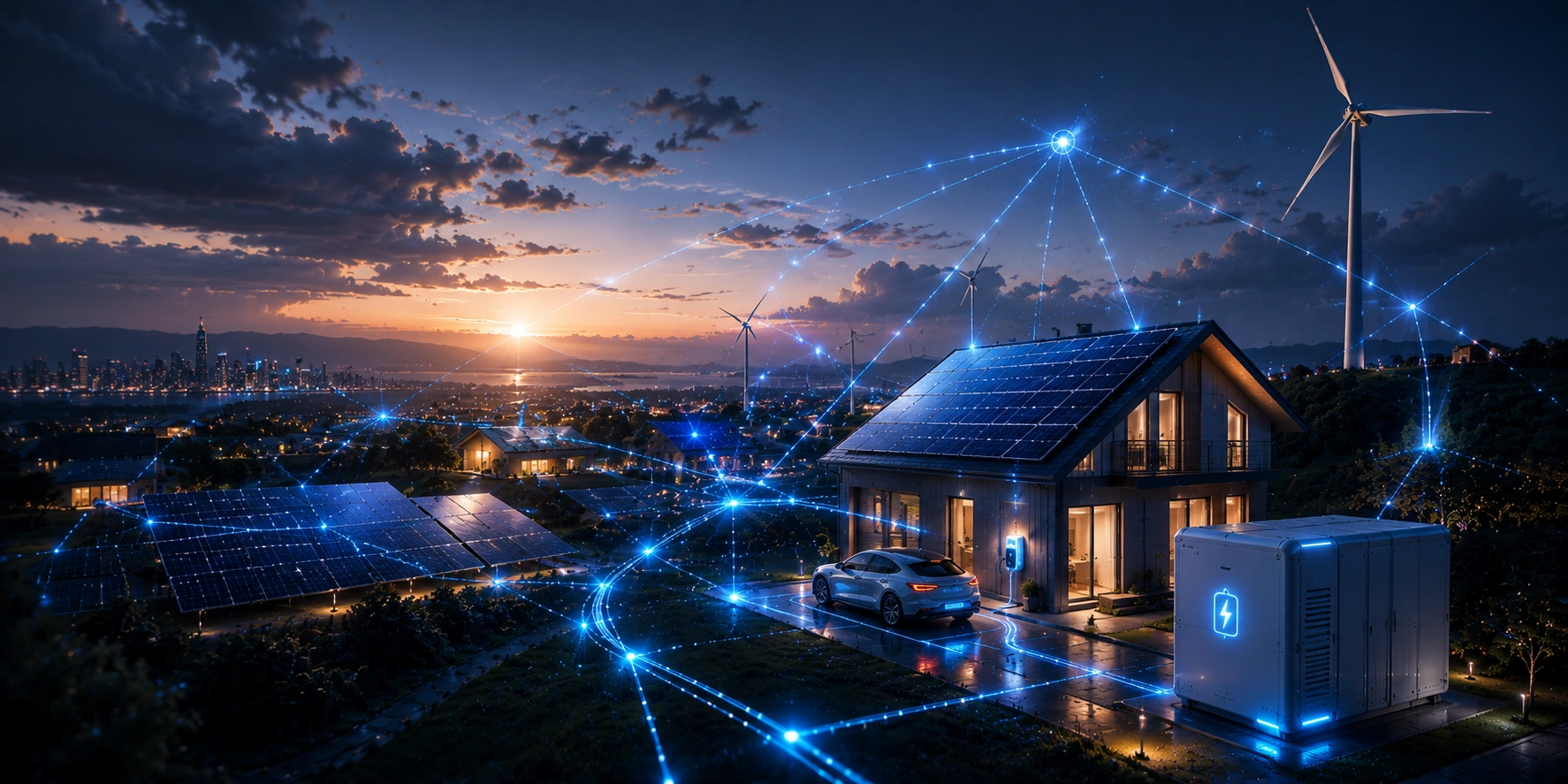
Daylight develops infrastructure for distributed energy resources — smaller energy assets located directly at or near consumers’ properties. These include rooftop solar systems, home batteries, EV chargers, electric vehicles, smart thermostats, and energy monitoring equipment. Instead of relying on a single large power plant, this model connects many independent devices into a distributed energy network.
The project is developed by Anode Labs, a company founded by specialists with experience in energy and infrastructure markets. In 2022, the company raised approximately $4 million in seed funding. In July 2024, it announced a $9 million Series A led by a16z crypto, with participation from Framework Ventures, Lerer Hippeau, Lattice, and Escape Velocity. The Daylight Protocol testnet was launched alongside this stage of development.
The original protocol concept focused on creating an on-chain economy around energy capacity and data. Users connect physical devices, while Daylight receives information that can be used to model electricity consumption and coordinate distributed resources. Economic incentives are designed to encourage owners to add compatible devices and participate in grid events.
This makes Daylight different from DePIN projects focused on wireless connectivity, computing, or geospatial data. The physical resource is controllable energy infrastructure. A home battery can store electricity for its owner while also providing flexible capacity during periods of high grid demand, allowing individual homes to become components of a larger virtual power plant.
2. Daylight App: solar panels, batteries, and connected devices
The Daylight App serves as the user interface for the energy network. Through the application, users can connect supported devices, monitor electricity consumption and generation, track stored energy, and participate in reward programs. Supported infrastructure includes energy monitors, smart thermostats, EV chargers, solar inverters, and battery systems.
The more data available to the platform, the more accurately it can model a household’s energy profile. This information has practical uses beyond basic statistics. Data about consumption patterns, solar generation, and battery status can help determine when electricity should be stored, consumed locally, or made available to the wider energy system.
| Component | Type | Role in the Daylight ecosystem |
|---|---|---|
| Daylight App | Energy Application | Combines device management, energy data, and user rewards |
| Solar | Distributed Generation | Generates electricity directly at the user’s property |
| Battery | Energy Storage | Stores electricity and can provide capacity during periods of grid demand |
| EV Charger | Connected Device | Adds energy data and a controllable electrical load |
| Smart Thermostat | Flexible Load | Helps monitor and optimize part of a household’s energy consumption |
| Energy Meter | Monitoring Hardware | Provides data about actual electricity consumption |
Another area of development involves the installation of new energy equipment. Daylight previously operated a Marketplace designed to connect consumers with solar systems, batteries, heat pumps, EV chargers, insulation, and other home upgrades through local contractors. The company later placed greater emphasis on its Energy Subscription model combining solar generation and battery storage.
In this configuration, the battery performs two functions. For the homeowner, it provides backup power during outages and enables more locally generated solar electricity to be used on-site. For Daylight, a network of batteries represents a controllable energy resource that can potentially be aggregated to support the power grid during periods of increased demand.
3. Sun Points, Energy Subscription, and the Daylight network economy
During the early testnet period, users received Daylight Points for connecting energy devices and participating in the network. By 2025, the active rewards program had shifted toward Sun Points. They can be earned through supported ecosystem activities, including sharing device data, completing tasks, connecting a utility account, referrals, participating in grid events, and joining the Energy Subscription program.
Sun Points should not automatically be treated as a tradable cryptocurrency. They function as an internal reward currency that can be used in supported scenarios, including available rewards or payments toward a Daylight Energy Subscription. The company has also discussed the possibility of a future network token, but any potential token should be distinguished from the existing points system.
Key elements of the Daylight economy:
- DePIN architecture based on distributed energy resources;
- connection of residential energy devices through the Daylight App;
- Sun Points for supported activities and network participation;
- energy data provided by compatible connected devices;
- grid events involving flexible energy capacity;
- Energy Subscription combining solar generation and battery storage;
- aggregation of residential batteries into a distributed network;
- potential revenue from providing energy and capacity to the power system;
- DayFi infrastructure for financing physical energy assets;
- separation between consumer rewards and the investment economy.
The business model is increasingly focused on real energy-related cash flows. Under the Energy Subscription model, a household receives a solar + battery system without the conventional large upfront purchase and instead makes recurring payments to Daylight. At the same time, the company can aggregate participating batteries and use their capacity in energy markets or grid programs during periods of peak demand.
For DePIN, this is an important distinction from an economy supported primarily by token issuance. If physical infrastructure generates payments from electricity services and grid participation, the network gains an external source of revenue. However, the economics of each installation depend on electricity tariffs, regional energy markets, hardware costs, interconnection rules, and the efficiency of battery management.
4. Base, DayFi, and the Web3 infrastructure of the energy project
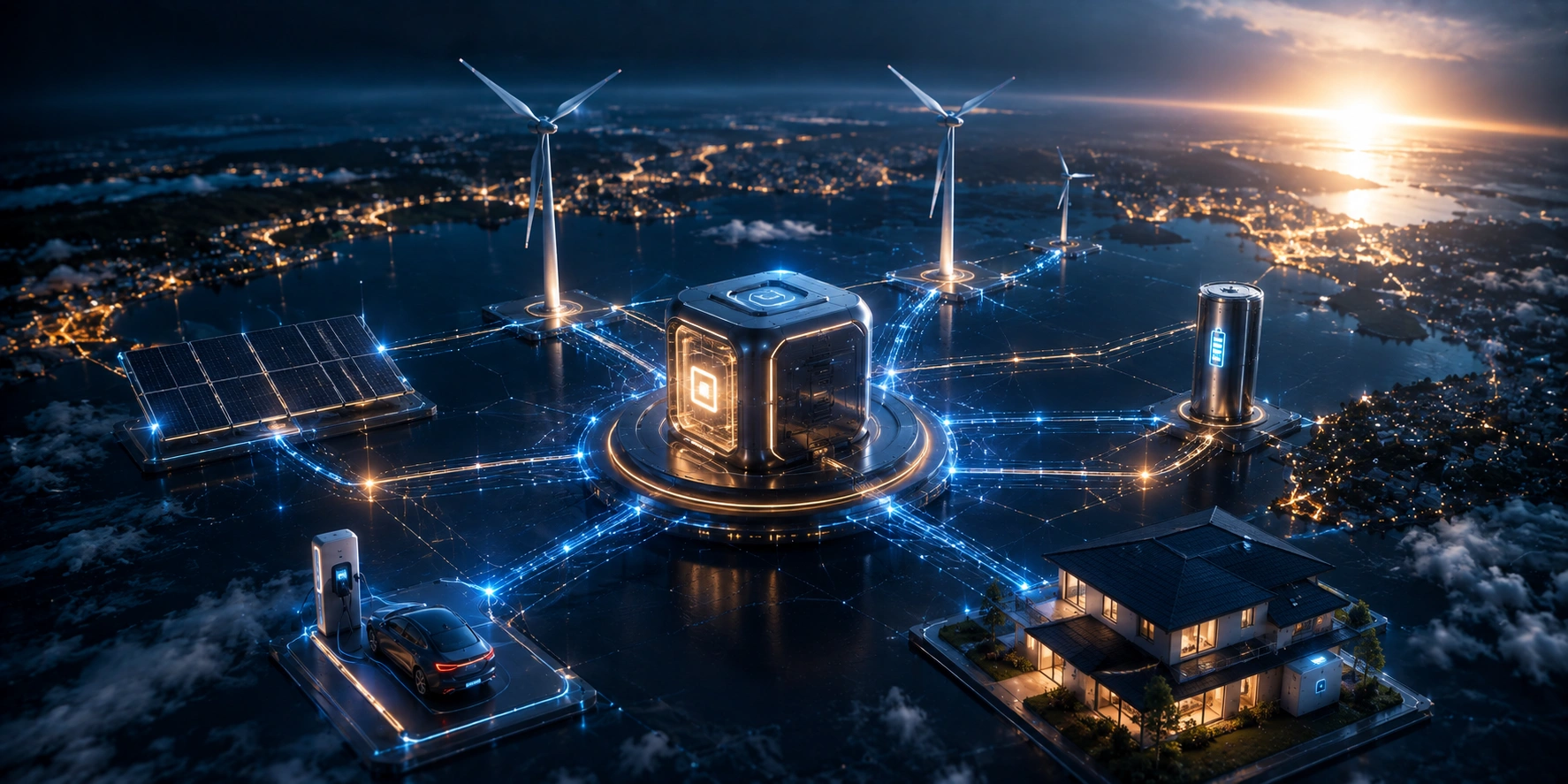
When its testnet launched in 2024, Daylight was described as an energy DePIN using Base. Blockchain infrastructure is not used to physically transmit electricity: energy continues to move through the conventional power grid. Instead, the on-chain layer is intended to provide a programmable economic framework around distributed energy assets, incentives, ownership structures, and financial mechanisms.
By 2026, DayFi had become an important part of this strategy. DayFi is a separate protocol designed to finance decentralized energy infrastructure. Its objective is to connect capital with solar and battery systems deployed at the edge of the electricity grid. The underlying idea is to transform cash flows generated by real energy infrastructure into structured on-chain financial instruments.
DayFi separates financing of physical assets from Daylight’s consumer-facing experience. Households are primarily concerned with electricity costs, backup power, and installed equipment, while capital providers are interested in the cash flows generated by energy systems. This structure brings the model closer to the RWA sector because the underlying economic value is tied to operating physical infrastructure.
Web3 infrastructure does not eliminate conventional energy-sector risks. Solar installations and batteries require installation, maintenance, grid interconnection, and long-term financing. Revenue depends on regional regulations, electricity tariffs, and access to grid-service markets. Smart contracts can make financial coordination and settlement more transparent, but they cannot guarantee hardware performance or future returns.
5. Daylight development and the future of decentralized energy
In 2025, Daylight significantly expanded the capital available for network development. The company announced $75 million in financing, consisting of $15 million in equity led by Framework Ventures and a $60 million project development facility led by Turtle Hill Capital. The equity round also included a16z crypto, Lerer Hippeau, M13, Room40 Ventures, EV3, Crucible Capital, Coinbase Ventures, and Not Boring Capital.
The financing is primarily intended to support the deployment of residential solar + storage systems and related financial infrastructure. The Energy Subscription program was introduced in Illinois and Massachusetts as a model under which Daylight finances the equipment while participating households receive solar generation, battery storage, and backup power without making a large upfront purchase.
This represents a shift from an experimental DePIN focused mainly on incentivizing connections to existing devices toward a more capital-intensive infrastructure model. Daylight aims to accelerate the deployment of new distributed energy assets, aggregate them into a network, and generate revenue from subscriptions and battery participation in energy markets. DayFi adds a separate mechanism for attracting capital to this infrastructure.
The main risks are connected to the economics of physical infrastructure, including the cost of solar and battery systems, installation quality, regional regulation, access to grid programs, and the ability to aggregate enough devices. Users also need to consider subscription terms, policies governing energy data, and the actual utility of the rewards program. Sun Points should not be interpreted as a guarantee of a future token or investment return.
Daylight represents an evolution of the energy DePIN concept from simple tokenized participation toward a combination of physical energy infrastructure, software-based coordination, and on-chain financing. Its long-term prospects will depend less on the number of points distributed and more on the number of operational solar + battery systems, the amount of controllable energy capacity, revenue from electricity and grid services, and DayFi’s ability to finance infrastructure on economically sustainable terms.











