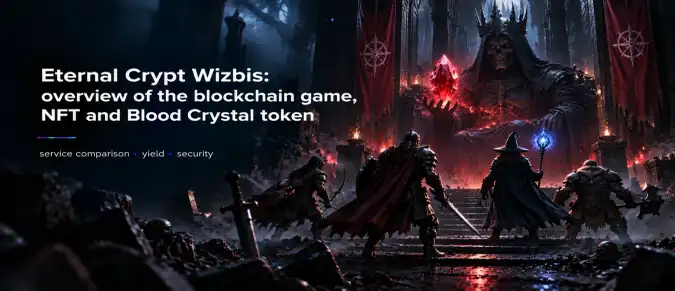

Eternal Crypt Wizbis most likely refers to Eternal Crypt – Wizardry BC –, an official blockchain game based on the classic Wizardry RPG franchise; no separate project called Wizbis has been confirmed in the available materials. The game combined clicker mechanics with party building, character progression, and dungeon exploration, while its Web3 layer was built around Adventurer NFTs and the Blood Crystal ($BC) token on Polygon. The full version launched on March 7, 2024, as a free-to-play project for browsers, iOS, and Android. However, Eternal Crypt – Wizardry BC – officially shut down on December 15, 2025, making it primarily a historical example of integrating an established gaming IP with NFTs and a crypto token.
Contents
- Eternal Crypt Wizbis and the Blockchain Version of Wizardry
- Eternal Crypt Gameplay and Dungeon Exploration
- Adventurer NFTs and Wizardry BC Game Assets
- Blood Crystal ($BC) Token and the Polygon Economy
- Eternal Crypt Shutdown and Current Project Status
1. Eternal Crypt Wizbis and the Blockchain Version of Wizardry
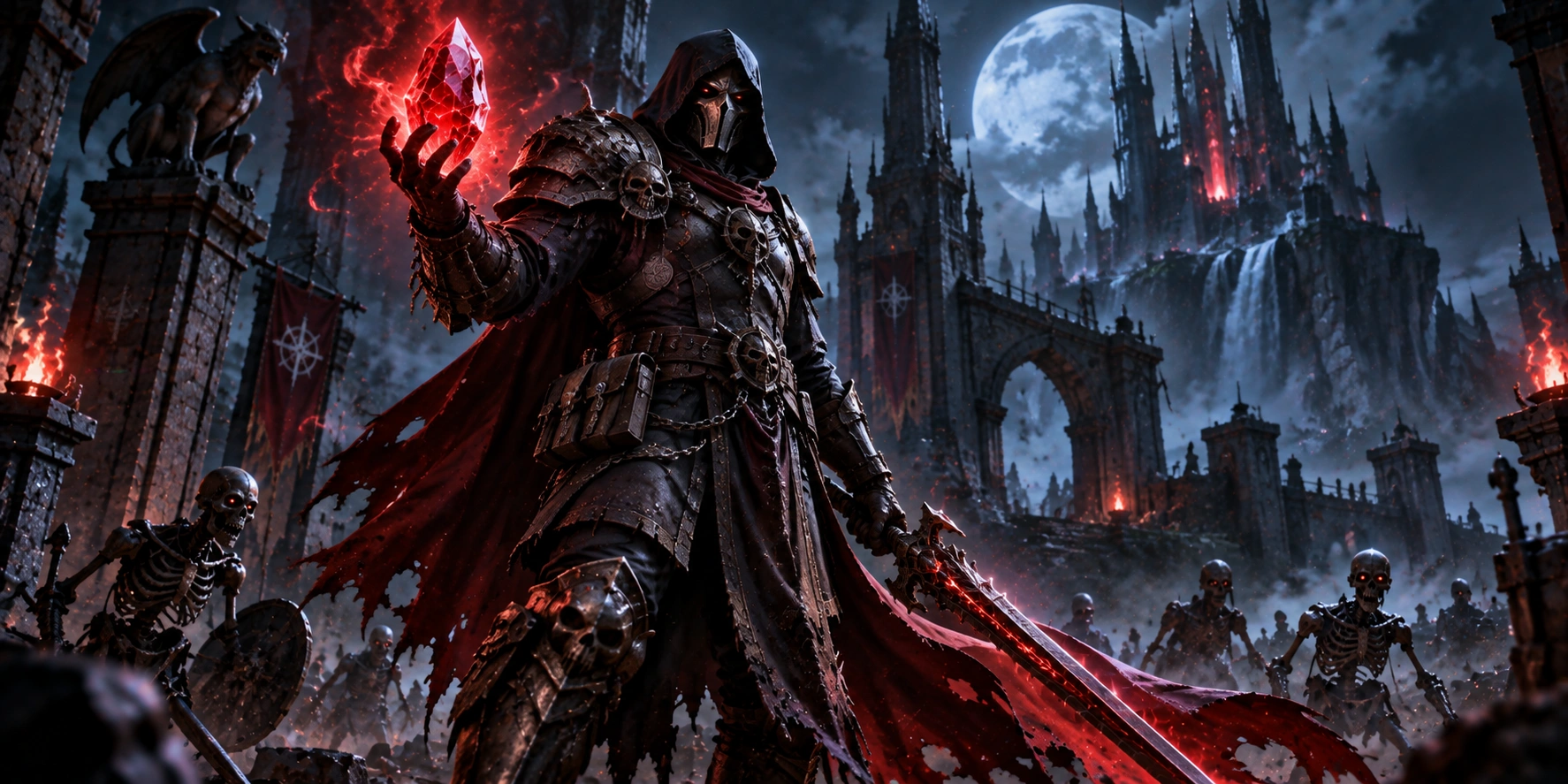
The project was officially introduced in 2023 as Eternal Crypt – Wizardry BC –. It used the Wizardry IP owned by Japanese company Drecom. Development and operation involved blockchain company Turingum, while Dubai-based ZEAL NOVA DMCC served as the publisher. The full release took place in March 2024.
Wizardry has a much longer history: the first game in the series was released in the United States in 1981. Party building, dungeon exploration, character classes, and turn-based combat influenced the development of computer RPGs. Eternal Crypt did not attempt to reproduce the classic formula directly in Web3, instead using the familiar universe for a simpler clicker/strategy model.
The name Eternal Crypt Wizbis does not appear as a separate official release, token, or version of the game. Therefore, it is more accurate to base the analysis on the confirmed Eternal Crypt – Wizardry BC – project rather than attribute features from unrelated products to it. The project's official domain also differed from eternalcrypt.io, with its main website operating under the Wizardry BC brand.
Players took the role of a Guild Master and managed a party of adventurers sent into the Dungeon of Dudael. The base game was free-to-play and did not require an NFT purchase to begin playing. Web3 mechanics became more relevant when interacting with $BC and blockchain assets, meaning that conventional gameplay and the crypto economy were partially separated.
2. Eternal Crypt Gameplay and Dungeon Exploration
Eternal Crypt combined automated clicker-style progression with strategic RPG elements. The main objective was to build an effective party of Adventurers, defeat enemies, and progress as deep into the dungeon as possible. Players had to consider character attributes, improve proficiency, restore their condition, and upgrade Legacy Items.
Characters differed by race and profession. Available races included Human, Elf, Dwarf, and Felpurr, while professions included Fighter, Priest, Mage, Thief, Bishop, Samurai, Lord, and Ninja. Different combinations of attributes determined each character's strengths and weaknesses, encouraging players to adjust their party composition depending on the situation.
Key elements of the gameplay loop included:
- building a party of Adventurers with different attributes;
- automated progression through the Dungeon of Dudael;
- fighting monsters and reaching new dungeon levels;
- improving proficiency and restoring characters;
- finding and upgrading Legacy Items;
- obtaining treasure chests and Blood Crystal when returning to town;
- opening chests with the risk of triggering traps;
- using Adventurer NFTs to participate in the Web3 economy.
The Return to Town mechanic connected dungeon progression with rewards. After returning from the dungeon, players could receive treasure chests and, under certain conditions, Blood Crystal. Progressing deeper than the previous record increased the importance of each new run for the reward system, making gradual dungeon advancement a central part of the gameplay loop.
Treasure chests could contain not only items but also Adventurer's Ashes. Under certain conditions, these could be used to restore a new adventurer. Chests could also contain traps, adding an element of risk to the reward system. As a result, the basic clicker structure was supplemented by party management and resource progression.
3. Adventurer NFTs and Wizardry BC Game Assets
NFT characters were the central Web3 component of Eternal Crypt. Not every Adventurer was necessarily a blockchain asset: a distinctive feature of Adventurer NFTs was Alchemical Power, which was connected to the ability to obtain $BC. Using these characters efficiently required players to consider their attributes and remaining resources.
Before the official launch, the project held an Initial NFT Offering for the Adventurer Genesis Collection. Genesis NFTs provided early access to certain features and participated in the initial $BC distribution model. According to the original tokenomics, up to 20% of the total Blood Crystal supply could be distributed through this collection when the relevant in-game conditions were met.
| Component | Function | Role in the Game | Web3 Format |
|---|---|---|---|
| Adventurer | Party member | Exploration and combat | In-game character |
| Adventurer NFT | Character with Alchemical Power | Participation in earning $BC | NFT on Polygon |
| Genesis Collection | Early character collection | Early access and tokenomics | NFT |
| Legacy Items | Character development | Improved efficiency | In-game assets |
| Blood Crystal | In-game currency | Purchases and progression | $BC on Polygon |
Adventurer NFTs could be transferred between the game account and an external wallet when specific conditions were met. The documentation described restrictions related to party usage, status effects, and Mining Power. NFT withdrawals also required a fee, meaning blockchain operations remained connected to the game's internal rules.
This architecture demonstrated a hybrid approach: most gameplay calculations were handled inside the application, while selected characters and tokens could be held in a user's wallet. This reduced the need to record every action on-chain while still allowing users to own certain digital assets outside the game server.
4. Blood Crystal ($BC) Token and the Polygon Economy
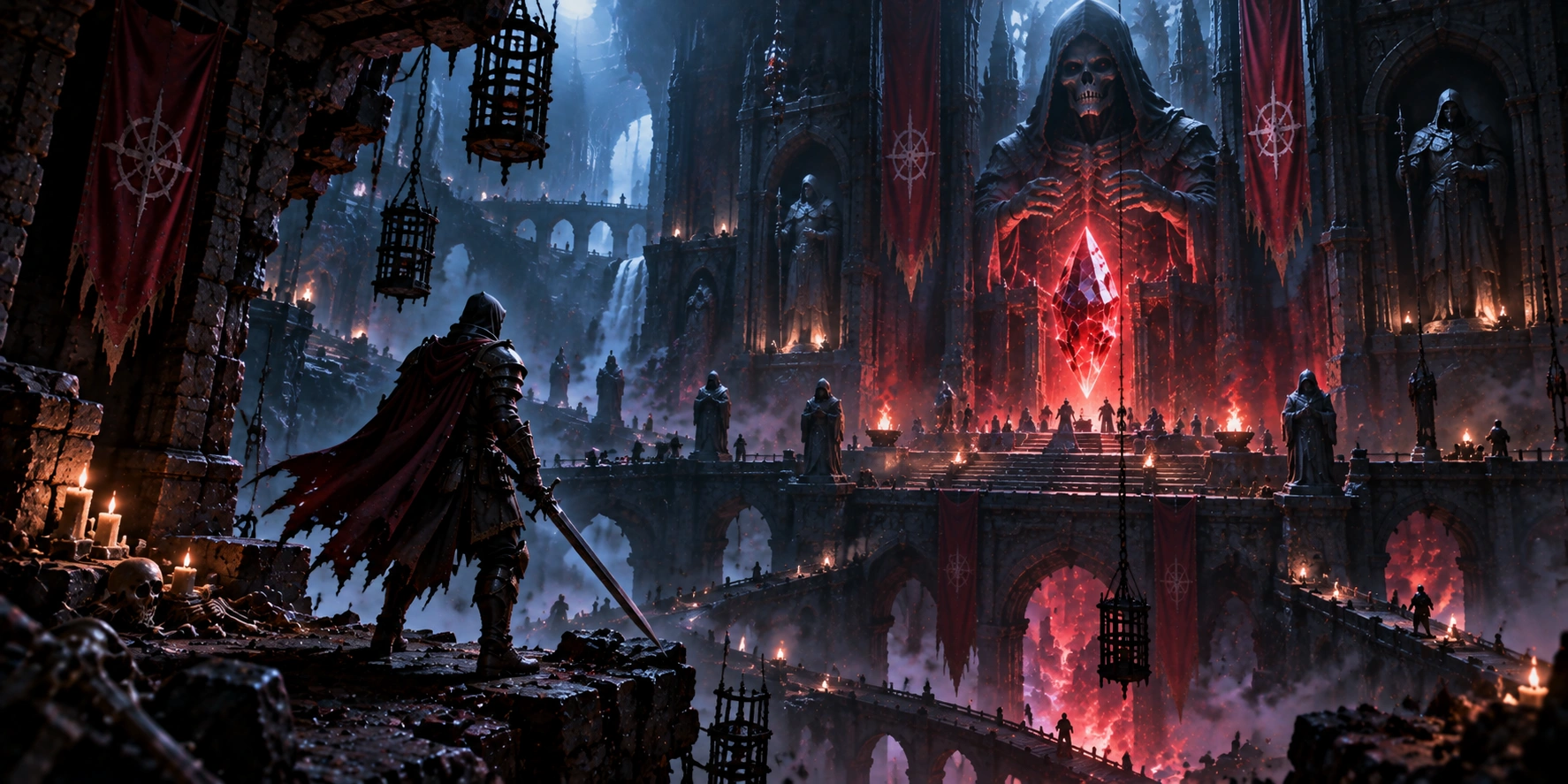
Blood Crystal ($BC) served as the primary cryptocurrency of Eternal Crypt. Its total supply was capped at 1 billion tokens. Obtaining $BC through gameplay depended on several conditions, including the use of eligible Adventurer NFTs and reaching the required level of dungeon progression.
The token's utility was directly connected to the game. $BC was used to purchase items, improve the proficiency of Adventurer NFTs, and obtain new characters. The developers also considered expanding its functions beyond the core gameplay as part of the broader development of the IP, although such plans should be distinguished from mechanics that were actually available before the service shut down.
The token operated on Polygon PoS. In October 2024, $BC was added to the Japanese cryptocurrency platform Coincheck, and in December it also became available through Coincheck Marketplace. This provided an external market for the in-game currency but also tied the value of rewards to market liquidity and the price of the crypto asset.
The project used a single-token model and presented limited issuance as one of the mechanisms for building a sustainable economy. Additional measures were intended to include control over NFT supply and external revenue sources such as in-game purchases and development of the Wizardry IP. However, a limited token supply alone cannot guarantee the stability of a GameFi economy, which also requires sustained demand and an active user base.
The history of Eternal Crypt also illustrates the difference between token ownership and the continued operation of a game service. $BC and NFTs could be withdrawn to an external Polygon wallet, but their original utility depended on the active game. Once the service ended, this connection was disrupted even though the on-chain assets could technically continue to exist.
5. Eternal Crypt Shutdown and Current Project Status
On October 1, 2025, the team announced that Eternal Crypt – Wizardry BC – would shut down following the dissolution of publisher ZEAL NOVA. New account registrations were suspended, followed by the gradual shutdown of commercial and Web3 features.
On December 1, 2025, the marketplace, new Adventurer NFT acquisition through Introduction Letters, $BC rewards through Return to Town, and Spending Account deposits were discontinued. The service fully shut down on December 15, 2025, meaning Eternal Crypt can no longer be considered an active blockchain game.
Before the shutdown, users were advised to withdraw $BC, POL, and NFTs from their Spending Accounts to external wallets. Withdrawn assets remained on Polygon, although their original utility was significantly reduced after the game servers were taken offline.
This highlights the distinction between on-chain ownership and in-game functionality. An NFT can remain in a wallet after a project shuts down, but its gaming features depend on continued application support. The same applies to $BC: the token's existence on the blockchain does not guarantee continued demand or the preservation of its original use cases.
Eternal Crypt Wizbis is therefore more accurately associated with the discontinued Eternal Crypt – Wizardry BC – rather than a separate active Web3 game. The project combined the Wizardry universe, clicker/strategy mechanics, Adventurer NFTs, and $BC on Polygon, but its lifecycle ended in December 2025.