

In the modern digital era, issues of privacy and personal data security have come to the forefront. Fileverse offers an innovative solution to these problems by creating an ecosystem for private work with files. This project represents a fundamentally new approach to managing digital assets, where the user gains full control over their information.
Unlike traditional centralized cloud services, Fileverse uses advanced technologies of decentralization and encryption. The platform allows not only for data storage but also for secure sharing and collaborative work on documents, all while maintaining anonymity and complete authority over one's digital resources.
Contents:
- Philosophy and Mission of the Fileverse Project
- Main Features and Platform Functionality
- Technological Architecture and Security
- Application of Fileverse in Real-World Scenarios
- Future Prospects of the Ecosystem
- Conclusion
Philosophy and Mission of the Fileverse Project
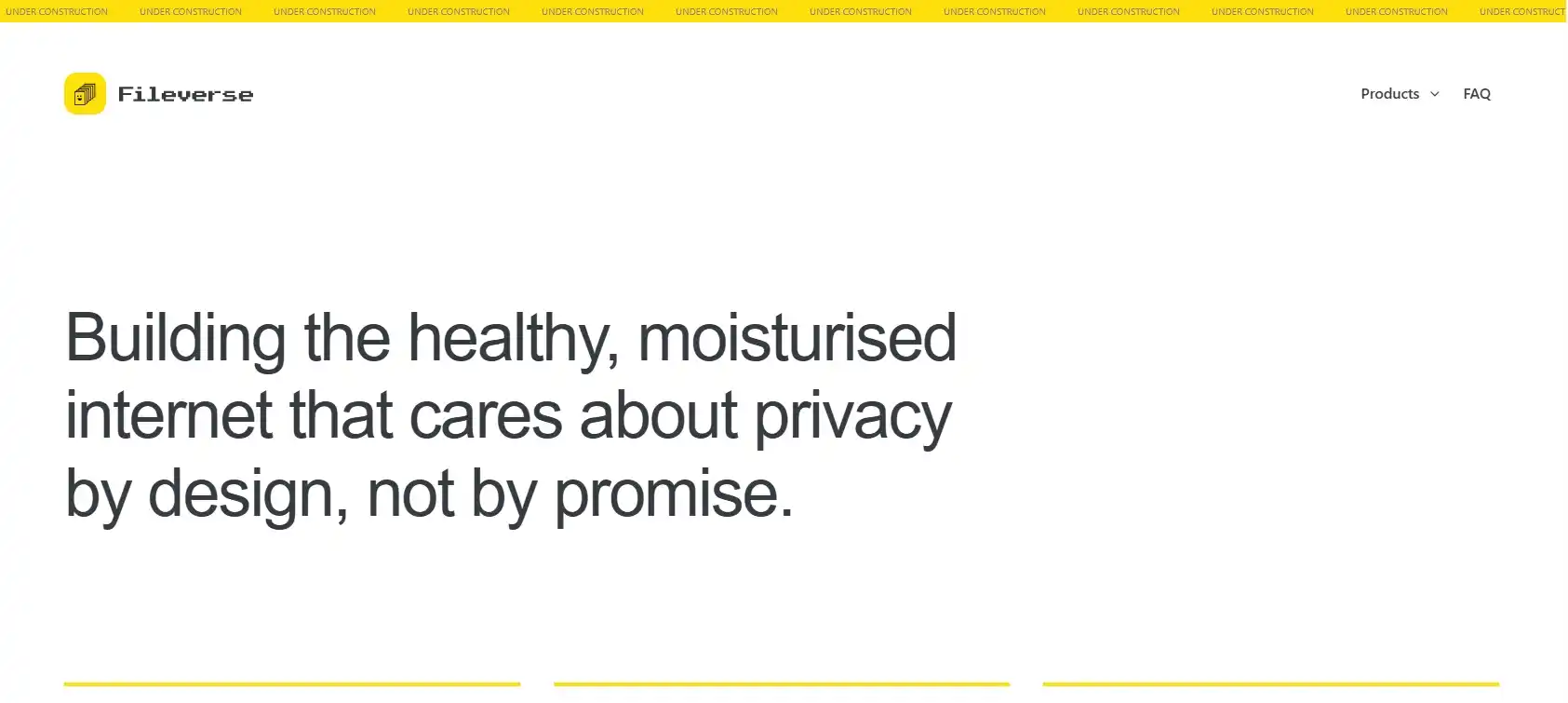
The philosophy of Fileverse is based on the principle of digital sovereignty, where the right to privacy is fundamental. The project aims to return full control over personal information to users, creating an alternative to the corporate model of data collection and monetization. The main idea is to build an internet where privacy is embedded into the very architecture of services.
The platform's mission is to create a secure infrastructure for communication and collaboration. This is a space where people can freely interact and exchange data without being subjected to constant surveillance or the risk of leaks. Fileverse places the safety and autonomy of the user in the digital environment at the forefront.
Main Features and Platform Functionality
Fileverse offers users not just secure storage, but a comprehensive set of tools for full-fledged work with files. The platform combines the convenience of classic cloud services with the privacy of decentralized technologies, enabling safe data storage, sharing, and collaborative document editing. Its key features include:
- Secure Storage: Uploading various file types to a private space with convenient organization.
- Controlled Sharing: Transferring data via one-time or customizable links with selective access.
- Collaborative Work: Tools for collective real-time document editing using end-to-end encryption.
- Full Sovereignty: The user independently defines and manages access rights to their data.
The platform's functionality transforms it into a secure working environment for teams and individual users. Fileverse provides the technological foundation that allows focusing on the content of the work without worrying about data confidentiality. This approach makes complex data protection mechanisms intuitive and accessible for everyday use.
Technological Architecture and Security
The reliability and confidentiality of Fileverse are ensured by a multi-layered technological architecture. Data is protected by end-to-end encryption, which is performed directly on the user's device before transmission. For information storage, decentralized networks are used, which eliminates a single point of failure and increases resilience to external interference.
Comparison of security approaches:
| Criterion | Traditional Cloud Services | Fileverse |
|---|---|---|
| Data Control | With the provider | With the user |
| Encryption | Often server-side | End-to-End (E2EE) on the client side |
| Storage | Centralized servers | Decentralized networks (IPFS, Arweave) |
| Censorship Resistance | Low | High |
| Trust Model | Trust in the company | Trust in cryptography and open code |
Blockchain plays a fundamental role in this ecosystem, serving as the foundational layer for rule execution. Smart contracts automatically manage access rights, and transactions create an immutable audit trail of actions. This allows for the creation of a transparent and secure environment where reliance on a central operator is not required.
Application of Fileverse in Real-World Scenarios
Fileverse finds practical application in professional fields where confidentiality is a critical requirement. Lawyers and journalists use it for the secure transfer of confidential documents and source protection. Open-source developers and corporate teams utilize its tools for collaborative project work, minimizing the risks of source code and internal communication leaks.
The platform is also in demand for solving everyday tasks related to personal data privacy. Users create secure family archives for sharing photos, store important personal documents, or organize small communities. This helps avoid surveillance by algorithms of large corporations and ensures full control over digital heritage and communication history.
Future Prospects of the Ecosystem
The further development of Fileverse is focused on deepening decentralization and expanding the platform's capabilities. The team is working on creating a more open, community-driven architecture that will enhance users' digital sovereignty. The project's strategy includes the implementation of key updates aimed at improving accessibility, privacy, and functionality.
Main planned innovations:
- Creation of a Decentralized Autonomous Organization (DAO) for collective governance.
- Support for additional blockchain networks to reduce fees and increase speed.
- Development of tools for anonymous verification and reputation building.
- Integration with other projects and services in the Web3 ecosystem.
The implementation of these plans will allow Fileverse to become a full-fledged infrastructural foundation for a new generation of private online services. Thus, the ecosystem will develop as an open and secure environment where users can not only store data but also participate in its development, creating a space for innovation based on trust and confidentiality.
Conclusion
Fileverse demonstrates a viable and promising alternative to the traditional model of digital services based on pervasive data collection. The project successfully combines a high level of technical security with practical convenience, making privacy a fundamental right in everyday use. This is an important step towards digital sovereignty, where control over information returns to its rightful owner.
Developing as an open and decentralized ecosystem, Fileverse lays the groundwork for a new generation of online tools where trust is ensured by cryptography, not corporate promises. Thus, the project not only solves current problems but also forms the technological basis for a safer and freer digital future.











