

Glacier Network — is an innovative blockchain platform focused on data storage, artificial intelligence, and scalable decentralized applications (DApps). Unlike most existing solutions, Glacier focuses on integration with distributed data storage systems optimized for processing large volumes of information. The project provides a technological foundation for secure data storage and fast queries at minimal costs, making it attractive for use in Web3, DeFi, AI, and Metaverse applications.
The project is designed to meet the growing demand for data processing in blockchain ecosystems and solves the problems of working with large datasets, offering unique solutions in the fields of versioning, storage, and computation.
- Glacier Network Project: Philosophy and Goals
- Solving Web3 and Blockchain Infrastructure Problems
- Technological Architecture of Glacier Network
- GlacierDB and AI Integration
- GLS Token Economics
- Project Prospects and Risks
Glacier Network Project: Philosophy and Goals
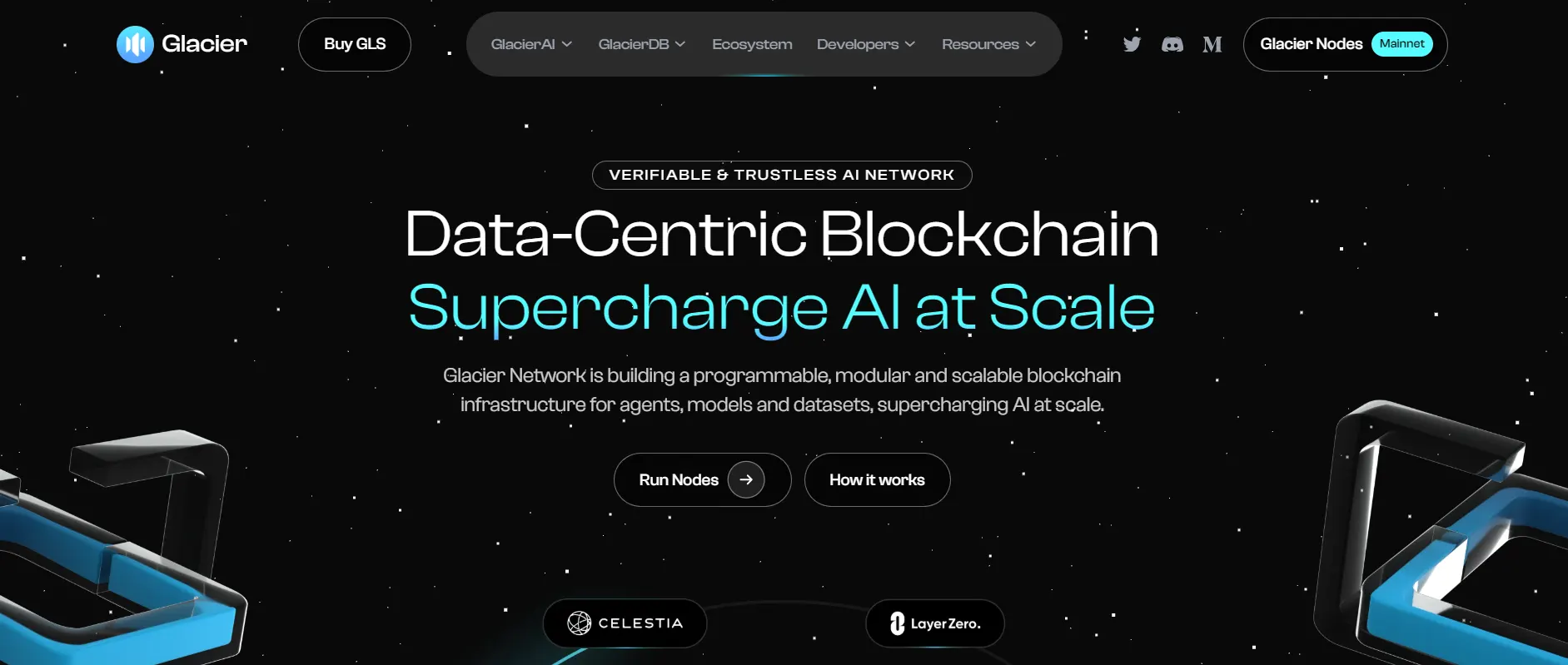
Glacier Network — is amodular and scalable blockchain infrastructure designed for efficient data management in Web3. The project addresses one of the most important issues — the lack of efficient and cost-effective solutions for handling large datasets in decentralized networks. Glacier focuses on building GlacierDB — a distributed NoSQL database that ensures data storage, processing, and querying without centralized solutions.
The main goal of the project is to create a platform for decentralized applications, where data storage and processing are carried out without intermediaries, and users get fast access to information. It is important to note that, unlike traditional blockchains, Glacier does not just process transactions but works with intelligent queries and data storage, opening up new horizons for the use of artificial intelligence and the metaverse.
Solving Web3 and Blockchain Infrastructure Problems
Web3 faces several problems, especially in the field of data processing and integration of various blockchain networks. Most existing solutions are focused only on storing immutable data, which complicates the creation of interactive and intelligent applications. Glacier solves these issues by offering a distributed NoSQL database, GlacierDB, which allows working with large volumes of information, creating flexible, scalable solutions for developers.
The Web3 problems solved by Glacier:
-
Lack of flexibility in data storage and processing
-
Scalability issues with existing blockchain solutions
-
Low performance when working with large datasets
-
Isolated ecosystems hindering integration between projects
-
Absence of fast and inexpensive data access for AI and DApp applications
Glacier solves all these issues by offering a modular architecture that allows flexible scaling and adapting infrastructure to developers' needs.
Technological Architecture of Glacier Network
The architecture of Glacier is built around several key components that provide its unique capabilities. The main element is GlacierDB — a distributed NoSQL database that allows for efficient data storage and processing. To ensure scalability and efficiency, a Layer‑2 rollup is used, which operates on top of the base storage layer, ensuring low costs and high performance.
Main components of the architecture:
| Component | Description |
|---|---|
| GlacierDB | Distributed NoSQL database for data storage and processing |
| Layer‑2 Rollup | Solution for improving scalability and reducing costs |
| Integration with various storage layers | Support for Arweave, Filecoin, and BNB Greenfield for reliable data storage |
| Flexible APIs | Access to data and computations for developers at various levels |
These components allow the creation of a universal blockchain platform that provides fast and efficient access to data at minimal costs.
GlacierDB and AI Integration
GlacierDB plays a key role in the project, providing efficient data storage and querying. Unlike standard blockchain systems that are limited in their ability to work with large datasets, GlacierDB offers intelligent data processing, which is especially important for projects with active use of artificial intelligence. The project actively integrates AI models and algorithms into its platform, providing support for complex computations and real-time analysis.
GlacierDB supports processing of vector data, which is essential for AI and machine learning solutions. The system also supports automatic versioning of data, which is important for developing AI solutions that require tracking changes and accuracy in data processing. Integration with AI models allows performing computations and analyzing data in real time, significantly expanding the possibilities of using Glacier for developing intelligent applications.
GLS Token Economics
The GLS token is the primary asset in the Glacier Network ecosystem. It plays an important role in ensuring the platform's functionality, allowing users to participate in various processes within the network. GLS tokens are necessary for transaction execution on the network, as well as for staking, which helps maintain the decentralized structure and security of the platform.
Users can lock their tokens in the staking process, receiving rewards in return. This mechanism encourages participants to make long-term investments in the project and support its operation. Additionally, the GLS token is used for network governance, giving token holders the ability to vote on important issues related to the development and improvement of the platform.
The total supply of GLS tokens is limited to 1,000,000,000 units, making them valuable and scarce. The token is actively used to finance the development of new features and expand the Glacier Network ecosystem. Staking, governance, and transaction payments — all of these functions ensure the stability and growth of the project, creating incentives for users and investors.
The platform is actively working on expanding the use of the token in various aspects of its functionality, which also attracts the attention of investors and users interested in the stability and long-term prospects of Glacier Network.
Project Prospects and Risks
Glacier Network has great potential, especially in the field of data storage and AI integration. The project is actively working on expanding its functionality, including support for new blockchains and improving interaction with various storage platforms. It is expected that integration with DeFi, the Metaverse, and other blockchain systems will open up new opportunities for data usage.
However, like any cryptocurrency project, Glacier faces certain risks, such as cryptocurrency market volatility and regulatory uncertainty. The platform depends on successful integration with the Web3 ecosystem, which presents potential risks in case of changes in market conditions or legislative initiatives.











