

In the rapidly evolving GameFi space, where video games meet decentralized finance, numerous projects are emerging. Among them, HappyLand stands out—a game offering immersion in a vast metaverse with its own economy. This project allows players not only to have fun but also to participate in a virtual economic system based on blockchain technology. Through mechanics of farm management, world exploration, and social interaction, HappyLand creates an ecosystem where players' time and efforts can be converted into real value.
Contents:
- Become a Farmer in the Virtual World of HappyLand
- Explore the Multifaceted Metaverse
- Blockchain-Based Economy
- HappyLand Gameplay and Earning Opportunities
- Future and Development of the Project
- Conclusion
Become a Farmer in the Virtual World of HappyLand
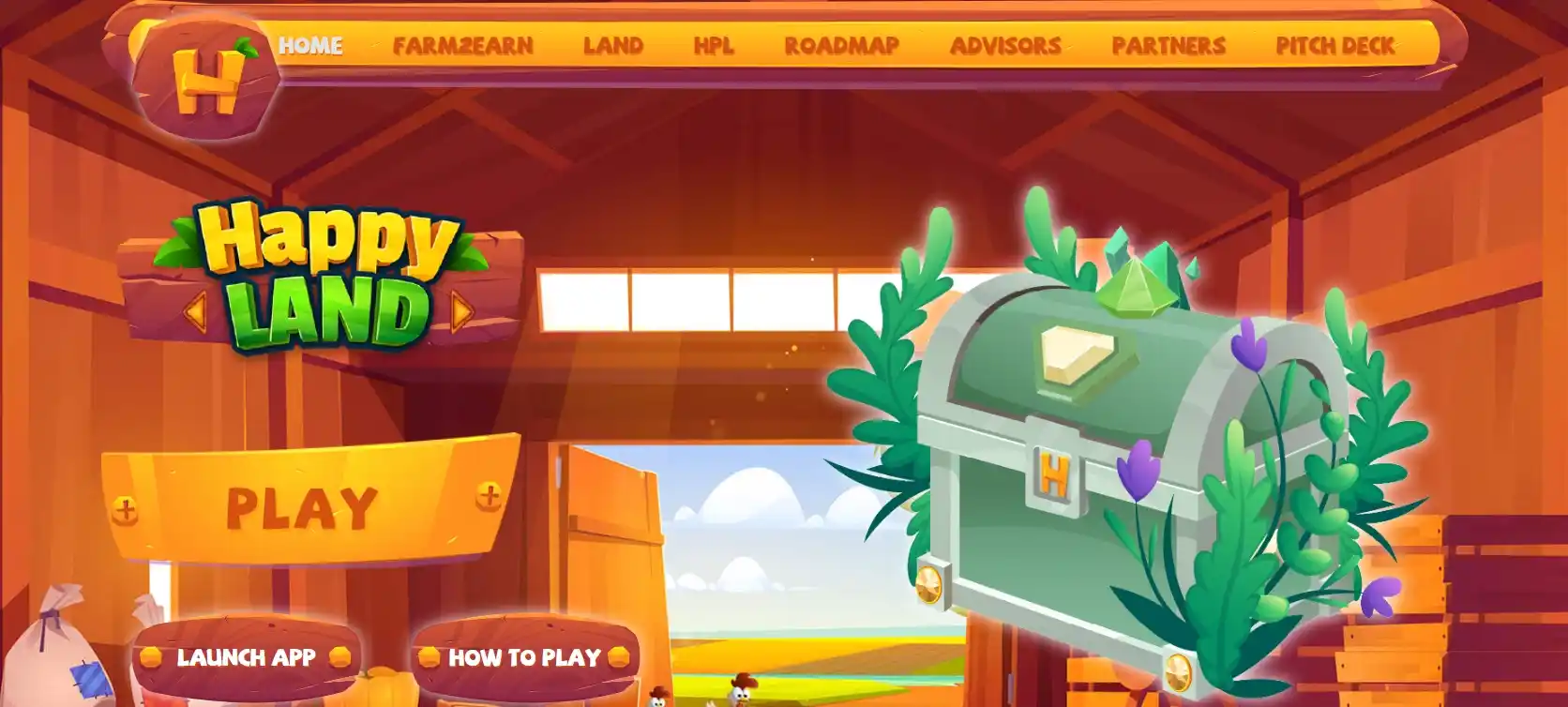
In HappyLand, the player begins their adventure as a landowner. The main task is to develop the plot and turn it into a thriving farm. The gameplay is focused on agricultural and industrial activities: planting various crops, caring for animals, and managing production. Every resource, be it a field with a harvest or livestock, represents a unique digital asset.
This process requires strategic planning and attention to detail. The player needs to calculate plant growth times, provide animals with food, and decide how to use their territory most effectively. Successful farm development becomes the key to creating a sustainable source of income within the game's economy, elevating the familiar farm-simulator mechanics to a new, engaging level.
Explore the Multifaceted Metaverse
Life in HappyLand is not limited to farm boundaries. Players are greeted by a lively and dynamic metaverse, including an extensive urban environment. Here, you can visit shopping centers for deals, entertainment complexes, and various social locations that make the world multifaceted and interesting to explore.
The key element of social interaction is a unique 3D avatar that the user customizes to their style. With it, you can freely travel the world, communicate with other participants, form alliances, and engage in activities together. Thus, the project transforms from an economic simulator into a full-fledged social platform, where business relationships are combined with informal communication, contributing to the formation of a sustainable gaming community.
Blockchain-Based Economy
The entire internal economy of HappyLand functions thanks to distributed ledger technology. It ensures transparency of all transactions, secure storage of assets, and genuine ownership rights for users over the values they have earned or created. Blockchain serves as the foundation that turns in-game progress into real, liquid assets.
The key components of this system are:
- NFT Assets: All significant objects—land plots, buildings, equipment, special crops, or animals—are represented as unique tokens (NFT), guaranteeing their authenticity and ownership by a specific player.
- Game Tokens: Economic operations within the ecosystem are carried out using the project's own cryptocurrency, used to purchase resources, pay for services, and settle accounts between participants.
- Decentralized Markets: Players have the opportunity to freely buy and sell their digital assets on both built-in and external trading platforms, shaping supply and demand within an open economy.
Thus, blockchain integration creates a reliable and interconnected ecosystem where the value created by players in the virtual space gains concrete digital embodiment and can be used beyond it. This ensures the fairness of the mechanics and gives participants real control over their virtual property.
HappyLand Gameplay and Earning Opportunities
HappyLand's mechanics provide participants with various ways to engage, each contributing to progress and potential earnings. The main areas of activity are structured and interconnected, forming a holistic in-game economy where efforts in one area can bring benefits in another.
| Activity Area | Key Actions | Economic Outcome |
|---|---|---|
| Agriculture | Cultivating crops, breeding livestock, harvesting, and processing products. | Creation of basic resources and goods for personal use or subsequent sale. |
| Trading | Selling surplus harvest, finished products, or unique assets on the market. | Acquiring in-game currency, participating in shaping the market value of virtual items. |
| Exploration & Interaction | Traveling the world, completing quests, participating in events, and collaborating with other players. | Obtaining special rewards, gaining access to exclusive content and opportunities. |
| Development & Investment | Improving land characteristics, acquiring more efficient equipment, developing farm infrastructure. | Increased productivity and, consequently, higher potential income from all types of activities. |
The presented structure clearly shows how the strategic combination of various activities leads to success. For example, resources produced in agriculture can be monetized through trade, and the profit obtained can be invested in development to increase future profitability. This approach encourages comprehensive planning and long-term participation in the life of the project.
Future and Development of the Project
The developers of HappyLand position their product as a constantly growing ecosystem. Development prospects are likely associated with expanding the game world, introducing new mechanics, and deeper integration with the Web3 ecosystem. The key task is maintaining a balanced and sustainable virtual economy that will remain attractive to players in the long term.
The team is expected to add fresh content: additional locations in the metaverse, more complex systems for farming and animal husbandry, as well as social features. The success of the entire initiative directly depends on the creators' ability to flexibly respond to community feedback, implement technological innovations, and ensure the uninterrupted operation of the underlying blockchain infrastructure, which is the foundation for user trust.
Conclusion
HappyLand demonstrates a typical approach for the modern GameFi segment, striving to harmoniously combine exciting gameplay with a thoughtful economic model on the blockchain. The project offers users not just entertainment, but a holistic digital environment for creativity, social connections, and economic activity, where the value of players' time and efforts finds its digital embodiment.
The long-term success of such an ecosystem will be determined by the developers' ability to maintain a delicate balance between engaging content, a fair reward system, and technical stability. If the team manages to effectively solve these tasks, HappyLand has every chance of becoming one of the sustainable and popular platforms in the Web3 space, offering players a truly valuable and multi-layered experience.











