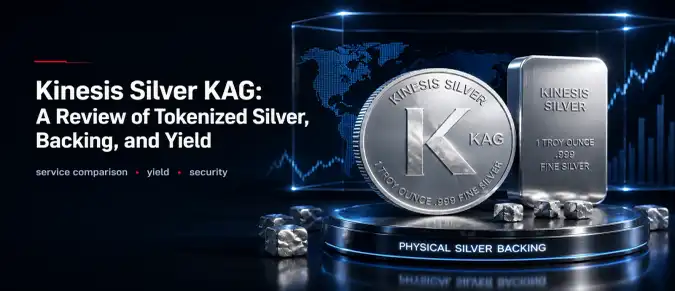

Kinesis Silver (KAG) is a digital asset backed by physical investment-grade silver and forms part of the Kinesis Monetary System. One KAG represents one troy ounce of silver with a minimum fineness of 999, stored across a network of professional vaults. Unlike synthetic silver instruments, KAG is linked to fully allocated physical metal, while its circulating supply is recorded on the Kinesis blockchain. The project combines the characteristics of a tokenized real-world asset (RWA) with trading, transfers, physical redemption, and rewards funded by fee revenue generated within the ecosystem.
Contents
- What Is Kinesis Silver KAG and How Is the Token Linked to Silver?
- How KAG Physical Backing and Silver Storage Work
- Kinesis Blockchain, Buying KAG and Physical Redemption
- Holder’s Yield and KAG Utility in the Kinesis Ecosystem
- Risks and Prospects of Kinesis Silver KAG

1. What Is Kinesis Silver KAG and How Is the Token Linked to Silver?
Kinesis Silver is part of the Kinesis ecosystem, which was designed to bring physical gold and silver into digital financial infrastructure. Alongside KAG, the system uses Kinesis Gold (KAU), where one unit represents one gram of gold. For silver, the base unit is one troy ounce, creating a direct relationship between the number of digital tokens and the corresponding quantity of physical metal.
Each KAG represents one ounce of fully allocated silver with a minimum fineness of 999. This means that the backing does not rely on futures contracts, unsecured obligations, or an algorithmic mechanism that merely tracks the market price. The token is backed by physical bullion held on behalf of owners within specialized custodial infrastructure.
The value of KAG generally follows the market price of one troy ounce of silver, but the token is not a stablecoin with a fixed US dollar value. When silver rises or falls on global markets, the economic value of KAG changes accordingly. On secondary markets, small deviations from the spot price may also occur because of liquidity, demand, and trading fees.
KAG belongs to the Real World Assets category because the blockchain token represents rights associated with a tangible underlying asset. This structure separates physical storage from digital transfer: the silver remains in professional vaults while its digital representation can move between accounts and wallets without requiring the metal itself to be transported for every transaction.
2. How KAG Physical Backing and Silver Storage Work
The physical silver backing Kinesis assets is stored through a global vaulting network associated with the project’s strategic partner, Allocated Bullion Exchange (ABX). According to Kinesis, this infrastructure includes facilities in major financial centers such as London, Zurich, Dubai, Singapore, Hong Kong, New York, Sydney, and Toronto. The bullion is held in insured professional vaults.
An important feature of the model is fully allocated storage. Kinesis states that owners retain legal title to the corresponding metal and that the silver is not treated as an unsecured liability of the system. KAG is backed by investment-grade silver with a minimum fineness of 999 and subject to the quality-control requirements used within the ABX infrastructure.
- 1:1 backing. One KAG corresponds to one troy ounce of physical silver.
- Silver fineness. The backing consists of investment-grade silver with a minimum fineness of 999.
- Allocated storage. Silver is held as allocated physical metal rather than as an unsecured obligation.
- Global vault network. Bullion is distributed across professional storage facilities in multiple jurisdictions.
- Insurance. Kinesis states that precious metals held within its vaulting network are insured.
- Independent verification. Physical reserves are subject to external inspections twice a year.
The quantity of physical silver is reconciled against the amount of KAG recorded on the blockchain ledger. Independent inspections are conducted by Inspectorate International, part of Bureau Veritas. These reviews examine the overall quantity of metal and include sample checks of bar weights, quality, and conditions at the relevant vault facilities.
For example, during an inspection in October 2025, approximately 3.725 million KAG were reported in circulation, while verified reserves represented roughly 3.730 million troy ounces of 999-equivalent silver. The difference included additional reserve bars. Kinesis continued publishing independent verification reports for its precious-metal reserves in 2026.
3. Kinesis Blockchain, Buying KAG and Physical Redemption
Native KAG operates on the Kinesis Blockchain, a specialized network whose architecture was originally developed using Stellar-based technology. This approach was selected to support relatively fast transfers and a high volume of transactions involving digital currencies backed by precious metals. The blockchain also serves as a ledger for tracking the amount of KAG within the system.
KAG can be bought and sold through the Kinesis platform and supported trading venues. The token is divisible into small units, with Kinesis specifying digital ownership down to 0.00001 ounce. This allows users to hold substantially less silver than would normally be practical when purchasing standard physical investment bars.
| Parameter | Kinesis Silver KAG |
|---|---|
| Asset type | Tokenized physical silver |
| Backing of 1 KAG | 1 troy ounce of silver |
| Minimum fineness | 999 |
| Native network | Kinesis Blockchain |
| Network architecture | Originally based on Stellar technology |
| Divisibility | Down to 0.00001 ounce |
| Physical redemption | From 200 KAG / 200 ounces |
| Reserve verification | Twice per year |
| Storage | Global network of insured vaults |
| Holder’s Yield | Funded by fee revenue generated within the system |
A key distinction between KAG and many financial instruments that track silver prices is the option for physical redemption. Users can exchange their digital holdings for underlying bullion subject to the platform’s requirements. The minimum redemption amount is 200 KAG, equivalent to 200 ounces of silver. Once redemption is completed, the corresponding digital units are removed from circulation.
As of 2026, Kinesis lists a physical redemption fee of 0.45% plus $100, in addition to applicable delivery costs. Logistics are handled through specialized providers, including Loomis and Brink’s. Actual costs depend on the amount, destination, and delivery arrangements, meaning physical redemption is generally more practical for relatively large holdings.

4. Holder’s Yield and KAG Utility in the Kinesis Ecosystem
One distinctive feature of KAG is the Holder’s Yield system. Physical silver itself does not generate interest, so these payments do not originate from yield produced by the underlying metal. Instead, Kinesis distributes a portion of fee revenue generated by activity within the ecosystem to eligible users.
According to the Kinesis model, 15% of the relevant Master Fee Pool is allocated to Holder’s Yield. Rewards are calculated based on factors including the amount and duration of eligible KAG holdings and are distributed monthly in silver. The resulting yield is not fixed because it depends on fee-generating activity, the holdings of other participants, and the applicable terms of the program.
Kinesis also uses other fee-distribution mechanisms. Velocity Yield is associated with qualifying trading and spending activity involving precious-metal currencies, while Minter’s Yield is designed for participants who create new KAU and KAG through the minting process. These payments therefore represent an internal revenue-sharing model rather than interest guaranteed by the underlying silver.
KAG can also be transferred between users, traded through Kinesis Exchange, and used within supported payment infrastructure. An ERC-20 version of KAG issued by KMS Labs also exists on Ethereum. This ERC-20 token represents a 1:1 claim on native Kinesis KAG held in reserve, so its structure differs from native KAG, which is directly connected to physical silver through the Kinesis infrastructure.
5. Risks and Prospects of Kinesis Silver KAG
The primary market risk of KAG is the volatility of silver itself. Unlike a US dollar stablecoin, the value of an ounce of silver changes in response to investment demand, industrial consumption, interest rates, currency movements, and broader macroeconomic conditions. Physical 1:1 backing therefore maintains the relationship between KAG and the quantity of silver but does not guarantee preservation of its value in fiat currency.
There are also infrastructure-related risks, including the operation of the issuer and custodial system, account and blockchain security, trading liquidity, fees, and regulatory changes. Physical redemption reduces dependence on an exclusively digital secondary market, but the process requires a minimum quantity and involves processing and delivery expenses.
The yield model also requires separate consideration. Holder’s Yield is not a guaranteed interest rate and depends on fees generated by activity within the Kinesis ecosystem. If trading and payment activity declines, the amount available for distribution may also change. When evaluating KAG, it is therefore important to distinguish the investment performance of silver itself from additional rewards distributed by the platform.
Kinesis Silver KAG represents one approach to bringing precious metals into the Real World Assets sector. Its model combines fully allocated physical silver, blockchain-based accounting, fractional ownership, physical redemption, and fee-sharing mechanisms. The future development of KAG will depend on demand for tokenized commodities, the market value of silver, digital-asset liquidity, the quality and transparency of reserve reporting, and the ability of Kinesis to maintain a reliable link between circulating tokens and the underlying physical metal.











