
Nexchain is a Layer 1 blockchain positioned as a platform that combines artificial intelligence with Web3 infrastructure. The project states that AI is used to optimize scalability, security, cross-chain interoperability, and network management. Its proposed architecture includes a hybrid consensus mechanism, smart contract support, cross-chain integration, and developer tools for building decentralized applications. At the time of writing, the ecosystem remains under development, and many of its announced features have not yet been fully implemented.
Contents
- What Is Nexchain and How Does the Blockchain Work?
- Nexchain Architecture and the Use of Artificial Intelligence
- The NEX Token and Ecosystem Economy
- Key Features of the Nexchain Platform
- The Future Development of Nexchain

1. What Is Nexchain and How Does the Blockchain Work?
Nexchain is a Layer 1 blockchain in which artificial intelligence is presented as one of the core elements of the network infrastructure. According to the project's published documentation, AI is intended to optimize network performance, distribute workloads, analyze blockchain conditions, and support individual components of the ecosystem.
The developers state that the network combines Proof-of-Stake with additional AI-based algorithms to create a hybrid consensus model. This approach is intended to improve transaction processing efficiency and help the network adapt to changing levels of demand.
The project also focuses on compatibility with different blockchain ecosystems. To achieve this, Nexchain proposes cross-chain mechanisms that would allow the network to interact with external blockchains and transfer digital assets between different infrastructures.
It is important to note that a significant portion of the project's technical specifications is based on developer materials and the published roadmap, as the ecosystem remains in an active stage of development.
2. Nexchain Architecture and the Use of Artificial Intelligence
One of Nexchain's main proposed features is the direct integration of AI into the blockchain architecture. Artificial intelligence is expected to analyze network conditions, automatically optimize performance, and support selected infrastructure management processes.
The technical documentation also describes AI-optimized smart contracts, developer SDKs, API interfaces, and configurable AI modules that could be used when building decentralized applications.
The project additionally claims support for scaling through sharding and directed acyclic graph technology, or DAG. These mechanisms are intended to increase network throughput and improve the processing efficiency of large transaction volumes.
This architecture is designed to create a unified platform that combines artificial intelligence, Web3 functionality, and development infrastructure for blockchain-based applications.
3. The NEX Token and Ecosystem Economy
The native asset of the network is the NEX token. According to the published tokenomics, it is intended to be used for transaction fees, staking, network governance, access to AI services, and interactions with decentralized applications.
The project documentation describes an initial supply of 1 billion tokens, distributed across the public sale, ecosystem development, staking, liquidity, the team, and other categories. It also proposes an annual token-burning mechanism intended to regulate the circulating supply.
| Component | Purpose |
|---|---|
| NEX | Native ecosystem token |
| Hybrid Consensus | Combination of Proof-of-Stake and AI |
| AI Modules | Artificial intelligence tools |
| SDK & API | Development tools for dApps |
| Cross-Chain | Interoperability with other blockchains |
The token is also positioned as a payment method for AI services and internal platform operations. However, the practical value of NEX will depend on the launch of the mainnet, demand for the project's services, and the overall development of the ecosystem.
At the current stage, many elements of the token economy remain under implementation in accordance with the project's roadmap.
4. Key Features of the Nexchain Platform
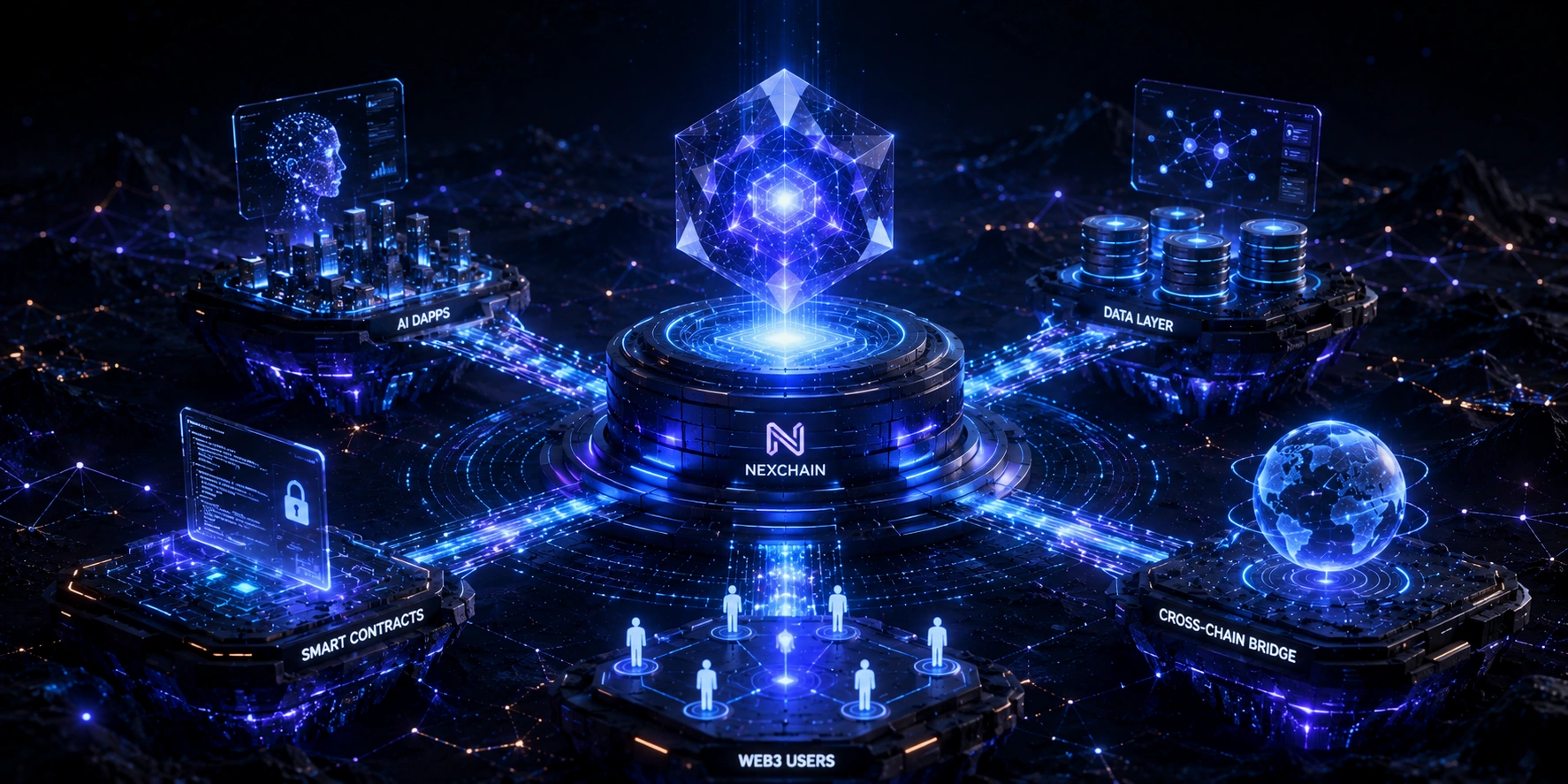
Nexchain is positioned as an infrastructure platform for building decentralized applications that use artificial intelligence. The project combines several technological areas that are usually developed separately.
The concept is based on using AI not only as a standalone service but also as a component of the network architecture that may influence performance and selected blockchain mechanisms.
Key platform features include:
- a Layer 1 blockchain;
- a hybrid AI and Proof-of-Stake consensus model;
- smart contract support;
- developer SDKs and APIs;
- AI modules for dApps;
- cross-chain integration;
- low transaction fees;
- scaling through DAG and sharding;
- NEX token staking;
- decentralized governance.
This combination makes Nexchain an example of projects seeking to integrate artificial intelligence and modern blockchain technologies within a single infrastructure.
Most of these features reflect the project's target architecture and should be assessed in the context of its current stage of development.
5. The Future Development of Nexchain
Interest in combining artificial intelligence with blockchain technology continues to grow, encouraging the development of new projects focused on AI infrastructure for Web3. Nexchain is being developed within this trend by proposing AI integration at the base protocol level.
According to the published roadmap, future development is expected to include the mainnet launch, the introduction of staking mechanisms, expanded developer tools, and broader cross-chain interoperability.
The project's practical assessment will depend on whether the proposed architecture is successfully implemented, whether a functioning application ecosystem emerges, and how closely the team meets its stated technical objectives.
Overall, Nexchain is a Layer 1 blockchain focused on integrating artificial intelligence into Web3 infrastructure. The project combines AI, hybrid consensus, smart contracts, and development tools, but a significant portion of its functionality remains under development. Its future prospects should therefore be evaluated based on both the published documentation and the network's actual technical progress.











