

SeekAR is a next-generation blockchain project that combines augmented reality, artificial intelligence, and the Web3 economy into a single, unified user experience. The Seek Protocol ecosystem creates an infrastructure in which the physical world becomes an interactive environment for engaging with tokens, NFTs, and decentralized applications. Unlike traditional GameFi solutions, SeekAR does not focus on virtual metaverses but instead emphasizes real-world locations, turning cities, events, and everyday user activity into sources of digital value. The project is designed for both a mass audience and Web3 projects and brands interested in new AR-driven engagement formats.
- SeekAR and Seek Protocol — a new-format AR ecosystem
- Technological architecture: AR, AI, and the Solana blockchain
- Economic model and the $SEEK token
- User experience and gameplay mechanics in SeekAR
- Platform tools for projects and brands
- Development outlook, risks, and market positioning
SeekAR and Seek Protocol — a new-format AR ecosystem
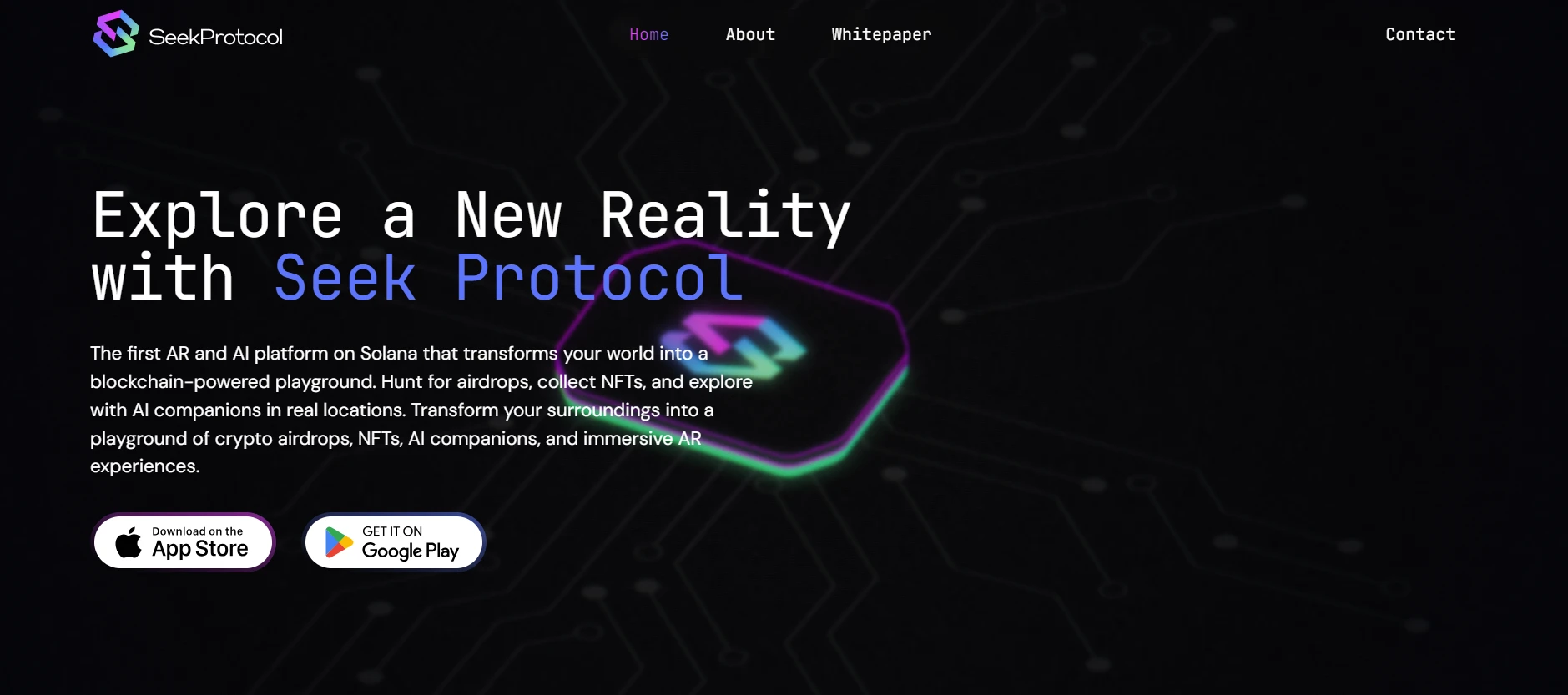
Seek Protocol is a decentralized platform built on the Solana blockchain, with the primary goal of connecting digital assets to physical space. The core product of the ecosystem is the SeekAR application, through which users gain access to AR content, tokenized objects, and interactive tasks tied to geographic coordinates. This approach moves Web3 interactions beyond browsers and virtual worlds, making them part of everyday life.
An important feature of SeekAR is its focus on scalability and versatility. The ecosystem is not limited to a single game or mechanic; instead, it acts as a platform on which custom campaigns, quests, and economic models can be launched. Seek Protocol forms an infrastructure layer for AR applications, where the blockchain ensures transparency, asset ownership, and reward distribution, while augmented reality drives engagement and emotional user response.
Technological architecture: AR, AI, and the Solana blockchain
The technological foundation of SeekAR is built on a combination of three key components: augmented reality, artificial intelligence, and the high-performance Solana blockchain. The AR engine is responsible for visualizing digital objects in the real world, allowing users to see tokens, NFTs, and interactive elements through their mobile device cameras. Geolocation and geofencing provide precise content anchoring to specific points on the map, making each interaction unique and physically grounded.
Artificial intelligence in Seek Protocol is used to adapt the user experience. AI agents analyze participant behavior, help generate tasks, manage quest difficulty, and personalize rewards. This enables the creation of dynamic scenarios that change based on user activity and preferences. The Solana blockchain, in turn, delivers high transaction throughput and low fees, which is critical for AR applications with frequent interactions and microtransactions.
Economic model and the $SEEK token
The Seek Protocol economy is built around the utility token $SEEK, which is used for all core operations within the ecosystem. The token acts as a connecting element between users, content creators, and the platform, forming a closed-loop supply and demand model. $SEEK is used both for rewards and for paying access to SeekAR’s infrastructure capabilities.
| Economic element | Purpose |
|---|---|
| $SEEK token | Primary medium of exchange and rewards |
| AR campaigns | Payment for placing tokens and NFTs in the real world |
| AI agents | Usage and management of AI-driven mechanics |
| User rewards | Earning tokens for activity and quests |
| Governance | Participation in ecosystem decision-making |
This model helps maintain a balance between the interests of users and content creators, encouraging long-term participation in the ecosystem. The token is not limited to speculative use; it has practical value directly tied to platform usage.
User experience and gameplay mechanics in SeekAR
For end users, SeekAR functions as an interactive AR application in which the physical world becomes a game field. Users explore real locations, interact with digital objects, and receive rewards for activity. Unlike traditional mobile games, progress here depends not only on time spent in the app but also on real-world movement and participation in events.
Key elements of the user experience include:
-
AR-based token and NFT hunts in real-world locations
-
Geographically anchored quests and missions
-
Dynamic tasks managed by AI agents
-
Social features and collaborative exploration
After completing tasks, users receive digital assets that can be stored, used within the ecosystem, or applied in other Web3 scenarios. This format increases engagement and makes blockchain interaction intuitive even for users without prior crypto experience.
Platform tools for projects and brands
Seek Protocol is designed not only for users but also for projects looking for new ways to attract audiences. The platform provides tools for launching AR campaigns without requiring deep technical integration. Projects can place their tokens, NFTs, or tasks in the real world, turning offline activity into part of a digital economy.
For brands and Web3 teams, SeekAR becomes a new type of marketing channel where user attention is driven by engagement rather than advertising. Campaigns can be tied to events, cities, or specific points of interest, enabling local promotion, community-driven activities, and hybrid on-chain/off-chain scenarios. This positions Seek Protocol as a versatile platform for experimentation at the intersection of Web3, AR, and the real world.
Development outlook, risks, and market positioning
SeekAR is developing amid growing interest in AR technologies and real-world blockchain use cases. The project focuses on mass adoption through mobile devices and a low entry barrier, potentially expanding its audience beyond the core crypto community. Feature expansion, AI agent development, and the scaling of AR campaigns could strengthen Seek Protocol’s position in the Web3 gamification segment.
At the same time, the project faces challenges typical of AR solutions, including dependence on geolocation accuracy, competition with centralized platforms, and the need for continuous content updates. The success of Seek











