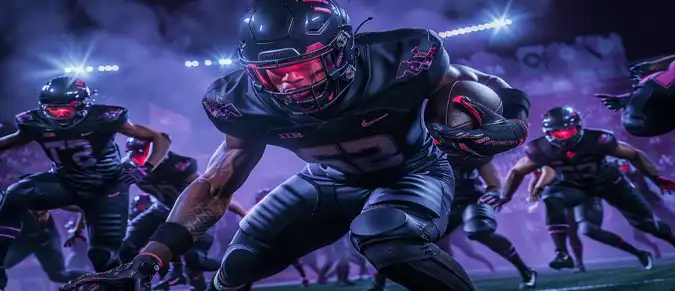

Sorare Fantasy Football is a blockchain-based game that brings the classic fantasy football format into the Web3 ecosystem. Users build teams made up of real professional football players represented as NFT cards and compete in tournaments where results directly depend on real-life match performances. This approach combines sports, data analysis, and digital ownership, creating a unique experience at the intersection of entertainment and decentralized economics.
The project has gained widespread recognition thanks to official licenses from football clubs and leagues, as well as a well-designed NFT interaction model. Sorare has become one of the most prominent representatives of the GameFi sector, clearly demonstrating how blockchain technology can organically enhance traditional sports formats.
Contents
- Overall Concept and Structure of Sorare
- Gameplay and Fantasy Mechanics
- NFT Cards and Blockchain Infrastructure
- Economic Model and Reward System of Sorare Fantasy Football
- Participation Strategies and Project Prospects
1. Overall Concept and Structure of Sorare
Sorare was launched as a global fantasy platform that uses blockchain technology to manage digital assets. At the core of the project lies the concept of true ownership: each football player card exists as an NFT and belongs to a specific user. This fundamentally distinguishes Sorare from traditional fantasy games, where all in-game assets remain within a centralized system.
The platform collaborates with hundreds of football clubs worldwide, allowing it to use official images, statistics, and player data. As a result, Sorare attracts not only crypto enthusiasts but also football fans who may be unfamiliar with Web3 technologies. This strong licensing base creates a high level of trust in the project.
From a technical perspective, Sorare is built on the Ethereum blockchain and uses scaling solutions to reduce fees and improve accessibility. Most interactions take place without requiring deep knowledge of cryptography, significantly simplifying the user experience. At the same time, Sorare continues to evolve as a platform that connects sports, digital assets, and community engagement, with regular updates and league expansions supporting its long-term development strategy.
2. Gameplay and Fantasy Mechanics
The gameplay of Sorare Fantasy Football is based on the principles of classic fantasy management. Players assemble a team of five footballers, assign them to positions, and register the lineup for tournaments held on a weekly basis. The final outcome directly depends on real-life matches and player performances.
Every on-field action — goals, assists, tackles, saves — is converted into points using a dedicated scoring system. This requires users to analyze statistics, player form, and tactical factors. As a result, the gameplay becomes both intellectual and analytical.
Main gameplay elements include:
- Building lineups using NFT football player cards.
- Participating in leagues and divisions of varying difficulty.
- Earning points based on real match performances.
- Competing with other managers for rewards and leaderboard positions.
The variety of tournaments allows players to choose formats suited to their experience level, lowering the entry barrier and encouraging gradual engagement. In addition, Sorare’s tournament system is designed to reward consistency and long-term squad planning. Players must consider match schedules, squad rotation, and opponent strength, as these factors directly influence results.
Over time, users develop their own strategies by balancing reliable performers with higher-risk, high-reward choices. This transforms Sorare from a simple game into a full-fledged football management simulator with a strong competitive focus.
3. NFT Cards and Blockchain Infrastructure
The central element of Sorare is its NFT football player cards. Each card is a unique digital asset recorded on the blockchain and protected against forgery. The limited number of issued cards creates scarcity, which directly affects their market value.
Different rarity levels establish a multi-tiered progression system. The rarer the card, the higher its value and the more opportunities it unlocks in tournaments. This structure encourages both collecting and strategic investing within the ecosystem.
| Card Rarity | Number of Editions | Role in the Game |
|---|---|---|
| Limited | Limited supply | Basic tournament participation |
| Rare | Low supply | Access to more competitive leagues |
| Super Rare | Very rare | High rewards and prestige |
| Unique | 1 edition | Collector and elite status |
The NFT infrastructure makes cards liquid assets that can be freely transferred between users, forming a fully functional secondary market.
In addition, blockchain technology ensures full transparency of all card-related operations, including ownership history and transaction records. This increases trust among participants and reduces the risk of fraud. The ability to trade NFT cards freely allows players to adapt their squads to changes in real football, turning Sorare cards into long-term digital assets rather than simple in-game items.

4. Economic Model and Reward System of Sorare Fantasy Football
Sorare’s economy is built around a competitive model rather than constant token emission. The primary rewards are earned through successful tournament participation, making income directly dependent on skill, analysis, and strategic decision-making.
Rewards may include NFT cards, cryptocurrency, and additional bonuses. This diversity of incentives reduces pressure on the overall economy and helps maintain balance. Unlike many traditional Play-to-Earn games, Sorare avoids aggressive inflation.
The secondary market plays a key role in the ecosystem. Trading cards based on player form, transfers, and news becomes a separate strategic layer. As a result, Sorare’s economy remains closely tied to real football, making it more resilient to speculative fluctuations.
5. Participation Strategies and Project Prospects
Successful participation in Sorare requires a comprehensive approach. Statistical analysis, understanding football dynamics, and proper budget management are essential. Poor squad selection decisions can have a direct impact on tournament results.
New players are advised to start in less competitive divisions to gradually learn the mechanics and NFT market. This approach helps reduce risks and adapt to the ecosystem more smoothly. From a long-term perspective, Sorare continues to expand partnerships with clubs and leagues, increasing its audience reach and strengthening its position in the Web3 sports market.
Sorare Fantasy Football demonstrates how blockchain technology can enhance the classic fantasy football experience. With licensed content, NFT-based mechanics, and a sustainable economy, the project remains one of the strongest representatives of the GameFi sector and is clearly oriented toward long-term growth.











