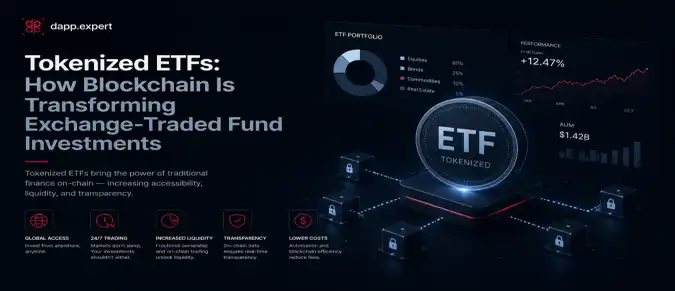

Tokenized ETFs are digital versions of exchange-traded funds built on blockchain technology. They combine traditional investment instruments with the advantages of distributed ledger technology, including transparent record-keeping, automated transactions, and fractional ownership of assets. This article explains how tokenized ETFs work, how they differ from conventional ETFs, and what opportunities and challenges they present.
Contents
- What Are Tokenized ETFs and How Do They Work?
- Blockchain Technology Behind Tokenized ETFs
- Key Benefits of Tokenized ETFs
- Traditional ETFs vs. Tokenized ETFs
- The Future of Tokenized ETFs
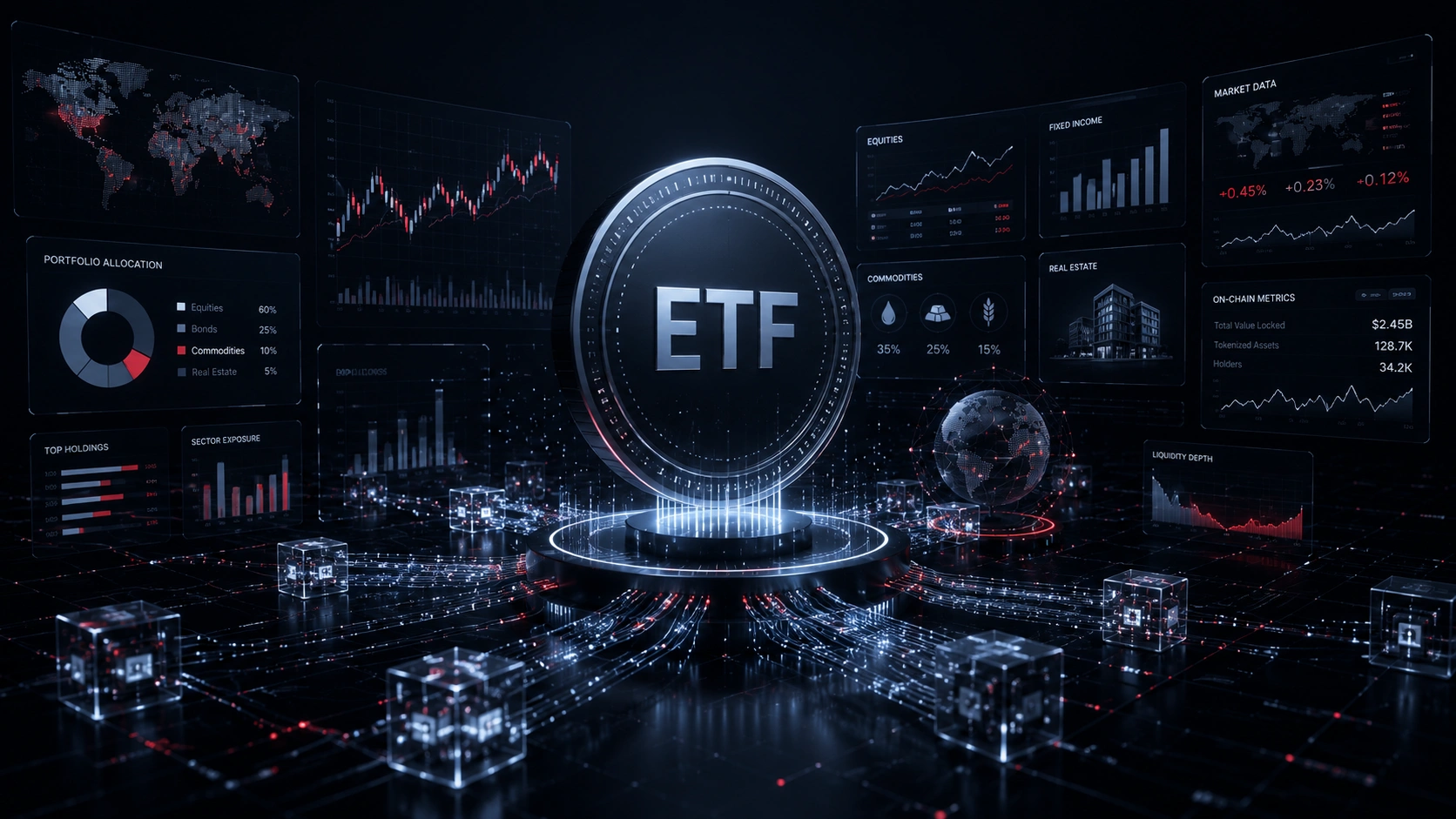
1. What Are Tokenized ETFs and How Do They Work?
A tokenized ETF is a digital token linked to an underlying exchange-traded fund. Depending on its structure, the token may be backed by real assets or represent rights to a specific share of a financial instrument. All transactions involving these tokens are recorded on a blockchain, ensuring transparency, security, and an immutable record of ownership.
Unlike traditional ETFs, which are traded on stock exchanges through licensed brokers, tokenized ETFs can operate on public or private blockchain networks. This enables the use of smart contracts to automate transactions and may reduce the number of intermediaries involved in the investment process.
The concept of tokenization has gained momentum alongside the growing interest in Real World Assets (RWA). Major financial institutions such as BlackRock, Franklin Templeton, JPMorgan, and other market participants have already launched pilot projects involving the tokenization of investment products and government bonds. These initiatives highlight the increasing interest of the traditional financial sector in blockchain-based infrastructure.
It is important to note that a tokenized ETF is not always an independent investment fund. In many cases, it serves as a digital representation of an existing financial asset, while investor rights remain governed by the legal framework of the jurisdiction where the issuer operates.
2. Blockchain Technology Behind Tokenized ETFs
Blockchain technology forms the foundation of tokenized ETFs. Every transaction is permanently recorded in a distributed ledger, making records highly resistant to alteration. This improves transparency while reducing the risk of errors in transaction processing and asset accounting.
Smart contracts play a central role in this ecosystem. These self-executing programs automatically perform predefined actions once specific conditions are met, allowing transactions to be completed with minimal manual intervention and potentially reducing settlement times.
Most modern tokenization projects are built on blockchain networks such as Ethereum, Polygon, Solana, and other platforms capable of supporting smart contracts. At the same time, enterprise blockchain solutions designed specifically for regulated financial markets continue to evolve.
Another essential element is the tokenization of Real World Assets (RWA). This process involves issuing digital tokens whose value is linked to existing physical or financial assets. Today, tokenization extends beyond ETFs to include government bonds, real estate, money market funds, and a growing range of investment products.
3. Key Benefits of Tokenized ETFs
The development of tokenized ETFs aims to make investment products more accessible and technologically efficient. Blockchain technology automates many processes that traditionally require brokers, custodians, clearing houses, and other financial intermediaries. As a result, transaction processing can become faster while maintaining greater transparency.
Another significant advantage is fractional ownership. Unlike many traditional investment products that must be purchased in whole shares or lots, tokenized ETFs allow assets to be divided into smaller digital units. This makes it easier for investors to gain exposure to financial markets with lower capital requirements.
The main advantages of tokenized ETFs include:
- greater transparency through blockchain-based transaction records;
- automated execution of transactions using smart contracts;
- fractional ownership of investment assets;
- potentially faster settlement compared to traditional financial infrastructure;
- 24/7 availability through blockchain networks without stock exchange trading hours;
- easier integration with digital wallets and Web3 applications.
At the same time, tokenized ETFs should not yet be viewed as a complete replacement for traditional exchange-traded funds. Their adoption is still influenced by national regulations, licensing requirements for issuers, and the maturity of digital financial infrastructure. Regulatory approaches to digital asset custody, investor identification, and taxation also differ significantly across jurisdictions.

4. Traditional ETFs vs. Tokenized ETFs
Although both products are designed to provide investment exposure to underlying assets, traditional ETFs and tokenized ETFs differ in several important ways. These differences extend beyond record-keeping technology to include settlement methods, trading infrastructure, custody, and market accessibility.
They also vary in transaction speed, support for fractional ownership, and integration with digital financial services. The comparison below highlights the key distinctions between the two models.
| Feature | Traditional ETF | Tokenized ETF |
|---|---|---|
| Record Keeping | Managed through brokers and custodians | Recorded on a blockchain using digital tokens |
| Settlement | According to traditional market procedures | Can be executed through smart contracts |
| Trading Hours | Limited to exchange trading sessions | Blockchain networks operate 24/7 |
| Fractional Ownership | Limited by market rules | Supported through tokenization |
| Infrastructure | Traditional financial system | Blockchain networks and digital wallets |
| Regulation | Well-established | Still evolving |
The advantages of tokenized ETFs largely depend on the platform, regulatory framework, and the quality of the asset backing each token. For this reason, investors carefully evaluate custody solutions, issuer transparency, legal structure, and compliance standards before participating.
Overall, tokenized ETFs leverage modern blockchain technology, while traditional ETFs continue to rely on conventional financial infrastructure. Both models are expected to coexist for the foreseeable future, with the most suitable option depending on investor objectives, regulatory conditions, and product availability.
5. The Future of Tokenized ETFs
Many industry analysts expect the market for tokenized real-world assets to expand significantly over the coming years. Continued improvements in blockchain infrastructure, evolving regulatory frameworks, and growing participation from major financial institutions are creating favorable conditions for new blockchain-based investment products.
Particular attention is being given to integrating blockchain technology with the traditional financial system. Banks, asset managers, and investment firms are already testing tokenized bonds, money market funds, and other financial instruments to evaluate the efficiency of blockchain-based settlement and asset management.
At the same time, several challenges remain. These include differences in regulatory approaches across jurisdictions, compliance with anti-money laundering (AML) requirements, cybersecurity risks, and the need for common industry standards. Addressing these issues will play a key role in determining the pace of adoption.
Tokenized ETFs represent one of the most promising developments in digital finance by combining the strengths of blockchain technology with traditional investment products. As regulations mature and technology continues to advance, these instruments are expected to become an increasingly important part of the global investment ecosystem.











