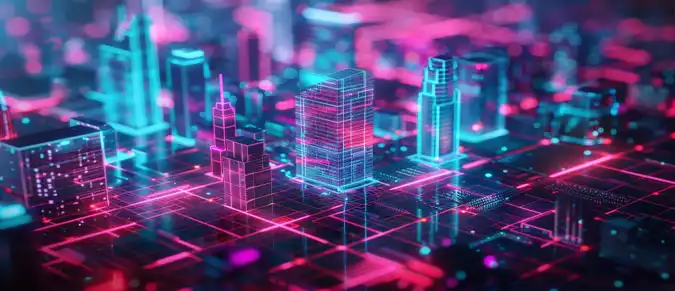

Upland is a blockchain-based metaverse game that combines virtual real estate, economic strategy, and true digital ownership. The project uses a real-world map, allowing players to buy, develop, and sell virtual properties linked to existing physical addresses. Unlike traditional games, Upland builds a sustainable economic model where in-game assets retain long-term value and can be monetized.
The game is designed not only for entertainment but also for creating a digital environment where users become active participants in an economy. Through the integration of blockchain technology and NFTs, Upland demonstrates a practical application of Web3 within a gaming format. The project is often regarded as one of the most mature examples of the play-to-own model.
Contents
- The Concept and Philosophy of Upland
- Gameplay Mechanics and Interaction
- Upland Economy, Tokens, and In-Game Assets
- NFTs, Blockchain, and the Ownership Model
- Community, Development, and Project Outlook
- Conclusion

1. The Concept and Philosophy of Upland
At the core of Upland lies the “play-to-own” principle, where gameplay progress is directly connected to real digital ownership. The virtual world is built on real-world geography, with each property corresponding to an actual address in a real city. This approach enhances the significance of player decisions and creates a strong link between the virtual and real economies.
Upland is not positioned as a short-term gaming product. It is a continuously evolving platform with an open economy, where user actions shape the value of neighborhoods, collections, and individual properties. The game is designed for long-term participation, while asset security is ensured through blockchain and NFT technologies.
The project’s philosophy also emphasizes low entry barriers. New players can begin without major investments, gradually learning the mechanics and economic systems. This approach supports organic user growth and helps build a stable and sustainable ecosystem.
2. Gameplay Mechanics and Interaction
The core gameplay revolves around acquiring virtual real estate, developing it, and participating in the economic life of the metaverse. Players explore cities, complete transactions, build collections, and interact with others through trading and cooperative activities. Movement across the map and identifying profitable opportunities play an important role. Certain districts and properties gain higher value due to rarity or strategic location, encouraging analytical thinking and long-term planning.
Key gameplay elements:
- Buying and selling virtual real estate.
- Building collections to unlock bonuses.
- Exploring cities and discovering rare assets.
- Participating in events, missions, and competitions.
- Creating and developing in-game businesses.
Gameplay is not limited to passive asset ownership. Players can construct buildings, upgrade properties, and contribute to the development of entire districts. This creates a layered experience that blends strategy, economics, and social interaction.
Additional depth comes from specialization. Some players focus on trading and investment strategies, while others prioritize city development or event participation. Cooperative activities and competition generate a dynamic environment, making Upland an open-ended experience rather than a linear progression.
3. Upland Economy, Tokens, and In-Game Assets
The economic system of Upland is based on several digital assets, each serving a specific purpose. The primary in-game currency is UPX, which is used to purchase properties, pay fees, and participate in trading. Sparklet plays a complementary role as a resource required for construction and customization. Player profitability is directly tied to activity: property ownership generates regular income, while completing collections increases earnings. This encourages strategic asset management rather than simple accumulation.
| Element | Purpose | Role in the Economy |
|---|---|---|
| UPX | In-game currency | Trading, asset purchases, fees |
| Sparklet | Construction resource | Property development and customization |
| NFT assets | Digital ownership | Investment and exchange |
The economy is largely shaped by player behavior. Market prices fluctuate based on demand, rarity, and gameplay updates, making the financial system dynamic and similar to real-world economic processes. The system favors long-term ownership and strategic planning over short-term speculation. Changes in balance, the introduction of new cities, and additional mechanics directly affect value distribution, keeping the economy responsive and community-driven.

4. NFTs, Blockchain, and the Ownership Model
Upland is built on the EOS blockchain, enabling high transaction speeds and low operational costs. All key in-game assets are represented as NFTs that belong directly to players and are not controlled by the developers. This ensures that digital ownership remains valid even outside the game interface.
NFTs in Upland have practical utility rather than purely collectible value. They are actively used in gameplay, integrated into the economy, and can be freely traded. Blockchain infrastructure guarantees transparency, authenticity, and protection against duplication, strengthening trust in the system and increasing the long-term value of ownership.
5. Community, Development, and Project Outlook
The community plays a central role in the Upland ecosystem. Players form neighborhoods, launch joint initiatives, and exchange strategies. This level of interaction creates a living metaverse where collective decisions influence the evolution of cities.
The development team maintains active communication with users, incorporating feedback into new features and balance adjustments. This collaborative approach supports sustainable growth and strengthens user loyalty. Looking ahead, Upland aims to expand tools for user-generated content and business activity, gradually transforming from a game into a comprehensive digital platform with social and economic infrastructure.
6. Conclusion
Upland demonstrates how blockchain technology can enhance gameplay mechanics without disrupting a familiar user experience. By combining strategy, economics, and true digital ownership, the project creates a resilient metaverse environment. Thanks to its well-designed play-to-own model, active community, and continuous development, Upland remains one of the most promising representatives of GameFi and Web3 gaming.
The project also illustrates how virtual worlds can evolve into full-fledged digital ecosystems with their own economies and social structures. Player interaction, market dynamics, and long-term asset value encourage meaningful participation rather than short-term progression. As functionality and city coverage expand, Upland continues to strengthen its position as a platform rather than just a game, with the potential to become a benchmark for next-generation metaverses.











