
Alien Worlds is a Play-to-Earn blockchain game built around resource mining, NFTs, and decentralized governance of virtual planets. Originally launched within the WAX ecosystem, the project later expanded to Ethereum and BNB Smart Chain, creating a multi-chain infrastructure. Players mine the Trilium (TLM) token, use NFT-based tools, participate in missions, and vote through Planet DAOs. Alien Worlds combines gameplay, digital ownership, and Web3 economics, using blockchain technology to manage assets and facilitate interaction across its decentralized ecosystem.
Contents
- What Is Alien Worlds and How Does the Blockchain Game Work?
- Gameplay, TLM Mining, NFTs, and Core Game Mechanics
- How Alien Worlds Differs from Other Play-to-Earn Projects
- The WAX Ecosystem, Planet DAO, and the TLM Token
- Risks and Future Prospects of Alien Worlds

1. What Is Alien Worlds and How Does the Blockchain Game Work?
Alien Worlds is a metaverse where players explore virtual planets, mine digital resources, and interact with the project's economy through NFTs and the Trilium (TLM) token. The game is built around the concept of digital ownership, with most in-game items existing as tokenized blockchain assets.
The primary blockchain powering Alien Worlds is WAX, which is optimized for gaming NFTs and high transaction throughput. The project also integrates Ethereum and BNB Smart Chain, allowing TLM to function across multiple ecosystems while expanding interoperability with DeFi applications.
Unlike traditional MMORPGs that focus on story-driven progression, Alien Worlds emphasizes a player-driven digital economy. Users can choose different strategies, including mining resources, participating in Planet DAO governance, completing missions, or expanding their NFT collections.
As a result, Alien Worlds is best viewed as a Web3 metaverse platform that combines Play-to-Earn mechanics, NFT ownership, and blockchain-based governance into a unified gaming ecosystem.
2. Gameplay, TLM Mining, NFTs, and Core Game Mechanics
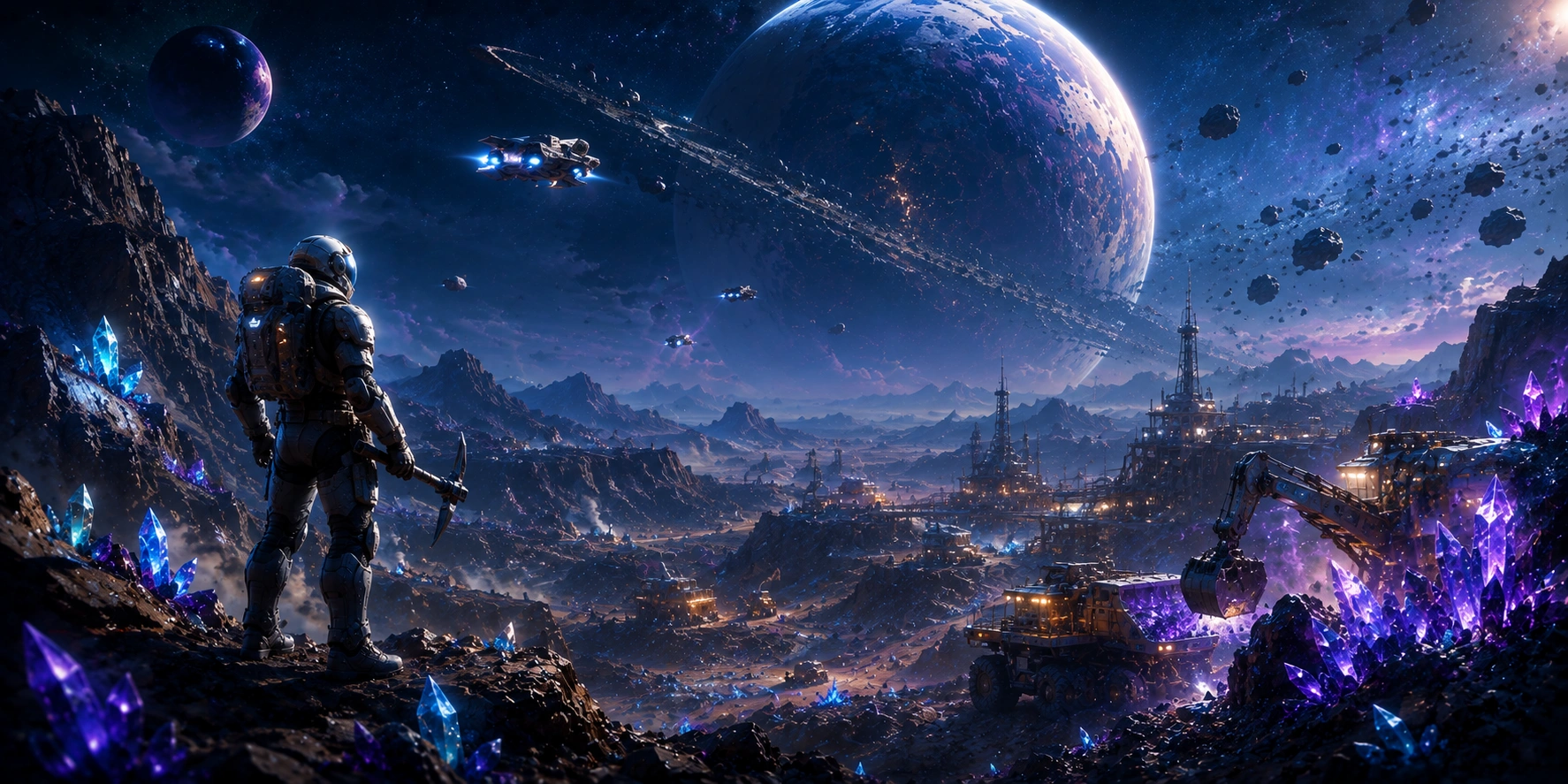
The central gameplay mechanic revolves around mining Trilium (TLM). Players select a land plot, equip NFT mining tools, and begin extracting resources. Reward generation depends on tool characteristics, land bonuses, and the cooldown period between mining attempts.
NFTs play an essential role throughout the game. Mining tools differ in rarity, mining power, cooldown speed, and bonus attributes. Land parcels are also represented as NFTs, allowing owners to receive commissions whenever other players mine resources on their property.
- Mining the Trilium (TLM) token;
- Using NFT mining tools;
- Owning NFT land plots;
- Participating in Planet DAO governance;
- Completing interplanetary missions;
- Staking TLM tokens;
- Collecting gaming NFTs;
- Trading assets on WAX marketplaces;
- Leveraging multi-chain integration with Ethereum and BNB Chain.
Beyond mining, players can join missions and limited-time events that offer additional rewards while expanding gameplay beyond standard resource extraction.
The in-game economy combines NFTs, the TLM token, and decentralized planetary governance, allowing participants to engage with the ecosystem in multiple ways depending on their preferred strategy.
3. How Alien Worlds Differs from Other Play-to-Earn Projects
Unlike many early Play-to-Earn titles, Alien Worlds combines several Web3 concepts within a single ecosystem. In addition to token mining, the project incorporates DAO governance, NFT land ownership, staking, and multi-chain functionality, creating a more sophisticated economic structure.
One of its defining features is the Planet DAO system. Each planet operates through its own decentralized autonomous organization, where TLM holders can vote on governance proposals and influence treasury allocations. This makes governance an active gameplay component rather than an administrative function controlled solely by developers.
| Model | Primary Gameplay | Blockchain Role | Key Feature |
|---|---|---|---|
| Alien Worlds | Mining and NFTs | DAO governance, NFTs, and tokens | Virtual planet economy |
| Traditional Play-to-Earn | Gameplay rewards | Tokens and NFTs | Activity-based incentives |
| NFT Metaverse | Virtual ownership | NFTs and digital assets | Metaverse environment |
| Traditional Online Game | Gameplay progression | Not used | Closed in-game economy |
Another distinguishing feature is its multi-chain architecture. While WAX powers gaming NFTs and most gameplay transactions, Ethereum and BNB Smart Chain expand the utility of TLM beyond the core game and into broader Web3 ecosystems.
This architecture enables Alien Worlds to combine blockchain gaming mechanics with interoperable digital assets while maintaining compatibility across several blockchain networks.
4. The WAX Ecosystem, Planet DAO, and the TLM Token
Trilium (TLM) serves as the primary utility token of Alien Worlds. It functions as the in-game currency, a staking asset, and the governance token for Planet DAOs. Players can stake TLM to specific planets and participate in decentralized governance decisions.
Planet DAOs add another governance layer to the ecosystem. Every planet maintains its own voting structure, treasury, and funding initiatives, making decentralized governance an integral part of the gameplay experience.
WAX provides the infrastructure for storing NFTs and processing most in-game transactions with relatively low fees and high throughput. This enables frequent gameplay interactions without the higher costs associated with some other public blockchains.
The ecosystem also includes NFT mining tools, weapons, avatars, land plots, and other digital collectibles. Their market value depends on rarity, in-game utility, player demand, and secondary-market liquidity.
5. Risks and Future Prospects of Alien Worlds
The primary challenge for Alien Worlds lies in maintaining a sustainable Play-to-Earn economy. The ecosystem depends on balancing TLM issuance, token demand, player activity, and NFT utility. Changes in any of these factors may significantly affect the game's overall economic stability.
Additional risks stem from the market volatility of digital assets. Both TLM and NFT prices depend on liquidity, investor sentiment, and broader cryptocurrency market conditions. The project also relies on the continued stability of WAX, Ethereum, BNB Smart Chain, and their underlying smart contract infrastructure.
Competition within the blockchain gaming sector remains another important consideration. To retain its player base, Alien Worlds must continue introducing new content, expanding Planet DAO functionality, improving gameplay systems, and refining its token economy.
At the same time, Alien Worlds remains one of the most recognizable Play-to-Earn projects built on WAX and continues expanding its multi-chain ecosystem. If the platform successfully maintains a balance between gameplay, digital ownership, and a sustainable in-game economy, it can preserve its position among leading blockchain games. Its long-term success will largely depend on community engagement, DAO participation, NFT demand, and the practical utility of the TLM token throughout the ecosystem.











