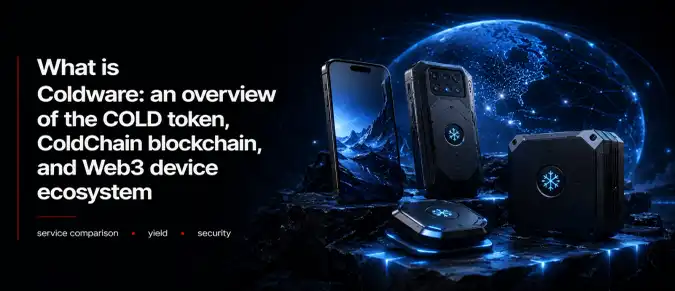

Coldware is a blockchain project that combines Web3 infrastructure, hardware devices, and a dedicated ecosystem of services. According to the published documentation, the project is developing the Proof-of-Stake-based ColdChain blockchain, the COLD token, decentralized finance tools, and a range of devices designed for Web3 interaction. One of Coldware's most distinctive features is its combination of software and hardware infrastructure, including the Larna 2400 smartphone, a cryptocurrency wallet, and plans to launch laptops and other devices. However, a significant part of the ecosystem remains under active development, so the project should be assessed based on both its published materials and its actual technical progress.
Contents
- What Is Coldware and How Does the Project Work?
- ColdChain, Web3 Devices, and the Coldware Ecosystem
- The COLD Token and Platform Economy
- Key Features of the Coldware Ecosystem
- The Future Development of Coldware

1. What Is Coldware and How Does the Project Work?
Coldware is a Web3 project focused on creating a unified infrastructure for user interaction with blockchain technology. Unlike most cryptocurrency projects, the company is developing not only software but also its own hardware solutions.
The foundation of the ecosystem is ColdChain, a Layer 1 blockchain that uses a Proof-of-Stake consensus mechanism. According to the white paper, the network is designed to support decentralized applications, staking, tokenization, and digital asset operations.
The project also aims to make Web3 technology more accessible to mainstream users. To achieve this, the team is developing tools that combine wallets, payments, communication services, and decentralized applications within a single ecosystem.
It is important to note that a significant portion of Coldware's components remains under development or in the early stages of implementation. Many of the project's characteristics are based on its roadmap and statements published by the team.
2. ColdChain, Web3 Devices, and the Coldware Ecosystem
One of Coldware's most notable features is its combination of blockchain infrastructure and consumer hardware. According to the documentation, the project is developing the Larna 2400 smartphone, which is expected to include preinstalled Web3 functionality such as a cryptocurrency wallet, a dApp Store, and messaging services.
The project's materials also mention plans for a ColdBook device, as well as the integration of a decentralized VPN, ColdChat, and other tools for managing digital assets. This approach makes Coldware closer to ecosystem projects that combine software and hardware within one platform.
The ecosystem also includes Cold DeFi, Cold Finance, and an integrated dApp Store. The developers state that users will be able to access decentralized services without installing additional software.
This model reflects the project's attempt to reduce barriers for users who have not previously interacted with blockchain applications or cryptocurrencies.
3. The COLD Token and Platform Economy
The native asset of the ecosystem is the COLD token. According to the published tokenomics, it is intended for transaction fees, staking, interaction with DeFi services, and the operation of selected ecosystem components.
The white paper indicates a maximum supply of 21 billion tokens. The allocation includes the presale, liquidity, staking rewards, developer grants, and other areas related to ecosystem development.
| Component | Purpose |
|---|---|
| COLD | Native ecosystem token |
| ColdChain | Proof-of-Stake Layer 1 blockchain |
| Larna 2400 | Web3 smartphone within the ecosystem |
| Cold Wallet | Wallet for storing and staking digital assets |
| Cold DeFi | Set of decentralized financial services |
The practical value of the COLD token will depend on ecosystem adoption, successful device launches, and demand for the project's services. As with other early-stage projects, the token's market value may fluctuate significantly under the influence of external factors.
Another important factor is strong competition among both Layer 1 networks and manufacturers of Web3-focused hardware products.

4. Key Features of the Coldware Ecosystem
Coldware is positioned as a comprehensive ecosystem that combines blockchain infrastructure, hardware devices, and financial services. The project aims to create a unified environment for managing digital assets and interacting with Web3 applications.
However, a substantial portion of the proposed functionality remains part of the project's target architecture and should be evaluated based on the actual level of implementation.
Key platform features include:
- the ColdChain Layer 1 blockchain;
- the COLD token;
- staking and DeFi services;
- the Larna 2400 Web3 smartphone;
- a cross-platform cryptocurrency wallet;
- ColdChat with proposed end-to-end encryption;
- a decentralized VPN service;
- dApp Store support;
- cross-platform digital asset management;
- integration of hardware and software solutions.
This combination makes Coldware one of the more unusual projects attempting to connect blockchain infrastructure with consumer devices.
Users should nevertheless consider that the success of this model will depend on the team's ability to deliver both the software and hardware components of the ecosystem.
5. The Future Development of Coldware
Interest in Web3 devices and privacy-focused digital services continues to grow, encouraging the development of projects that combine hardware products with blockchain technology. Coldware is being developed within this trend through a combination of a Layer 1 network and dedicated devices.
The project's future will depend on the successful launch of its core infrastructure, execution of the roadmap, and growth of its user base. Device manufacturing, network scalability, and developer support will also play important roles.
From a market perspective, Coldware is notable as an experiment in combining blockchain, hardware, and Web3 services within a single ecosystem. However, as with most early-stage projects, its prospects should be evaluated by considering both technical progress and market risks.
Overall, Coldware is a project at the intersection of blockchain, fintech, and hardware technology. It combines the COLD token, the ColdChain network, and a range of Web3 devices. Its long-term success will depend on how fully the team delivers the proposed architecture and whether its products gain meaningful demand among users.











