
Kenshi is a Web3 infrastructure project focused on building a high-performance blockchain data pipeline. The platform enables developers to collect, index, process, and distribute data from multiple blockchain networks in near real time. Unlike traditional RPC-based data retrieval, this architecture significantly improves the performance of decentralized applications, analytics platforms, AI agents, and enterprise solutions. Kenshi combines streaming data processing, a broker-based network, subnets, and an extensible infrastructure designed for scalable Web3 services.
Contents
- What Is Kenshi and Why Does Web3 Need a Data Pipeline?
- Kenshi Architecture and How the Network Works
- Key Features and Use Cases of Kenshi
- Kenshi Compared to Other Web3 Infrastructure Solutions
- The Kenshi Ecosystem, Future Development, and Practical Applications
1. What Is Kenshi and Why Does Web3 Need a Data Pipeline?
Modern blockchain networks generate massive amounts of data every day, including blocks, transactions, smart contract events, state changes, and user activity. For most decentralized applications, simply connecting to an RPC node is no longer sufficient. Data must be collected, processed, transformed into a usable format, and delivered efficiently through APIs or other interfaces.
Kenshi addresses this challenge by providing a Web3 Data Pipeline—an infrastructure layer that automates blockchain data collection, filtering, indexing, processing, and distribution. This approach is particularly valuable for analytics platforms, AI-powered applications, DeFi protocols, blockchain gaming projects, monitoring systems, and enterprise-grade Web3 solutions.
According to the project's technical documentation, Kenshi is built around a modular network architecture. Instead of relying on a centralized server, the platform distributes responsibilities across independent components, each handling a specific part of the data processing workflow. This modular design allows the infrastructure to scale without requiring a complete redesign of the system.
This concept reflects a broader trend within the Web3 ecosystem, where blockchain data infrastructure is becoming a dedicated layer of the technology stack alongside blockchain networks, decentralized storage solutions, and oracle services.
2. Kenshi Architecture and How the Network Works
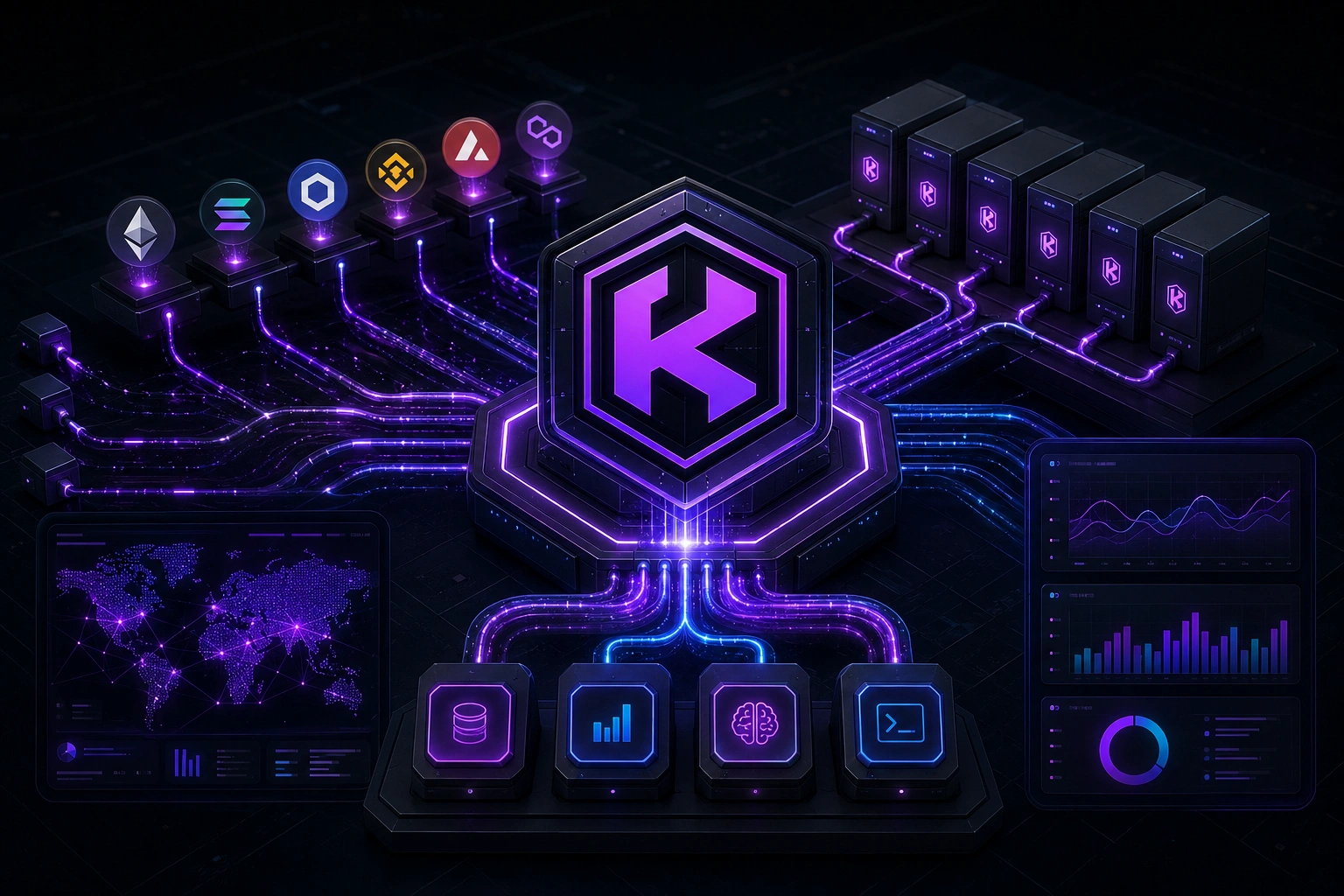
Kenshi's architecture is built around three core components: Brokers, Subnets, and Workers. The Broker acts as the network's management layer, handling subnet registration, participant authorization, access control, and enforcement of internal network policies.
Each Subnet can operate with its own security settings, staking requirements, authorization mechanisms, and governance rules. This design allows different organizations and development teams to deploy independent infrastructure environments while using the same underlying Kenshi technology stack.
Once a Broker has been configured, Worker nodes can join the network to process incoming blockchain data. This distributed model resembles modern stream-processing systems, where workloads are shared across multiple independent nodes to improve scalability, resilience, and performance.
One of Kenshi's defining characteristics is its event-driven architecture. Instead of relying on continuous polling through RPC requests, the platform responds to blockchain events as they occur and routes them to the appropriate processing services. This approach reduces latency, minimizes unnecessary network traffic, and enables applications to access fresh blockchain data with significantly greater efficiency.
3. Key Features and Use Cases of Kenshi
Kenshi is primarily designed for Web3 infrastructure developers, enterprise organizations, and teams that require fast, reliable access to blockchain data across multiple networks.
One of the platform's defining characteristics is its modular architecture, which enables different data-processing components to work together as a unified infrastructure. This flexibility allows developers to tailor the system to a wide range of use cases, from lightweight decentralized applications to enterprise-grade platforms handling large volumes of blockchain data. As a result, Kenshi can support environments where continuous, high-throughput data processing is essential.
Key capabilities of the platform include:
- Indexing blockchain events and smart contract activity;
- Near real-time stream processing of blockchain data;
- Scalable architecture based on Brokers and Subnets;
- Flexible authorization and access management;
- Support for external modules and plugin integration;
- Creation of specialized infrastructure subnets for different workloads;
- Administrative tools for managing the network lifecycle;
- Staking mechanisms that help support selected infrastructure components.
These capabilities make Kenshi suitable for blockchain analytics platforms, DeFi monitoring tools, fraud detection systems, AI-powered applications, trading platforms, gaming ecosystems, and other services that rely on a continuous stream of structured blockchain data.
Another advantage of this architecture is the independence of its individual components. Updates or scaling operations can be performed on one subsystem without disrupting the operation of the rest of the infrastructure, improving both reliability and maintainability.

4. Kenshi Compared to Other Web3 Infrastructure Solutions
Several projects already provide blockchain indexing and data-processing services within the Web3 ecosystem. However, Kenshi adopts a different architectural model based on Brokers, Subnets, and distributed event processing rather than focusing solely on data indexing.
When comparing these solutions, it is important to recognize that Kenshi is designed to manage the entire blockchain data lifecycle—from collection and processing to routing information between services. Thanks to its modular architecture, the platform can serve as the foundation for scalable infrastructure deployments requiring high performance, flexibility, and efficient resource management.
| Feature | Kenshi | Typical Web3 Indexers |
|---|---|---|
| Primary Purpose | Blockchain Data Pipeline and processing infrastructure | Blockchain indexing |
| Architecture | Brokers, Subnets, and Worker nodes | Centralized or distributed indexers |
| Scalability | Independent Subnet-based scaling | Depends on the project's implementation |
| Processing Model | Event-driven architecture | Periodic indexing or subscription-based updates |
| Extensibility | Plugin support and customizable subnet policies | Usually limited to project APIs |
These differences demonstrate that Kenshi focuses on building a comprehensive blockchain data infrastructure rather than serving solely as an indexing service. This broader approach enables the platform to support a wider variety of applications, including analytics systems, AI-driven services, enterprise Web3 platforms, and other environments where scalability, modularity, and architectural flexibility are critical.
At the same time, Kenshi should not be viewed as a direct replacement for traditional blockchain indexers or oracle networks. Instead, it occupies a position between blockchain data infrastructure, event-routing systems, and distributed service orchestration platforms.
5. The Kenshi Ecosystem, Future Development, and Practical Applications
As the Web3 industry matures, innovation is increasingly shifting from building standalone blockchains to developing the infrastructure that powers decentralized applications. This trend has significantly increased the demand for Data Pipeline solutions capable of delivering reliable, structured blockchain data. Without efficient access to blockchain information, modern DeFi protocols, analytics platforms, AI agents, gaming ecosystems, and enterprise blockchain services cannot operate effectively.
Kenshi continues to expand its ecosystem by developing tools for network administration, staking mechanisms, Broker registration, Subnet configuration, and Worker node management. This modular approach enables organizations to deploy dedicated infrastructure environments tailored to specific business or technical requirements without modifying the platform's core architecture.
From a technical perspective, Kenshi emphasizes scalability, modularity, and a clear separation of responsibilities across network components. These principles align with modern distributed systems design, making the platform well suited for future expansion as blockchain networks continue to generate increasing volumes of data.
As Web3 adoption grows, so does the need for high-performance infrastructure capable of processing blockchain data efficiently across multiple networks and external services. Kenshi addresses this challenge through a flexible architecture that combines event-driven data processing, subnet management, and distributed coordination between infrastructure components. As a result, the project represents an important infrastructure layer for developers, analytics providers, and organizations building scalable Web3 applications that depend on near real-time blockchain data.











