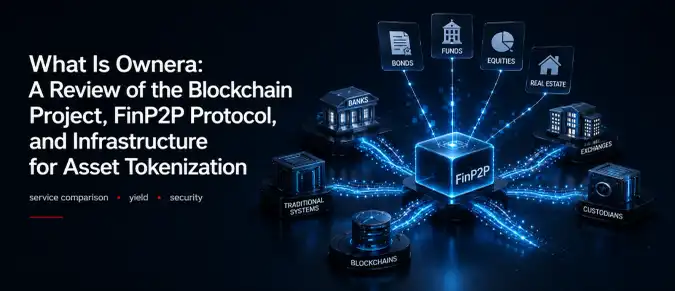

Ownera is a blockchain infrastructure project focused on advancing the tokenized asset market and improving interoperability between financial institutions. Rather than launching another Layer 1 blockchain, the project provides a universal orchestration layer that connects multiple blockchains, custodial solutions, traditional banking systems, and financial applications into a unified ecosystem. At the core of the platform is the open FinP2P protocol, designed to facilitate data exchange and transaction coordination between market participants. This approach addresses infrastructure fragmentation, one of the major barriers to the broader adoption of digital financial assets.
Contents
- What Is Ownera and What Problem Does It Solve?
- Ownera Architecture and the FinP2P Protocol
- Key Features of the Ownera Platform
- Ownera vs. Traditional Financial Infrastructure
- Ownera's Role in the Future of Asset Tokenization

1. What Is Ownera and What Problem Does It Solve?
Ownera is a technology platform designed to enable seamless interaction between participants in the digital asset market. The project primarily targets banks, asset managers, brokers, custodians, exchanges, and infrastructure providers working with tokenized financial instruments.
One of the biggest challenges facing today's digital asset ecosystem is infrastructure fragmentation. Tokenized assets are issued across multiple blockchains, rely on different token standards, trade on separate marketplaces, and are supported by independent service providers. As a result, financial institutions often need to build numerous individual integrations.
Ownera replaces this model with a unified approach. Each organization deploys its own Router, which communicates with other Routers through the open FinP2P protocol. This architecture resembles the way the internet operates, where common communication standards enable systems to exchange information regardless of the underlying infrastructure.
Rather than competing with existing blockchains, Ownera connects distributed ledgers, traditional IT environments, and financial services into a shared ecosystem for digital asset exchange.
2. Ownera Architecture and the FinP2P Protocol
The foundation of the platform is the FinP2P protocol, an open communication standard designed for financial institutions. It manages message routing, transaction coordination, workflow orchestration, and business process execution across different participants.
The central component of the architecture is the Ownera Router. Each organization deploys its own Router within its internal infrastructure. This allows customer data, private keys, and internal processing to remain under local control while only the required messages, cryptographic proofs, and signed transactions are exchanged externally.
The platform also introduces the Business Intents concept. Instead of manually building technical workflows, applications describe the desired business outcome—such as purchasing a tokenized bond, transferring an asset between networks, or executing a repo transaction. The Router then automatically coordinates the required interactions between blockchains, custodians, payment providers, and other connected services.
In addition, the platform supports standardized identity models for users, organizations, and assets, allowing multiple blockchain networks to operate through a single business framework.
3. Key Features of the Ownera Platform
The platform is designed to automate the entire lifecycle of digital financial assets, from issuance and trading to settlement. Through its unified orchestration layer, different services can exchange data using standardized mechanisms regardless of the underlying blockchain.
This architecture reduces the need for multiple point-to-point integrations while simplifying collaboration between financial institutions. It also enables organizations to connect both distributed ledger technologies and traditional enterprise systems within the same infrastructure.
Key capabilities of the platform include:
- unified integration across multiple blockchains and distributed ledgers;
- transaction routing between financial institutions;
- support for multiple digital asset custody models;
- liquidity aggregation across different marketplaces;
- implementation of the open FinP2P protocol;
- support for tokenized securities, funds, bonds, and other financial assets;
- integration of traditional banking platforms without replacing existing infrastructure.
These capabilities position Ownera as an interoperability layer connecting different participants within the digital asset ecosystem. Standardized communication allows organizations to deploy new services more efficiently while expanding support for tokenized financial products without redesigning existing infrastructure.
Another notable feature is support for specialized applications known as SuperApps. According to the project's documentation, these applications leverage the same orchestration layer for trading, asset issuance, lending, collateral management, settlements, and other financial workflows.
4. Ownera vs. Traditional Financial Infrastructure
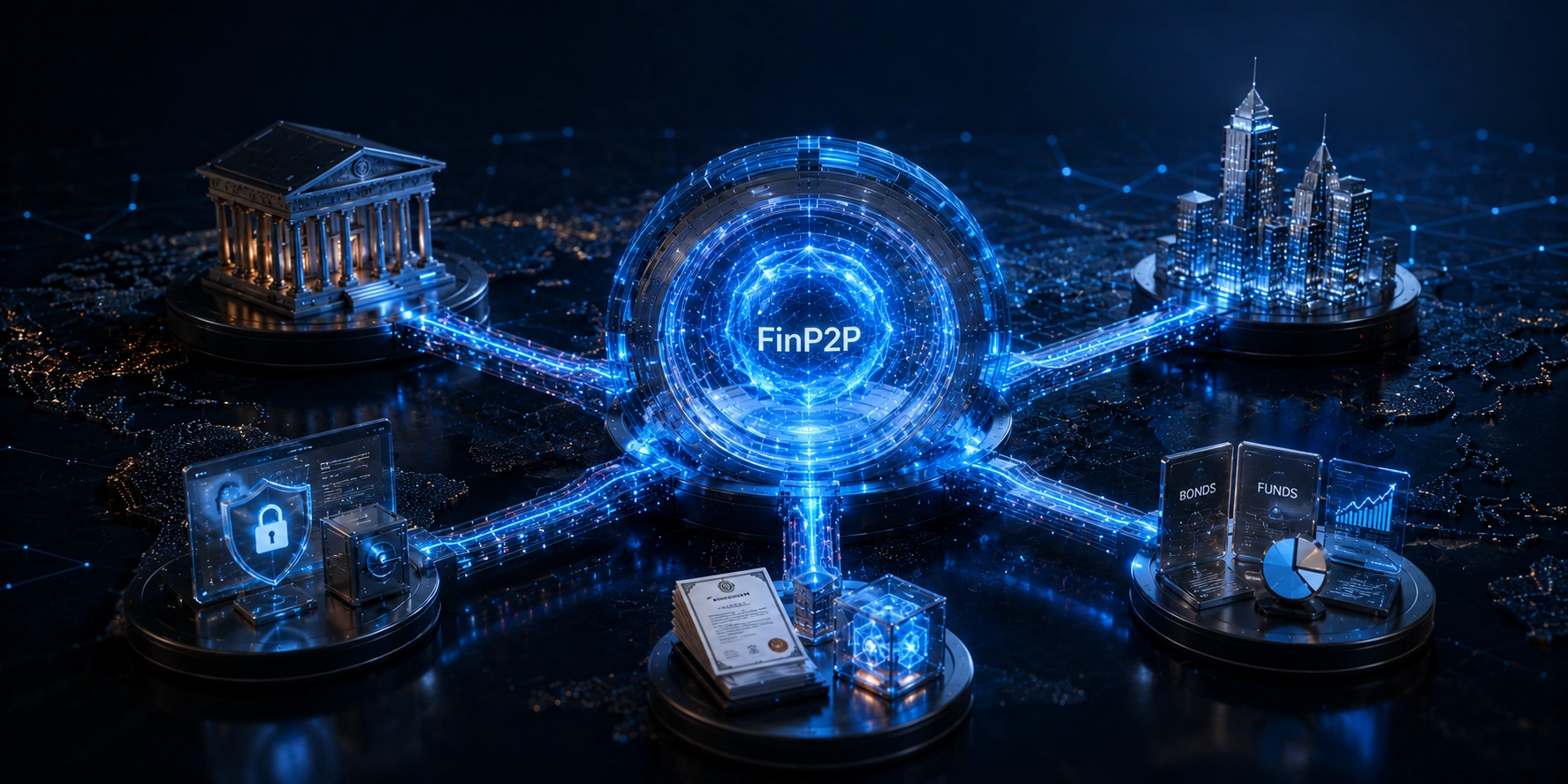
Ownera's operating model differs significantly from conventional financial integration approaches. Instead of creating numerous direct connections between institutions, the platform relies on a unified interaction layer that simplifies onboarding and infrastructure expansion.
The comparison below highlights the differences between traditional financial integration models and Ownera's architecture. The primary advantage lies in its standardized interoperability framework, which enables new organizations and services to connect without requiring custom integrations for every participant.
| Criteria | Traditional Model | Ownera |
|---|---|---|
| Integration | Individual connections between organizations | Connection through Router and FinP2P |
| Blockchain Support | Separate integration for each network | Unified interoperability model |
| Scalability | Integration complexity grows rapidly | New participants can join without numerous additional integrations |
| Data Exchange | Proprietary APIs | Standardized communication protocols |
| Liquidity | Fragmented across multiple venues | Liquidity aggregation capabilities |
| Legacy System Support | Requires dedicated adapters | Built into the platform architecture |
This model is particularly relevant for institutional tokenized asset markets, where multiple distributed ledger platforms, custodians, banking systems, and trading infrastructures operate simultaneously.
The development of these interoperability mechanisms is also supported by industry initiatives. Organizations such as GDF and the FIX Trading Community recognize FinP2P as a potential framework for integrating traditional capital markets with digital asset infrastructure.
5. Ownera's Role in the Future of Asset Tokenization
As tokenized bonds, investment funds, credit products, and other digital assets become more widespread, demand continues to grow for interoperable infrastructure connecting financial institutions. Ownera addresses this challenge by providing a unified coordination layer across blockchain networks and enterprise systems.
The project places significant emphasis on compatibility with traditional financial infrastructure. Rather than replacing existing platforms, it enables their integration with distributed ledger technologies through standardized interfaces, making tokenization adoption more practical for established financial institutions.
Another important direction is the adoption of open industry standards. By combining the FinP2P protocol with existing financial standards such as FIX, Ownera promotes interoperability between technology providers while reducing dependence on closed ecosystems.
Instead of operating its own public blockchain, Ownera serves as an infrastructure layer connecting existing networks. As the tokenized asset market continues to expand, platforms built around interoperability may play an increasingly important role in enabling efficient digital asset exchange across financial ecosystems.











