

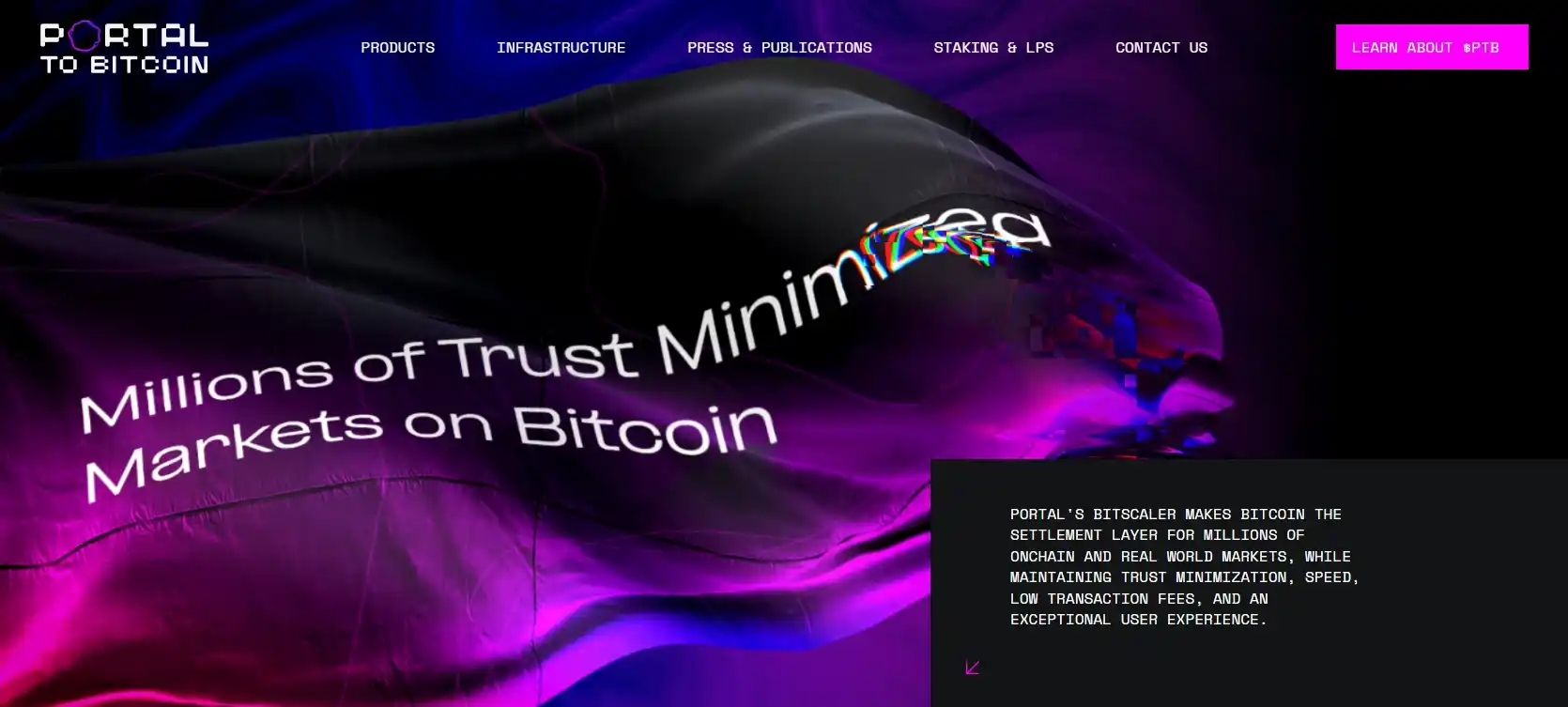
In the world of cryptocurrencies, Bitcoin has long established itself as "digital gold"—a reliable safe-haven asset. However, its use as a foundation for decentralized finance (DeFi) and other Web3 applications has historically been constrained by scalability issues. The Portal to Bitcoin project offers a radical solution to this problem. Its goal is to transform BTC from primarily an investment tool into a global settlement layer for millions of markets, while preserving the key principles of decentralization and security.
Contents:
- The Bitcoin Scalability Problem
- BitScaler: A Trustless Solution
- Portal OS: Infrastructure for Validators
- Tools for Developers and the Portal to Bitcoin Ecosystem
- Partners and Future Project Development
- Conclusion
The Bitcoin Scalability Problem
Limited throughput and relatively slow transaction processing speed in the Bitcoin network create significant obstacles to its widespread adoption in decentralized finance. These technical characteristics of the base protocol make it unsuitable for active use in situations requiring instant transaction confirmations and minimal fees.
To overcome these limitations, solutions such as cross-chain bridges and the creation of wrapped versions of BTC on other blockchains are often used. However, such methods introduce new risks associated with the need to trust third-party operators and vulnerabilities in their smart contracts, which essentially contradicts the fundamental principle of decentralization. The Portal project offers an alternative path, eliminating the very need for such compromises.
BitScaler: A Trustless Solution
The key technology underlying the project is BitScaler. This system is a unique solution for scaling the first cryptocurrency, operating without the need for trust in intermediaries and built on the principles of interaction between multiple independent parties.
Core principles and advantages of BitScaler:
- No Custody Risk: A model of non-custodial delegation is used, ensuring that validators never control user assets.
- Direct Integration: The technology allows for the deployment of permissionless cross-chain contracts directly within the Bitcoin network, without requiring changes to its base code (Op Codes).
- Security and Efficiency: The approach preserves the high level of security inherent to the original blockchain and ensures high-speed transactions with low cost.
BitScaler opens up possibilities for creating complex decentralized applications (DeFi) and other Web3 solutions, using Bitcoin as a secure and reliable foundational settlement layer. This eliminates the traditional trade-off between scalability, cost, and security, offering a fundamentally new architecture for the ecosystem.
Portal OS: Infrastructure for Validators
To operate the entire decentralized network, Portal uses its own operating system, Portal OS. This infrastructure provides validators with a complete set of tools for safe and efficient work, while remaining seamless and not requiring the use of traditional bridges. Its modular architecture is flexibly configurable for various tasks.
Comparison of the Portal OS approach with the traditional blockchain interaction model:
| Criterion | Traditional Model with Bridges | Portal OS Model |
|---|---|---|
| Architecture | Depends on third-party intermediary smart contracts. | Seamless, direct connection via nodes. |
| Funds Control | Risk of custody by the bridge operator. | Non-custodial: validators do not control user assets. |
| Security | Depends on vulnerabilities of an individual contract. | Relies on the security of the Bitcoin base layer and multi-party channels. |
| Components | Fragmented solutions for each blockchain. | Unified set: Liquidity Router, Co-ordinator, L1/L2 node support. |
Portal OS creates a unified and secure environment for processing transactions. It eliminates the key risks inherent in bridges and ensures the stable operation of BitScaler, making Bitcoin scaling technically feasible and economically viable.
Tools for Developers and the Portal to Bitcoin Ecosystem
For the active development of the ecosystem, Portal offers developers practical tools. The Swap SDK allows for the creation of applications for any virtual machine, providing them with direct access to Bitcoin liquidity without complex bridge integration. The Portal Liquidity Router acts as a decentralized hub for trading assets issued on various layers of the BTC network, contributing to the growth of the entire economy.
Examples of ready-made wallets with a built-in cross-chain exchange demonstrate the technology's operation for end-users, including support for new standards such as Runes and Ordinals. The separate project RAFA (Generative AI for Crypto) shows how complex services—in this case, personal AI assistants for market analysis—can be built on this infrastructure. This creates a complete environment for innovation in Web3.
Partners and Future Project Development
The success of infrastructure solutions directly depends on their adoption and support by the industry. Portal to Bitcoin demonstrates confident progress in this direction, as confirmed by interest from key players in the crypto market. Current information on the official website allows for the identification of several main areas of partnership.
Main areas of interaction:
- Investment Support from venture funds and private investors specializing in blockchain technologies.
- Technology Integration with other projects and platforms in the Bitcoin and Web3 ecosystem.
- Ecosystem Development through collaboration with teams creating new applications and financial instruments.
The growing network of partners and integrations creates a solid foundation for Portal's long-term development. The focus on providing a secure and efficient alternative to traditional bridges opens up significant prospects for the project in shaping the future of cross-chain interaction and decentralized finance based on Bitcoin.
Conclusion
The Portal to Bitcoin project represents a comprehensive and technically sound solution to overcome the main limitation of the first cryptocurrency. Through the combination of BitScaler and Portal OS technologies, it creates a secure and high-performance environment capable of turning Bitcoin into a full-fledged settlement layer for the global Web3 economy.
The further development of this infrastructure, supported by a growing number of partnerships and convenient tools for developers, opens a new era for BTC. From digital gold, it can evolve into a living, dynamic foundation for millions of decentralized markets, while preserving its immutable basic principles—reliability, security, and freedom from intermediaries.











