

Rumby Stars is a multiplayer blockchain project that combines competitive PvP gameplay, social interaction, and a Web3 economy without creating strict entry barriers for players. The project is designed for a mass audience and focuses on skill, team play, and match dynamics rather than financial dominance. Rumby Stars aims to seamlessly integrate blockchain mechanics into the gameplay experience while preserving the familiar structure of online games and expanding it with digital ownership capabilities.
- Rumby Stars Concept and Web3 Gaming Philosophy
- Rumby Stars Gameplay: PvP Battles and Core Mechanics
- Characters and Team Interaction in Rumby Stars
- Technical Architecture and Blockchain Infrastructure
- In-Game Economy and Reward Model
- Rumby Stars Ecosystem, Community, and Project Growth
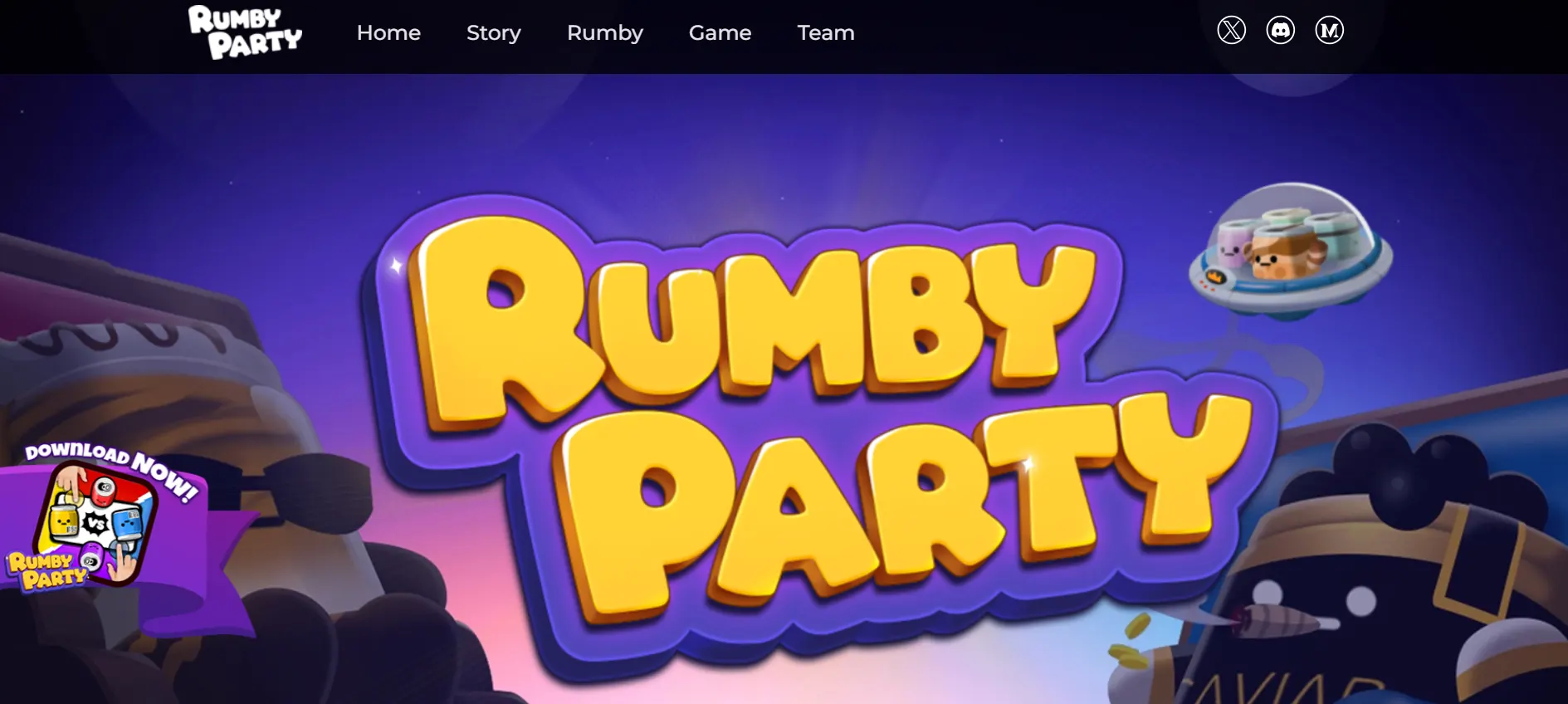
Rumby Stars Concept and Web3 Gaming Philosophy
Rumby Stars is developed as a competitive multiplayer game where the core focus remains on gameplay itself. Created by the GOMBLE studio, the project is positioned as an accessible PvP game that does not require users to own NFTs or cryptocurrencies at the entry stage. This approach clearly differentiates Rumby Stars from traditional GameFi projects, where participation is often tied to mandatory upfront investments.
The project’s philosophy is built around gradual player onboarding into the Web3 environment. Users can start playing in a familiar format without directly interacting with blockchain technology and later, as interest grows, engage with economic and on-chain mechanisms. This significantly lowers both psychological and technical entry barriers while preserving the potential for a fully developed digital economy within the project.
At its core, Rumby Stars promotes fair competition. Match outcomes are determined by coordination, reaction speed, and strategic decisions rather than the amount of acquired assets. This balance makes the project appealing to both traditional gamers and the Web3 audience.
Rumby Stars Gameplay: PvP Battles and Core Mechanics
The gameplay of Rumby Stars is centered around team-based PvP matches in a 4v4 format. Players form teams and participate in fast-paced arena battles where decision-making speed and coordination with teammates play a crucial role. Matches are relatively short, making the game suitable for regular sessions and mobile-oriented play patterns.
Key gameplay features of Rumby Stars:
-
team-based PvP battles
-
strong focus on cooperation and tactics
-
fast and dynamic game sessions
-
no mandatory NFT ownership
-
skill-based competitive mechanics
The gameplay is designed to keep players constantly adapting to battlefield conditions and opponents’ actions. A variety of arenas and match scenarios supports long-term engagement and high replayability.
Characters and Team Interaction in Rumby Stars
The universe of Rumby Stars is populated by characters known as Rumbies. These characters are stylized as everyday objects while featuring unique visual identities and gameplay characteristics. Each character fulfills a specific role within the team, directly influencing tactics and match strategies.
Character roles are distributed across offensive, support, and control functions, requiring thoughtful team composition. Successful gameplay depends not only on individual skill but also on understanding teammates’ strengths and weaknesses. This structure enhances team synergy and makes interaction between players a central element of the experience.
Social interaction extends beyond individual matches. Rumby Stars encourages cooperative play, long-term team formation, and participation in shared activities, creating a stable game environment with a strong social layer.
Technical Architecture and Blockchain Infrastructure
Technologically, Rumby Stars is built as a hybrid project combining Web2 user experience principles with Web3 infrastructure for managing digital assets. Blockchain functions as a background layer that ensures economic transparency and asset ownership without interfering with core gameplay.
The project relies on scalable blockchain solutions with low transaction fees, which is essential for handling large volumes of in-game operations. The architecture includes the use of smart contracts for reward distribution, asset management, and support for future NFT elements related to customization and character progression.
This approach allows Rumby Stars to maintain stable performance while laying the groundwork for expanding Web3 functionality without compromising the player experience.
In-Game Economy and Reward Model
The economic model of Rumby Stars is designed to build a sustainable game ecosystem where value is generated through active participation and match performance rather than speculative mechanics.
| Economic Element | Description |
|---|---|
| Game Entry | Free |
| NFTs | Optional |
| Rewards | Based on activity and performance |
| Token | Used within the ecosystem |
| Economic Model | Balance-oriented |
The project’s economy is structured to support long-term player engagement and avoid sharp inflation of in-game rewards, enabling gradual ecosystem growth without loss of digital asset value.
Rumby Stars Ecosystem, Community, and Project Growth
Rumby Stars actively develops its community through social platforms and in-game events as core channels of interaction. The team emphasizes player feedback, allowing continuous adjustments to balance, mechanics, and development priorities.
The project’s future prospects are tied to content expansion, new game modes, competitive formats, and deeper Web3 integration. Rumby Stars aims to occupy a niche as an accessible PvP game with a blockchain-based economy, maintaining a balance between entertainment and digital value.
Further development will depend on the quality of ongoing support, update frequency, and the team’s ability to retain player interest in a highly competitive Web3 gaming market.











