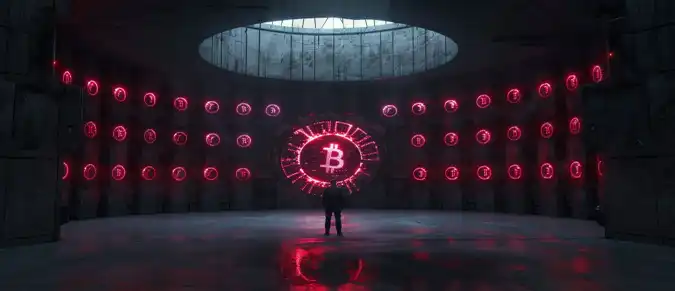

Age of Rust is a sci-fi adventure game with quest and puzzle elements, where blockchain technology is embedded directly into the narrative structure. Unlike most Web3 projects focused on token farming and economic mechanics, the emphasis here is on atmosphere, world exploration, and intellectual challenges. NFT items function as part of the storyline rather than standalone speculative assets.
The project introduced an alternative approach to integrating crypto technologies into the gaming industry. Instead of building complex tokenomics, the developers focused on blending traditional game design with digital ownership. This positioned Age of Rust as one of the early examples of how Web3 can enhance a narrative-driven experience without disrupting its structure. The concept influenced further experiments in story-focused blockchain games and demonstrated that digital assets can exist within an artistic context without compromising immersion.
Contents
- Concept of Age of Rust and Its Place in Web3
- Gameplay and Puzzle Structure
- Economic Model and Digital Assets in Age of Rust
- Technological Architecture and Blockchain Integration
- Project Significance and Future Prospects
1. Concept of Age of Rust and Its Place in Web3
Age of Rust unfolds in a dark sci-fi universe where players explore abandoned stations, ruined structures, and mysterious mechanisms. The central theme revolves around discovering digital artifacts and solving puzzles connected to cryptography and blockchain technology. This approach merges classic adventure game elements with modern decentralized tools.
The project emerged during the rapid expansion of the NFT market but occupied a distinct niche. Rather than adopting a yield-focused GameFi model, Age of Rust integrates digital assets into the storyline itself. NFTs serve as keys to hidden locations and tools for interacting with the environment.
In this way, Age of Rust demonstrated that Web3 can function as a narrative device rather than merely an economic system. Players engage with blockchain-based assets to progress through the story, creating a deeper experience compared to traditional tokenized games. The project highlighted how cryptographic mechanics can be woven into interactive storytelling and showed that single-player games can harmoniously coexist with decentralized technologies.
2. Gameplay and Puzzle Structure
The gameplay centers on exploration and logical problem-solving. Age of Rust follows the tradition of classic adventure games, where attention to detail and environmental analysis are crucial. Locations are filled with hidden clues that require careful observation.
Main Gameplay Features:
- Exploration of atmospheric sci-fi environments.
- Multi-layered logical puzzles.
- Use of NFT keys to unlock new areas.
- Interaction with cryptographic mechanisms.
- Discovery of hidden digital artifacts.
- Progression through a nonlinear storyline.
Some challenges require a basic understanding of cryptographic principles or interaction with external wallets. This adds an additional layer of depth, connecting gameplay with real-world technological concepts. Unlike action-oriented titles, the focus here is on intellectual engagement and gradual narrative development.
The absence of combat mechanics reinforces the sense of solitary exploration. Players experience a deliberate and thoughtful journey where each discovery matters. Gradually increasing puzzle complexity sustains engagement and encourages analytical thinking, creating a balance between entertainment and conceptual learning.
3. Economic Model and Digital Assets in Age of Rust
The economic structure of Age of Rust is restrained and avoids aggressive tokenomics. NFT items are limited in supply and primarily function as narrative tools. The project utilized Enjin’s infrastructure to mint and manage tokenized objects.
Key Digital Assets:
| Name | Standard | Purpose |
|---|---|---|
| Enjin Coin (ENJ) | ERC-20 | Backing and supporting NFT assets. |
| Age of Rust NFT Keys | ERC-1155 | Access to hidden areas and quest content. |
| Rare Digital Artifacts | ERC-1155 | Limited-edition collectible items. |
The ERC-1155 standard enabled the issuance of both unique and semi-fungible items within a unified structure. Scarcity reinforced perceived value, yet the primary emphasis remained on functional integration within gameplay rather than speculative demand.
Unlike reward-driven economies with constant token emission, Age of Rust avoids inflationary mechanics. Digital assets serve the artistic concept instead of acting as daily farming incentives. This design reduces speculative pressure and strengthens the narrative orientation, positioning the economy as a complement to gameplay rather than its core driver.
4. Technological Architecture and Blockchain Integration
Age of Rust integrates the Ethereum blockchain through the Enjin ecosystem. Smart contracts ensure transparent ownership and allow assets to be transferred outside the game environment. This approach makes items independent of centralized servers.
Players can use compatible wallets to store and manage their NFTs. At the same time, the game maintains a traditional single-player structure, with Web3 elements embedded seamlessly rather than dominating the experience.
The technical implementation balances usability and decentralization. Blockchain functions as an additional layer of capability without overwhelming users with complex procedures.
The integration of digital keys and cryptographic components illustrates how game design can intersect with real technological tools. Furthermore, the architecture preserves proof of ownership beyond the lifecycle of the game itself, enhancing user trust in digital assets and reinforcing the permanence of blockchain-based collectibles.
5. Project Significance and Future Prospects
Age of Rust stands as a compelling example of how blockchain can be integrated into a narrative game without focusing on mass monetization. The project demonstrated that NFTs can function as storytelling devices, enhancing interactivity and immersion.
However, such a model requires continuous content updates and stable infrastructure. NFT and crypto market volatility influences how players perceive digital assets, making it essential to maintain a balance between artistic value and technological relevance.
The future of Age of Rust lies in the development of narrative-driven Web3 experiences that prioritize atmosphere and intellectual depth. In a broader context, the project represents an important stage in the evolution of blockchain gaming. It proved that decentralized technology can expand game design possibilities without replacing traditional mechanics, establishing Age of Rust as a significant experimental milestone in Web3 adventure development.











