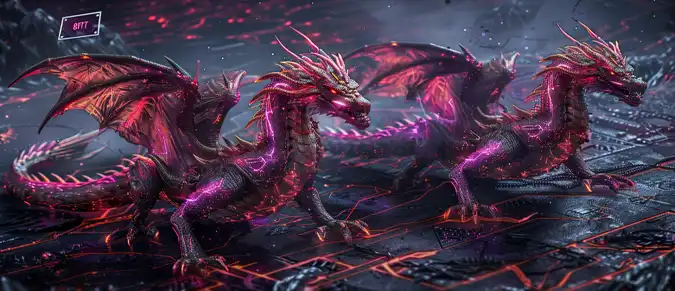

Dragonary is a blockchain-based turn-based strategy game built around collecting, developing, and battling NFT dragons. The project emerged during the early wave of play-to-earn titles but gradually evolved into a more balanced model where tactics, character synergy, and a carefully designed economy play the central role. Dragonary demonstrates how Web3 tools can be used to confirm digital ownership while maintaining a sustainable in-game ecosystem without allowing the financial layer to dominate the experience. The game focuses on long-term engagement rather than short-term speculative cycles. This makes it appealing not only to crypto users but also to fans of strategic gameplay.
Contents
- Dragonary Concept and Strategic Depth
- Gameplay and Core Activities
- Technology Model and Blockchain Integration
- Dragonary Economic System and Tokens
- Community and Platform Development Prospects
1. Dragonary Concept and Strategic Depth
Dragonary is built around the idea of digital ownership of in-game creatures represented as NFTs. Each dragon features unique attributes, abilities, and rarity levels, with ownership recorded on the blockchain. However, the core focus is not on resale potential but on strategic deployment in battles and long-term progression. The gameplay system revolves around assembling a balanced team. Dragons fulfill different roles — damage dealers, defenders, and support units — and victory depends on tactical decision-making, skill combinations, and the ability to adapt to an opponent’s playstyle. This structure creates depth and rewards thoughtful planning.
The project introduces Web3 mechanics gradually: newcomers can focus purely on gameplay, while experienced users explore token management and marketplace interactions. The balance between accessibility and rarity allows progression without forced monetization. Ultimately, strategic gameplay forms the foundation of the project, while blockchain technology serves as a supporting tool rather than a dominant feature.
2. Gameplay and Core Activities
Dragonary’s gameplay is centered on 3v3 turn-based battles. Players select three dragons, assign their roles, and compete against other users or AI opponents. Success requires analyzing enemy moves and using special abilities at the right moment.
The progression system includes leveling up, enhancing attributes, and evolving dragons. Advancement requires resources earned through battles and events, encouraging consistent participation and long-term engagement.
Main Player Activities:
- completing PvE missions with increasing difficulty;
- competitive PvP and ranked matches;
- leveling and evolving NFT dragons;
- participating in seasonal tournaments;
- completing daily quests;
- managing resources to strengthen the team.
The combination of competition and character progression creates a balance between strategy and growth. Leaderboards and seasonal rewards provide additional incentives, motivating players to demonstrate performance in ranked environments. This competitive structure strengthens the community and makes gameplay the core of the ecosystem.
3. Technology Model and Blockchain Integration
Dragonary operates on a hybrid architecture. Core gameplay mechanics — damage calculations, character interactions, and match synchronization — run on traditional servers to ensure stability and performance.
The blockchain layer records ownership of NFT dragons and selected digital assets. This approach maintains transparency without overloading the network. Players manage assets through integrated tools, simplifying interaction with the Web3 layer.
The technical infrastructure supports scalability and future updates. New modes and features can be added without restructuring the foundation. Blockchain acts as a verification layer for ownership rather than the primary computational engine.
Additional security mechanisms and transaction controls reduce fraud risks and increase trust. The flexible architecture allows adaptation to changes in the blockchain ecosystem, creating a solid base for sustainable development.
4. Dragonary Economic System and Tokens
Dragonary’s economy is built around the utility token CYT (Coinary Token) and NFT dragons. CYT is used for rewards, specific in-game processes, and ecosystem interactions. The primary goal of the model is to maintain balance between supply and demand.
Unlike early play-to-earn systems, Dragonary aims for sustainability. Rewards depend on player activity and battle results rather than passive token holding. This design encourages engagement and maintains a competitive environment.
Token and Economic Elements Table
| Name | Type | Purpose | Role in the Ecosystem |
|---|---|---|---|
| CYT | Utility Token | Rewards and in-game operations | Economic circulation |
| NFT Dragons | NFT | Playable characters | Digital ownership and battle participation |
| Game Resources | In-game assets | Upgrades and evolution | Supports progression |
Controlled emission and inflation management help maintain economic stability. The absence of pay-to-win mechanics preserves competitive fairness, integrating the financial layer into gameplay rather than separating it. Developers also regulate reward frequency and asset releases to prevent market oversaturation. Sustainability is achieved through the balance between gameplay engagement and token utility.
5. Community and Platform Development Prospects
The Dragonary community plays a central role in maintaining ecosystem stability. Tournaments, regular updates, and in-game events encourage player retention and continuous activity. The development team shares roadmaps and incorporates feedback, strengthening transparency and trust.
Future growth is linked to expanding content, introducing new dragon types, and refining ranked systems. Enhancing the strategic layer can attract tactical game enthusiasts, while esports formats and social features may increase engagement. Cooperative events and leagues could serve as additional growth drivers.
By preserving balance between gameplay and tokenomics, Dragonary has the potential to secure a stable position among Web3 strategy games. The project demonstrates that digital ownership can enhance rather than replace gameplay. Long-term success will depend on update quality, market adaptability, and the ability to sustain player interest through well-designed content.











