
DePAI (Decentralized Physical AI) is one of the fastest-growing narratives at the intersection of artificial intelligence, blockchain, and decentralized physical infrastructure (DePIN). The concept envisions real-world devices, sensors, autonomous machines, and intelligent agents collaboratively generating data, training AI models, and receiving economic incentives through blockchain networks. As the number of AI agents continues to increase, a new model for coordinating computation, data storage, and information exchange without centralized intermediaries becomes increasingly important. For this reason, DePAI is widely regarded as a foundational concept for emerging financial primitives, including Prop-AMM, a next-generation liquidity architecture being explored within the Solana ecosystem.
- What Is DePAI and Why Is This Narrative Gaining Momentum?
- How the Decentralized Physical AI Architecture Works
- The Relationship Between DePAI, Prop-AMM, and the Solana Ecosystem
- Comparing DePAI with Other Blockchain Models
- The Future of DePAI and Its Impact on Web3
1. What Is DePAI and Why Is This Narrative Gaining Momentum?
The term Decentralized Physical AI combines several technological domains, including artificial intelligence, decentralized computing, DePIN, robotics, the Internet of Things (IoT), and blockchain. Unlike traditional cloud-based infrastructures, where computing resources and data are controlled by large corporations, DePAI proposes a distributed infrastructure owned and operated by network participants.
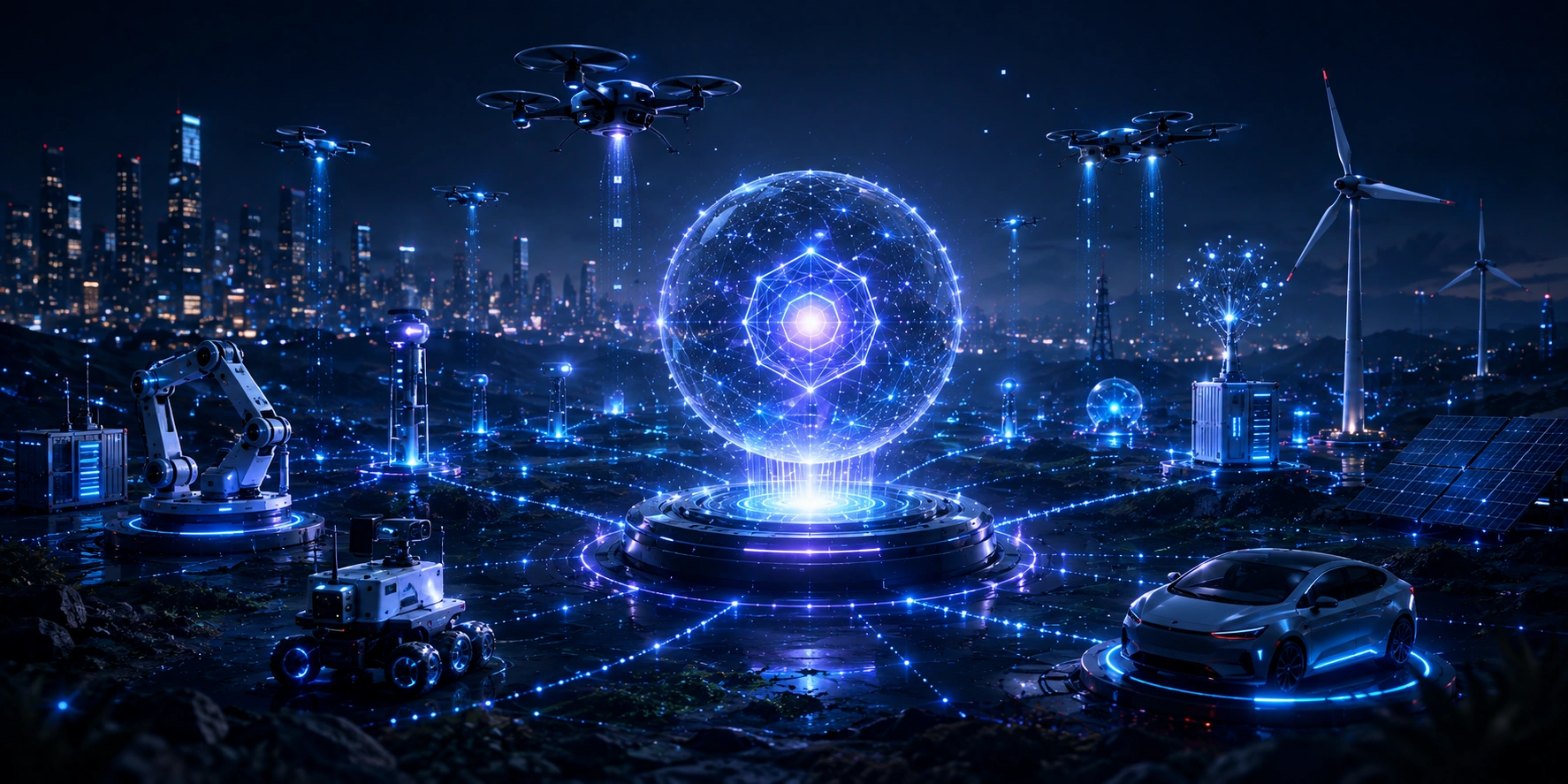
The core idea is that cameras, vehicles, sensors, mobile devices, drones, servers, and other physical assets can function as active participants within the network. They collect real-world data, verify its origin, contribute computing resources, and earn rewards through tokenized economic mechanisms.
The rapid advancement of generative AI has dramatically increased demand for high-quality real-world data. While most modern AI models are trained using centralized datasets, DePAI introduces the concept of open data marketplaces, where contributors are fairly compensated for providing valuable information.
This approach reduces dependence on centralized infrastructure providers while making AI development more transparent and collaborative. As a result, DePAI is increasingly viewed as the natural evolution of both DePIN networks and the emerging economy of intelligent autonomous agents.
2. How the Decentralized Physical AI Architecture Works
The DePAI architecture consists of several interconnected layers, each responsible for a specific function while remaining coordinated through blockchain technology and smart contracts.
Unlike conventional AI services, where users simply submit requests to centralized models, nearly every participant in a DePAI ecosystem can simultaneously contribute computing power, datasets, or physical infrastructure.
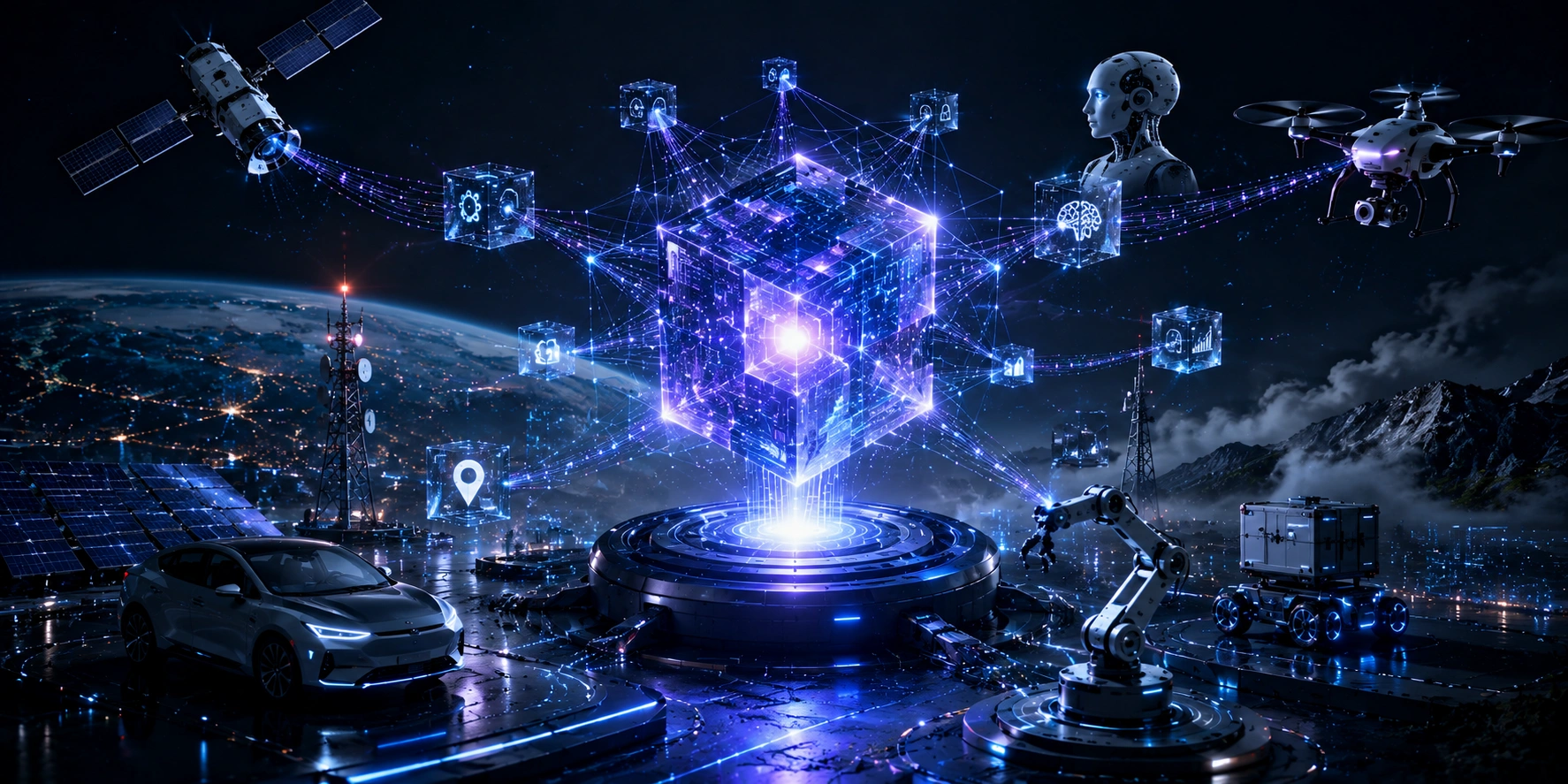
This architecture distributes data collection, verification, processing, and economic incentives across numerous independent participants. As a result, reliance on centralized cloud providers is reduced, while the infrastructure becomes more resilient, transparent, and resistant to censorship. The basic architecture of DePAI can be summarized as follows:
- Physical devices collect data from the real world.
- Decentralized networks verify the authenticity and origin of the data.
- AI models use the collected information for training and decision-making.
- Blockchain provides transparent accounting of participant activity.
- Tokens distribute economic incentives among infrastructure providers.
- Smart contracts automatically coordinate interactions across the ecosystem.
Each component plays an essential role in creating a unified ecosystem where data and computing resources can be utilized efficiently. Extensive automation minimizes the need for trusted intermediaries while improving transparency between network participants.
This architecture enables open marketplaces for data, computing power, and autonomous AI agents capable of interacting without centralized operators. In the long term, DePAI could become the foundation for a new generation of decentralized applications where artificial intelligence operates not only with digital assets but also with physical objects in the real world.
3. The Relationship Between DePAI, Prop-AMM, and the Solana Ecosystem
One of the most promising directions for DePAI is its integration with next-generation financial primitives. As autonomous AI agents become more widespread, efficient mechanisms for exchanging assets and liquidity between machines become increasingly necessary.
This is where the Prop-AMM (Proprietary Automated Market Maker) narrative emerges, gaining attention within the Solana ecosystem and investment research published by Coinbase Ventures. Unlike traditional automated market makers, Prop-AMM relies on proprietary capital, dynamic risk management, and intelligent liquidity allocation.
This architecture is particularly well suited for AI agents because it enables near real-time decision-making. Solana's high throughput, low transaction fees, and rapid finality make it an attractive platform for supporting these advanced financial mechanisms.
While traditional AMMs primarily facilitate interactions between users and liquidity pools, Prop-AMM is increasingly viewed as infrastructure where autonomous algorithms can execute transactions directly with one another without continuous human involvement.
4. Comparing DePAI with Other Blockchain Models
Although DePAI is closely connected to blockchain technology, it differs significantly from traditional consensus mechanisms and modern decentralized infrastructure models. Its defining characteristic is the use of real-world data and intelligent agents as primary economic resources.
Traditional blockchain architectures mainly focus on securing networks and validating transactions, whereas DePAI expands blockchain applications into physical infrastructure, AI coordination, and decentralized data markets. The comparison below highlights the key differences between these models.
| Model | Primary Resource | Purpose | Key Characteristic |
|---|---|---|---|
| Proof of Work | Computing Power | Consensus | High energy consumption |
| Proof of Stake | Staked Tokens | Consensus | Economic network security |
| DePIN | Physical Infrastructure | Service Provision | Decentralized real-world devices |
| DePAI | Data, AI, and Physical Devices | Training and Operating Intelligent Agents | Integration of AI, DePIN, and blockchain |
| Prop-AMM | Proprietary Market-Maker Liquidity | Trading Optimization | Dynamic capital management |
The comparison shows that DePAI is not intended to replace existing blockchain models but rather to complement them by combining artificial intelligence, decentralized networks, and physical infrastructure. This approach enables the creation of more sophisticated digital ecosystems where data, computing resources, and autonomous AI agents become valuable economic assets.
In many respects, DePAI represents the next stage in the evolution of Web3 infrastructure, extending tokenization beyond financial assets to include data, computational resources, and intelligent systems.
5. The Future of DePAI, AI Agents, and the Next Generation of Web3
The growing number of autonomous AI systems is gradually reshaping expectations for the next generation of the internet. Whereas traditional applications were designed primarily for human interaction, intelligent agents are increasingly capable of making independent decisions and interacting directly with one another.
In this environment, decentralized physical networks have the potential to provide infrastructure for data storage, model training, distributed computing, and autonomous financial operations. DePAI unifies these capabilities into a single economic framework where every participant can simultaneously contribute data, computational resources, and intelligent services.
The evolution of Prop-AMM, high-performance blockchains, and new tokenization models is laying the groundwork for an ecosystem in which AI agents can independently purchase data, pay for computing resources, exchange digital assets, and execute transactions without relying on centralized platforms. Although many of these technologies remain in their early stages, the convergence of DePAI, DePIN, artificial intelligence, and advanced financial protocols is increasingly viewed as one of the most promising directions for Web3. As standards for interoperability between physical devices, intelligent agents, and blockchain networks continue to mature, the importance of this narrative is expected to grow significantly.











