

Metafluence is a Web3 platform that combines a metaverse, the influence economy, and blockchain infrastructure within a unified digital environment. The project is designed for influencers, brands, and communities, offering new mechanisms for monetization, interaction, and audience attention management. Unlike traditional social networks, Metafluence builds a model where digital influence becomes an on-chain asset, and all interactions are recorded and rewarded through a tokenized economy. The platform aims to redefine the role of content creators in Web3, providing them with tools for direct control over their audience, revenue streams, and digital identity.
- Metafluence as a Web3 Metaverse for Influencers
- Metafluence Platform Ecosystem and Core Components
- Influence-to-Earn Economic Model
- The METO Token and Its Role in the Ecosystem
- Interaction Between Influencers, Brands, and Communities
- Metafluence Growth Prospects and Market Risks
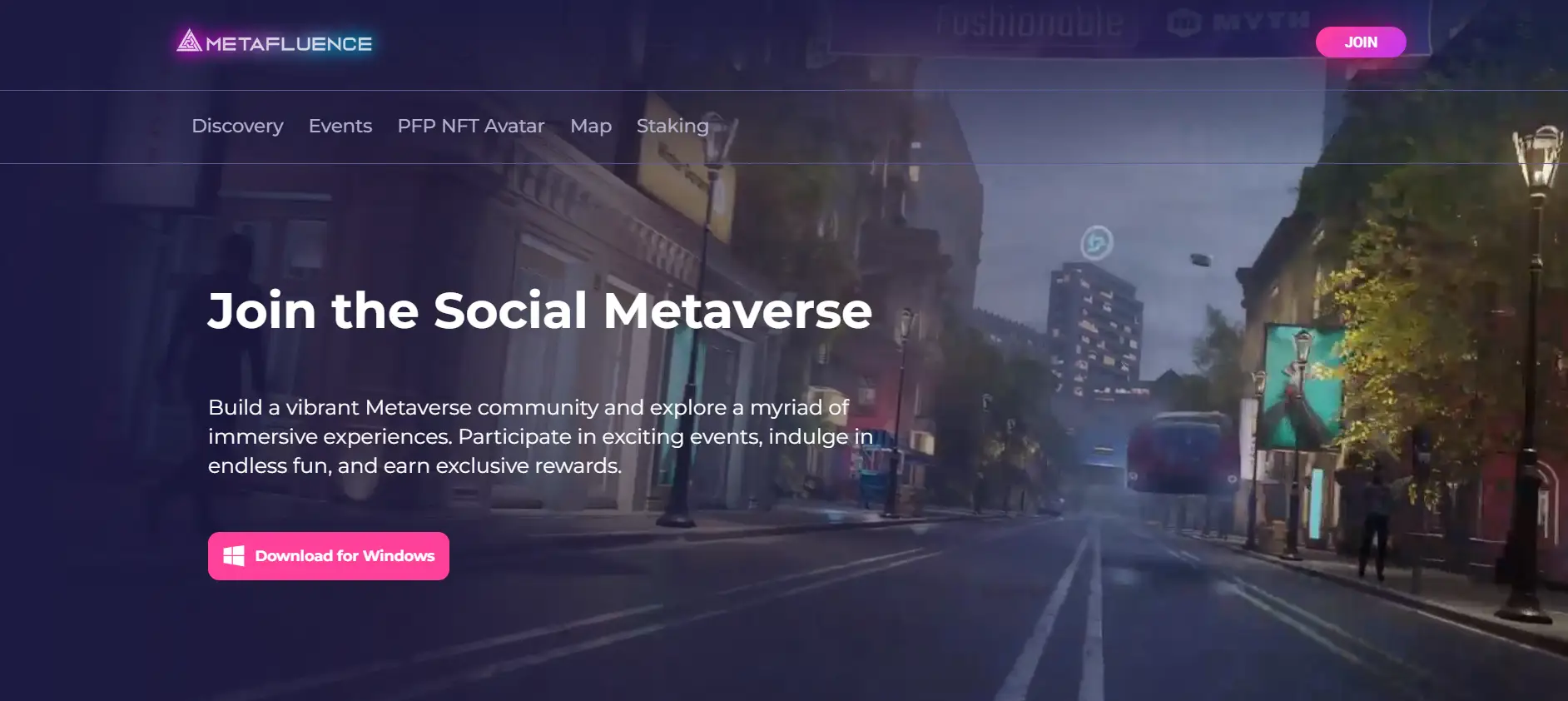
Metafluence as a Web3 Metaverse for Influencers
Metafluence is positioned as a specialized metaverse created not for abstract gaming scenarios, but for the influence economy. At its core lies the idea of transferring social interactions and personal branding into a virtual space powered by on-chain logic. Influencers gain the ability to build their own digital locations that function as personal media hubs, concentrating audience engagement, content distribution, and commercial activity.
Unlike traditional platforms where algorithms and monetization rules are centrally controlled, Metafluence offers a decentralized model in which users own their digital assets and communication channels. The metaverse acts not merely as a visual layer, but as a fully functional environment for hosting events, brand integrations, NFT sales, and building long-term relationships with audiences. This approach allows influence to be treated as a measurable and scalable resource within the Web3 economy.
Metafluence Platform Ecosystem and Core Components
The architecture of the Metafluence Platform is built around a set of interconnected modules that form a cohesive digital ecosystem. Each component is designed to increase user engagement and economic activity.
Key ecosystem components include:
-
Metahuts — personal virtual spaces for influencers
-
Metaclans — communities and clans for collective participation
-
NFT infrastructure for creating and trading digital assets
-
Social reputation and achievement mechanics
-
Analytics tools for brands and content creators
All these elements are unified by a shared on-chain economy and gamification logic. Metahuts serve as digital headquarters where influencers host events and distribute exclusive content. Metaclans strengthen social dynamics by forming sustainable communities around key opinion leaders. Together, the ecosystem creates an environment where social activity is directly transformed into economic value.
Influence-to-Earn Economic Model
At the foundation of Metafluence lies the Influence-to-Earn concept, reflecting a shift from passive content consumption to active participation in the digital economy. This model rewards users for actions that increase the value of the ecosystem, including audience engagement, event participation, content creation, and community development.
Influence-to-Earn provides an alternative to Web2 advertising algorithms, where revenue distribution lacks transparency. Within Metafluence, all actions leave an on-chain footprint and can be converted into tokenized rewards. This approach encourages long-term engagement and reduces influencer dependence on external platforms. The model also incentivizes audiences, transforming followers from passive observers into motivated participants within the ecosystem.
The METO Token and Its Role in the Ecosystem
The METO token is the central element of the Metafluence economy, performing multiple functions that ensure platform sustainability and scalability.
| METO Token Function | Description |
|---|---|
| Medium of Exchange | Payment for services, NFTs, and events within the metaverse |
| Rewards | Incentives for activity and participation in Influence-to-Earn |
| Governance | Potential participation in voting and platform development |
| Incentivization | Motivation for influencers and communities |
| Ecosystem Asset | A unifying element across all Metafluence modules |
METO functions as a universal economic interaction tool, connecting social, gaming, and commercial mechanics. Its use spans both individual and collective scenarios, making the token the foundation of the entire Metafluence ecosystem.
Interaction Between Influencers, Brands, and Communities
Metafluence establishes a three-sided interaction model where influencers, brands, and audiences operate within a single digital space. Influencers gain tools for direct monetization of attention without intermediaries, brands receive transparent analytics and new activation formats, while communities participate directly in the project’s economy.
This approach reduces the imbalance of interests typical of Web2 platforms. All parties interact through smart contracts and tokenized mechanisms, increasing trust and predictability. Metafluence effectively forms a new digital marketing model where influence is measured not by reach, but by on-chain activity and engagement.
Metafluence Growth Prospects and Market Risks
Metafluence’s future prospects are closely tied to the expansion of the Web3 economy and the evolution of metaverses as practical platforms rather than experimental environments. The project focuses on influencers and brands, allowing it to concentrate on real-world use cases.
At the same time, Metafluence faces sector-specific risks, including intense competition, token price volatility, the need to scale its user base, and sustained influencer engagement. The platform’s success will depend on its ability to transform the Influence-to-Earn concept into a sustainable economic model with genuine demand. If successfully implemented, Metafluence could secure a strong position at the intersection of metaverses, social platforms, and the Web3 economy.











