

Read what the benchmark actually measured
The Buffer engagement report compares formats among posts in its dataset. The result depends on platform, metric and sample. Interactions relative to reach and interactions relative to impressions answer different questions. Neither measures whether someone understood the article.
Separate the format from the assignment
Imagine two AI tools given different prompts and judged by different people. A score gap cannot tell you which tool performed better under the same conditions. A feed comparison has a similar problem: carousels may be chosen for different topics, creators or audiences than single images.
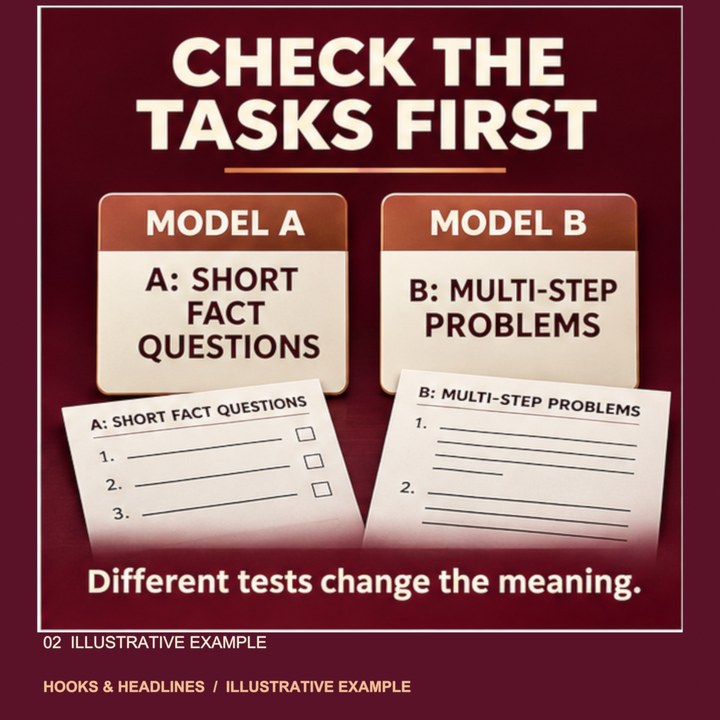
Run a comparison that fits your decision
If you want to know whether a carousel helps people understand a mechanism, choose one audience, one idea and one comprehension question. Compare a carousel with an alternative that conveys the same substantive information. Where random assignment is unavailable, record exposure, timing and other differences and treat the result as directional.
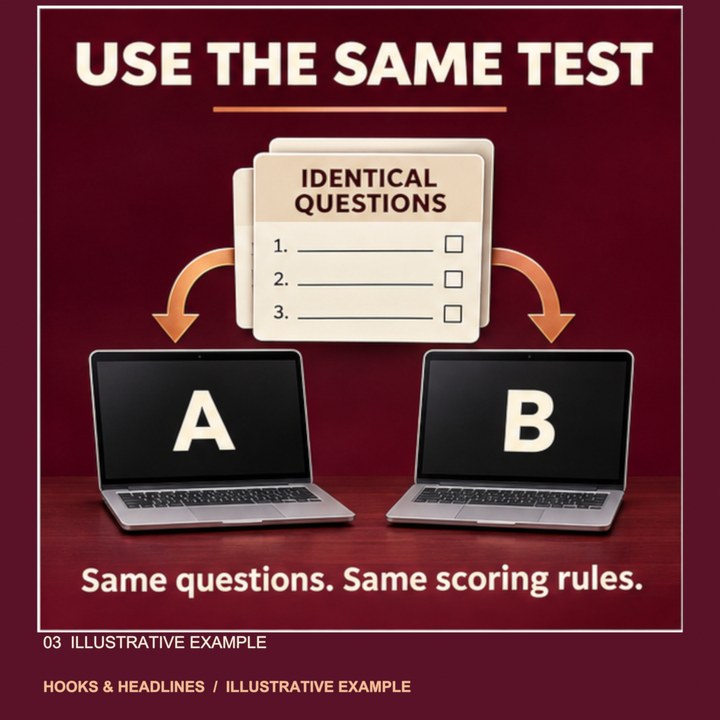
Choose the metric before looking at the result
Record what each format was intended to do, the eligible audience, and the numerator and denominator. Compare saves, clicks or correct answers separately when they matter. A benchmark can suggest a test; it cannot settle your specific editorial choice.