

Delysium is not just a Web3 game, but a comprehensive ecosystem that combines an open-world MMO, AI Virtual Beings, and a tokenized economy. The project develops a cyberpunk universe of the future where players interact not only with each other but also with autonomous digital entities. Unlike many blockchain games, the focus here is not on speculation, but on integrating artificial intelligence directly into gameplay and infrastructure.
Delysium aims to unify three layers — gameplay, AI architecture, and Web3 mechanics — into a single system. To understand the core of the project, it is important to examine its components separately: the game world, the behavior of virtual beings, the $AGI token, and the role of the AI agent network. This structured approach allows for evaluating not only technological innovation but also practical feasibility.
Table of Contents
- The Delysium game world and the concept of AI Virtual Beings
- AI Agent Architecture and the Role of Lucy
- Project Economy and the $AGI Token
- Delysium's Engagement Mechanics and Participation Incentives
- Development Prospects and Strategic Significance

1. The Delysium game world and the concept of AI Virtual Beings
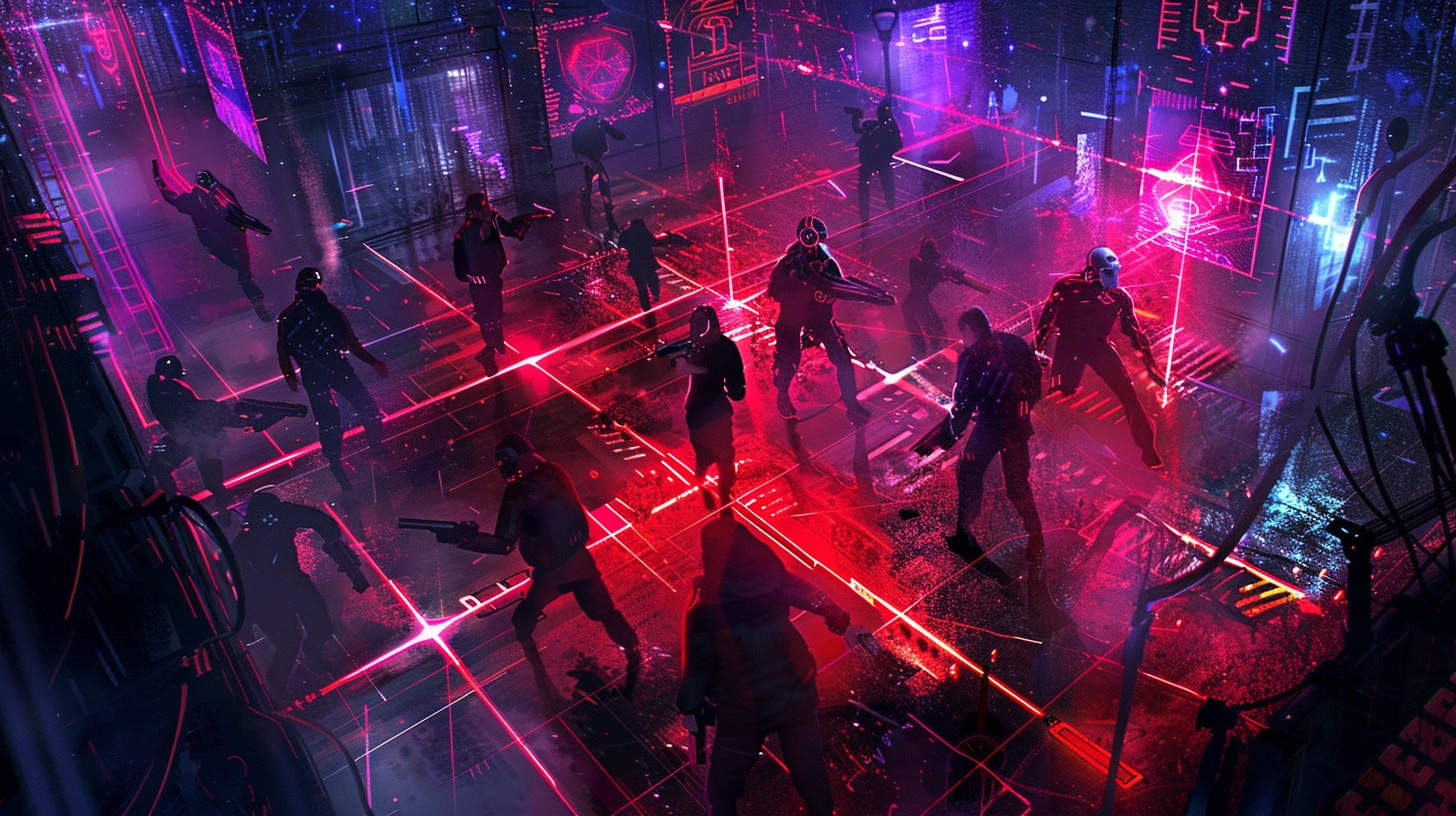
Delysium is positioned as an AI-powered open-world MMO set in a futuristic environment. Players enter a world where advanced technology and human evolution intersect. A key feature is the presence of AI Virtual Beings. These are not static NPCs, but dynamic digital entities capable of participating in missions, shaping narrative arcs, and responding to player actions.
This approach differentiates the project from traditional MMORPGs. Instead of relying solely on pre-scripted scenarios, the developers emphasize adaptability. The behavior of digital beings can change depending on context, creating the effect of a “living” world. Players do not simply complete quests; they interact with a system capable of evolving.
The social dimension also plays an important role. Interaction with AI Virtual Beings is complemented by cooperative mechanics between players, creating a multi-layered dynamic. This opens the possibility for unique in-game situations that cannot be fully predicted in advance.
At the same time, the foundation remains gameplay-focused: exploration, character progression, social interaction, and PvP/PvE activities. AI does not replace gameplay but enhances it. This balance between technology and entertainment forms the core of Delysium.
2. AI Agent Architecture and the Role of Lucy
Beyond the gaming layer, Delysium develops an AI agent infrastructure. Within the YKILY Network concept, an environment is created where autonomous digital agents can interact with each other and execute tasks. This expands the project beyond a single game and moves it toward becoming a broader platform.
Lucy plays a central role as the operating system for AI agents. It is designed to simplify the creation of crypto workflows and automated interaction scenarios with decentralized applications. Essentially, Lucy acts as a bridge between users, agents, and blockchain infrastructure.
This infrastructural layer allows solutions to scale beyond the game itself. If the architecture proves resilient, it may be applied across other Web3 projects. In this sense, Delysium aims not only to build a game but also to provide a technological foundation.
This model positions the project as an experiment in integrating AI into the Web3 economy. The game environment serves as an entry point, while the agent network extends functionality. In the long term, this could result in an ecosystem where interaction occurs not only between people but also among autonomous digital entities.
3. Project Economy and the $AGI Token
The central element of the Web3 layer is the $AGI token. It serves utility functions within the ecosystem: covering network fees, enabling AI agent operations, granting access to services, and supporting community initiatives. The maximum supply is capped at 3 billion tokens.
The economic model revolves around balancing supply and demand. For sustainability, token usage must be embedded in real scenarios. Only with consistent utility can long-term value be established.
Main Token Parameters
| Parameter | Description |
|---|---|
| Name | AGI |
| Maximum Supply | 3,000,000,000 |
| Main Utility | Network fees, AI agent registration, service access, participation programs |
| Distribution | Treasury/Reserve — 57% Team — 20% Strategic Sale — 10% Private Sale — 10% Market Maker — 2% Airdrop — 1% |
A significant reserve allocation suggests long-term development funding. However, economic sustainability depends not only on distribution but also on actual demand. If $AGI is actively used across gaming and infrastructure scenarios, it gains practical value.
Transparency in tokenomics is another critical factor. Publicly available information about allocation and incentive programs enables more informed decisions. In the Web3 space, trust is built through openness and verifiable data.
4. Delysium's Engagement Mechanics and Participation Incentives
To maintain ecosystem activity, Delysium implements staking mechanisms and community initiatives. These tools foster long-term engagement and help reduce short-term market pressure. A well-designed incentive system connects user participation with overall platform growth.
Unlike models driven purely by speculative interest, Delysium seeks to establish a sustainable cycle: user activity strengthens the ecosystem, and ecosystem development increases the value of participation. This structure encourages not only token holding but also meaningful interaction with the product.
Key Mechanisms:
- $AGI Staking — locking tokens for different periods with reward accrual.
- Incentive Programs — encouraging user and developer activity.
- Governance Initiatives — elements of community participation in development.
- Agent Token Usage — payment for operations within the AI network.
- Ecosystem Grants — support for expanding functionality.
These instruments contribute to building a resilient community. Participants receive not only financial incentives but also the opportunity to influence development direction. This strengthens commitment and supports long-term engagement.
It is important to distinguish yield from utility. Rewards may attract attention, but sustainable value comes from real token usage in services and gameplay. The broader the application spectrum, the more stable the model becomes.
5. Development Prospects and Strategic Significance
Delysium integrates three complex domains — MMO development, AI systems, and blockchain infrastructure. Success requires balanced progress across all levels: compelling gameplay, a sustainable token economy, and a scalable AI agent network.
A major strength of the ecosystem is the deep integration of artificial intelligence into the interaction model itself. AI Virtual Beings are not decorative elements but components of a dynamic environment capable of influencing gameplay. If executed effectively, Delysium could set a new benchmark for Web3 gaming.
Growth potential is closely tied to the expansion of Lucy and the YKILY network. Scaling the agent infrastructure broadens $AGI’s use cases and reinforces the platform aspect of the project. However, challenges remain: scalability complexity, continuous content development, and tokenomic pressure. The final outcome will depend on the team’s ability to balance innovation with long-term sustainability.











