

Influence is a large-scale Web3 MMO space strategy set in the asteroid belt of the Adalia system. The project combines deep economic simulation, realistic orbital mechanics, and an on-chain architecture where assets and core processes are secured on the blockchain. Unlike typical “token-based games,” the economy here is shaped by players: mining, production, logistics, and trade form a single interdependent system. Influence emphasizes long-term strategy, cooperation, and planning rather than rapid progression. As a result, the game attracts not only crypto enthusiasts but also fans of complex management simulations.
Contents
- The World of Adalia and the Logic of Colonization
- Economic Model and Production Chains
- On-Chain Architecture and Technical Foundation
- Influence Tokens and Game Assets
- Development Strategy and Player Behavior
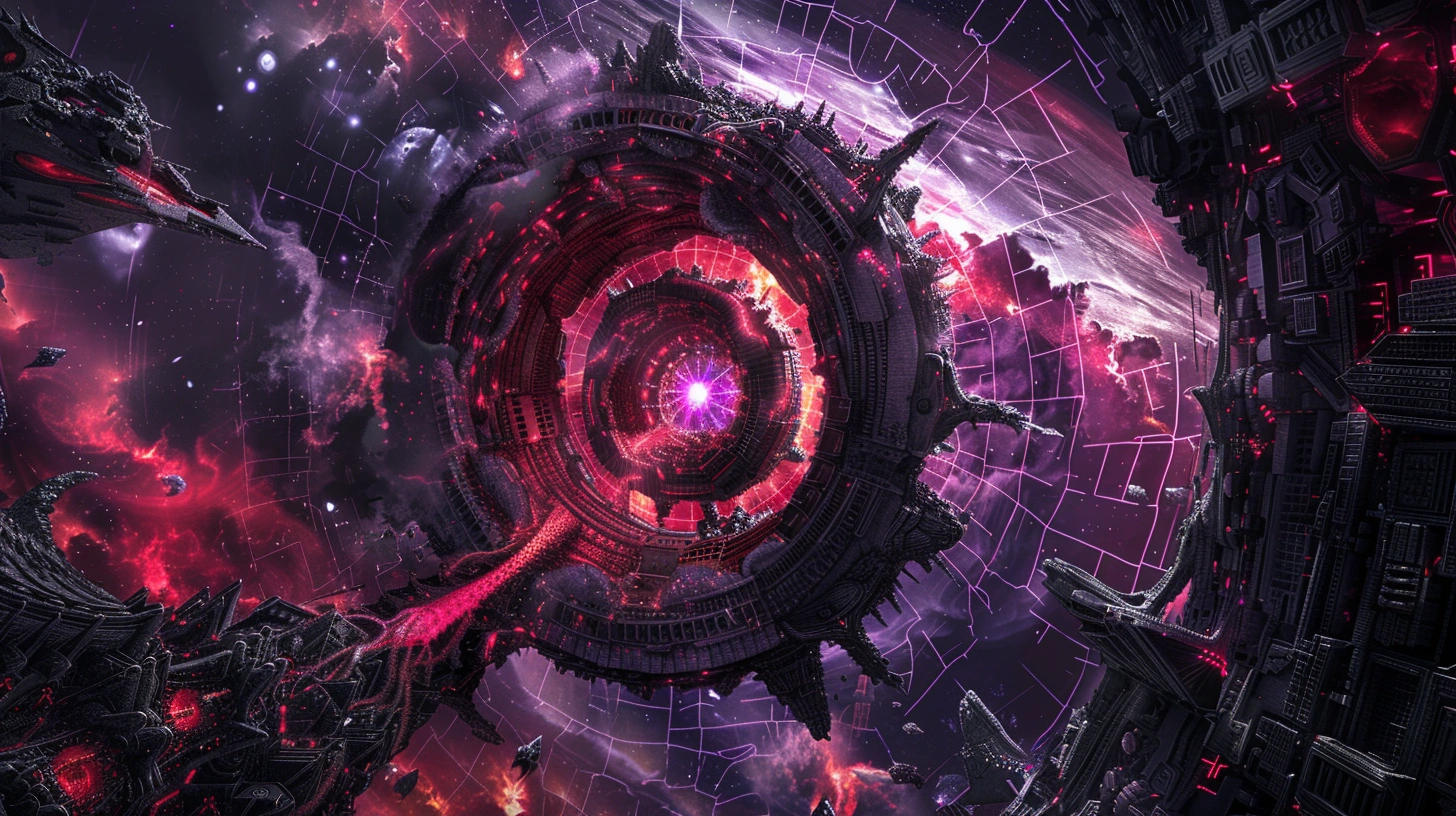
1. The World of Adalia and the Logic of Colonization
Influence takes place in the distant future after humanity has fled Earth. Colonists arrive in the Adalia system aboard a generational ship and must survive within a vast asteroid belt. There are no pre-built cities or established infrastructure — everything is created by players. Each asteroid is a unique object with its own resource composition, orbital characteristics, and strategic position.
A defining feature of the world is its dynamic orbital mechanics. Asteroids move along realistic trajectories, directly impacting logistics and trade. Distances between objects change over time, meaning a profitable route today may become inefficient tomorrow. This forces players to factor time into production planning and trade agreements.
In Influence, territory is not merely “land ownership,” but control over a node within an economic network. A well-positioned asteroid can become a major trade hub even if its resources are moderate. Geography therefore becomes a strategic tool rather than decorative background. This foundation shapes the broader economic model discussed in the next section.
Depth is further enhanced by asteroid diversity: some are rich in rare metals, while others are ideal for industrial facilities. Players must evaluate not only short-term profit but also long-term development potential. Over time, successful locations evolve into settlement clusters and commercial hubs. The map transforms into a living structure shaped by community activity.
2. Economic Model and Production Chains
The economy of Influence is built around a sequential value creation chain. Players extract resources, refine them, manufacture equipment and goods, and then sell their products on open markets. Unlike traditional MMOs where resources are often system-generated or removed from circulation, supply and demand here emerge from player activity.
Production requires energy, infrastructure, and careful time management. Industrial growth is impossible without logistics: transporting materials and goods between asteroids becomes a specialized profession. This creates a complex and interconnected ecosystem.
Key Economic Roles
- Miners supply raw materials and influence baseline pricing.
- Industrialists create higher-value products.
- Logistics operators optimize routes and reduce transport costs.
- Traders balance markets by responding to shortages and surpluses.
- Alliance organizers coordinate large-scale infrastructure initiatives.
The system rewards specialization. Broad, unfocused playstyles are less efficient than targeted strategies, especially in the long run. This makes Influence closer to an industrial simulator than a traditional space sandbox.
Markets react dynamically to player decisions. Shortages may arise due to disrupted logistics or large-scale construction projects in specific regions. In such moments, adaptive players can quickly occupy emerging niches. This responsiveness keeps the economy alive and unpredictable.
3. On-Chain Architecture and Technical Foundation
Influence implements the concept of a fully on-chain world. Significant in-game assets and operations are recorded on the blockchain, ensuring transparency and verifiable ownership. The project is built within the Ethereum ecosystem and leverages Starknet as a Layer 2 scaling solution, enabling high transaction throughput with moderate fees.
An on-chain approach means the economy is inseparable from blockchain infrastructure. Ownership of asteroids, ships, or crews is represented by tokens, and market operations are executed via smart contracts. This creates a resilient system where rules are harder to alter centrally.
Players operate in an environment where assets have traceable histories and economic processes follow transparent logic. This strengthens trust among participants and supports long-term collaborative projects.
Layer 2 integration reduces entry barriers by lowering transaction costs while maintaining compatibility with Ethereum’s broader ecosystem. Developers continue migrating additional mechanics on-chain, reinforcing the vision of an autonomous digital universe governed by stable rules.
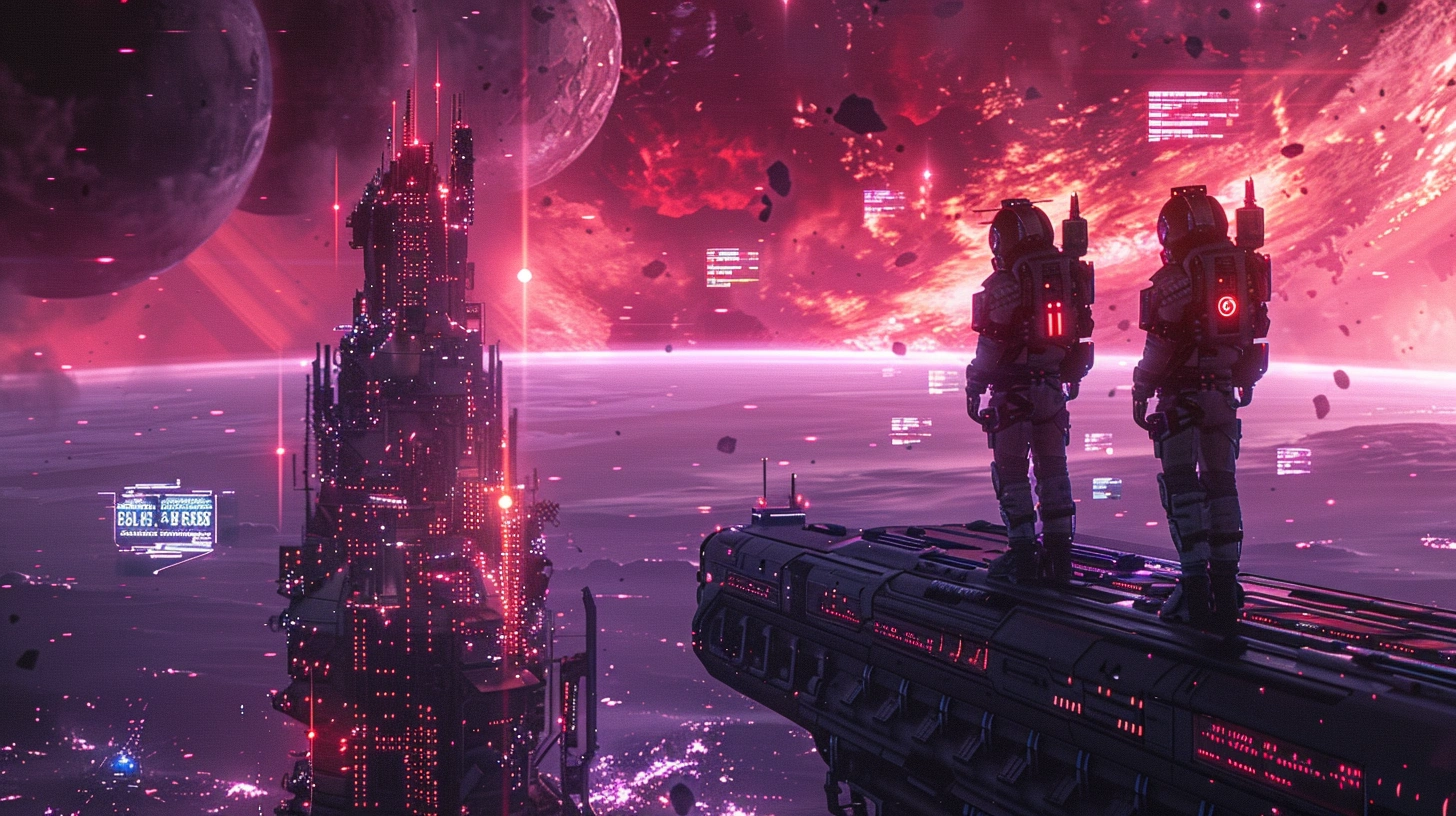
4. Influence Tokens and Game Assets
The economic structure of Influence relies on multiple tokenized asset types. These serve different purposes — from currency to unique objects and bulk resources. The central element is the SWAY token, which functions as the primary unit of account.
Separating assets by token standards allows flexible economic management. Unique objects preserve ownership history, while resources are tracked in scalable formats. This structure simplifies trading and enables automation through smart contracts.
Token and Asset Table
| Asset | Type | Purpose | Role in the Economy |
|---|---|---|---|
| SWAY | Fungible token | Main currency | Trade, fees, settlements |
| Asteroid | NFT | Territory and resource source | Control over mining and infrastructure |
| Crew | NFT | Operational unit | Task execution and specialization growth |
| Ship | NFT | Transport | Logistics and expansion |
| Resources | Semi-fungible tokens | Raw materials and goods | Production and trade |
The SWAY token acts as the economic connector across all market segments, standardizing pricing and settlements. NFT assets secure strategic control and ownership positions. Additionally, the value of each asset depends on its functional context within the broader system. An asteroid alone is passive without crew and logistics, while ships and infrastructure transform ownership into real economic leverage. The interdependence of these token types forms a deeply integrated and self-regulating digital economy.
5. Development Strategy and Player Behavior
Success in Influence is built on systems thinking and long-term planning. Players must consider not only current prices but also future orbital shifts, route accessibility, and regional development trends. Time becomes a strategic resource, and careful planning underpins sustainable growth.
Effective progression often relies on specialization and cooperation. Alliances, role distribution, and infrastructure investment reduce operational risks and stabilize market exposure. Instead of short-term profit, stability and supply chain reliability are prioritized.
Influence rewards analytical gameplay: cost calculation, logistical optimization, and strategic capital allocation. Players who adapt to change and control key economic nodes gain competitive advantages. More broadly, the project demonstrates how Web3 technologies can serve as the foundation of a sophisticated game economy, reinforcing strategy rather than replacing it.











